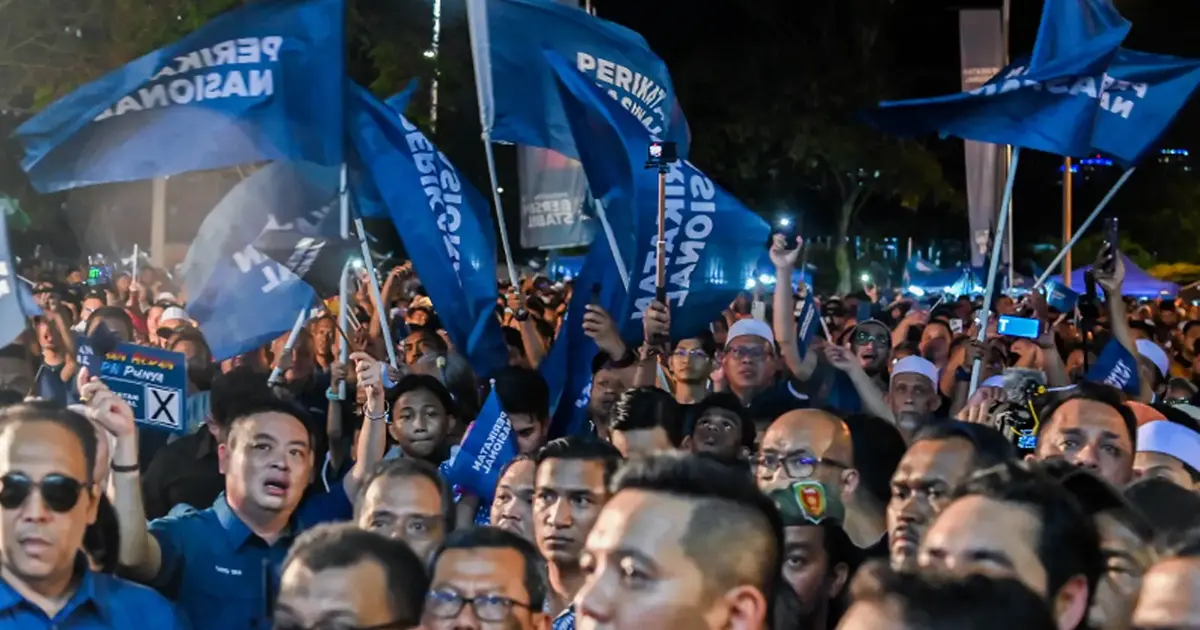
The Perikatan Nasional coalition faces a deepening existential crisis as tensions between its principal component parties, PAS and Bersatu, have evolved from public disagreements into what analysts describe as sustained political warfare. Yusri Ibrahim, chief researcher at the Ilham Centre, characterises the current phase of intra-coalition conflict as having transitioned into a 'guerrilla war' dynamic—suggesting protracted, below-the-surface skirmishes rather than the earlier instances of more openly declared disputes between the two Islamist-oriented parties.
The Perikatan Nasional coalition emerged as a significant political force following the 2022 general election, initially presenting itself as a unified alternative to the Pakatan Harapan-led federal government. However, the partnership between PAS, which commands substantial support in rural and Islamic constituencies, and Bersatu, the party led by former Prime Minister Muhyiddin Yassin, has proven increasingly fractious. These tensions carry far-reaching implications not only for Malaysian politics but also for the regional political landscape, where opposition coalitions typically serve as counterbalances to incumbent administrations.
The characterisation of the conflict as entering a guerrilla warfare phase suggests a shift in tactical dynamics. Rather than engaging in high-profile confrontations or issuing formal statements of disagreement, the two parties are increasingly adopting covert strategies—positioning allies in key constituencies, contesting electoral territories previously considered settled between them, and conducting behind-the-scenes manoeuvring within state governments where they hold joint responsibility. This shift to irregular conflict patterns makes the coalition particularly vulnerable to sudden rupture, as the informal understanding that previously held the alliance together erodes gradually rather than visibly.
PAS, under the leadership of Abdul Hadi Awang, has consolidated its grip over the northern states and has been expanding its footprint in other regions through aggressive grassroots organising. Bersatu, conversely, maintains significant presence in eastern Sabah and Sarawak, though its peninsular support base remains more geographically diffuse and contested. The parties' divergent geographic strongholds and competing ambitions for seat allocations in future electoral contests represent a structural fault line within the coalition that intensifies during the approach to election cycles.
The implications for Malaysian political stability are considerable. A fragmented opposition alliance weakens the institutional check that opposition coalitions typically provide against executive overreach. Conversely, persistent internal conflict within Perikatan Nasional diverts resources and attention away from the policy alternatives and programmatic platforms that opposition coalitions should ideally develop. For voters seeking a coherent alternative vision to the current government, the spectacle of Perikatan Nasional's internal strife undermines confidence in the coalition's capacity for unified governance.
The guerrilla war characterisation also reflects the information warfare dimension of contemporary Malaysian politics. Social media platforms, allied media outlets, and proxy commentators affiliated with each party increasingly engage in sustained campaigns of delegitimisation rather than straightforward policy debate. These campaigns create cumulative damage to the coalition's public image and gradually normalise the idea among party activists that severance from the partnership may be preferable to continued discomfort within the alliance.
Historically, Malaysian political coalitions have demonstrated surprising resilience despite internal frictions—the Barisan Nasional endured multiple internal conflicts across several decades before its 2018 electoral defeat. However, Perikatan Nasional lacks the institutional maturity and formalised dispute resolution mechanisms that longer-established coalitions develop. The absence of established protocols for managing disagreements means that even relatively minor disputes can escalate rapidly when other triggers for conflict align.
The question of state-level administrations adds another layer of complexity. In states where both PAS and Bersatu hold executive or legislative positions, the guerrilla war dynamic plays out concretely through policy disagreements, resource allocation disputes, and competing patronage networks. These ground-level tensions invariably filter upward to affect national-level coalition dynamics, creating feedback loops of mutual mistrust.
Observers of Malaysian politics must also consider whether the current phase represents a temporary escalation from which Perikatan Nasional might recover, or whether it signals the beginning of terminal decline for the coalition. Historical precedent suggests that once opposition coalitions enter the guerrilla warfare stage of internal conflict, reversing the trajectory becomes increasingly difficult. The costs to each party of maintaining the partnership grow with each incident, while the political costs of formal separation decline correspondingly as activists and supporters become accustomed to the idea through months of proxy conflict.
For the federal government under Anwar Ibrahim, the spectacle of Perikatan Nasional's internal turbulence provides strategic advantage in the near to medium term, reducing the coherence and effectiveness of institutional opposition. However, the fragmentation of opposition politics also carries risks—a splintered opposition landscape without unified messaging can paradoxically create openings for unexpected political movements or alliances that current calculations do not anticipate.
The trajectory of the PAS-Bersatu relationship will likely determine whether Perikatan Nasional survives as a meaningful political coalition through the next general election cycle or whether it fragments into component parties and reduced coalitions. The shift to guerrilla warfare tactics suggests that the breaking point may approach sooner than conventional political timelines would typically predict, with the coming months representing a critical period for the coalition's ultimate fate.