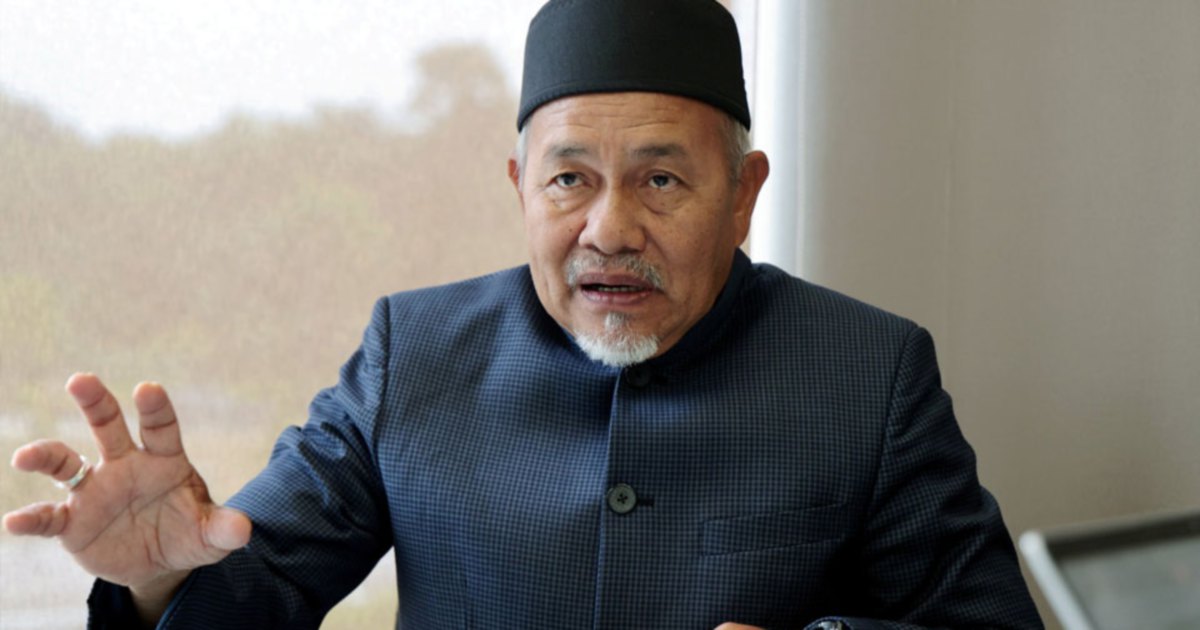
Perikatan Nasional (PN) has categorically denied allegations by its coalition partner Bersatu that the postponement of the alliance's Seat Negotiation Committee meeting stems from PAS's intention to pivot towards political cooperation with Barisan Nasional (BN). The denial, issued in Kota Baru, signals deepening tensions within the three-year-old opposition coalition that has emerged as a significant counterweight to the Anwar Ibrahim administration.
The dispute centres on the indefinite postponement of crucial seat-allocation discussions that were meant to finalise the coalition's positioning ahead of the next general election. These negotiations are typically essential for determining parliamentary and state assembly candidacies, making their delay a matter of considerable strategic importance for all parties involved. The fact that either side would publicly attribute blame suggests fissures in the coalition structure that extend beyond routine administrative disagreements.
Bersatu's assertion that PAS was orchestrating delay to facilitate talks with BN strikes at the heart of PN's internal stability. Such a manoeuvre would represent a fundamental recalibration of Malaysian political alignments, potentially fracturing the opposition coalition that has performed credibly in state-level contests and presented itself as a viable government alternative. For Malaysian observers, the allegation hints at the volatile nature of multi-party alliances in the country's fractionalised political landscape.
PAS, as the largest component party within PN and dominant in northern states including Kelantan and Terengganu, wields disproportionate influence over the coalition's strategic direction. The party's potential interest in BN engagement would reflect pragmatic considerations about government participation and resource allocation, particularly in states where BN retains considerable influence. Such calculations are not unusual in Malaysian politics, where coalition membership often depends on tangible benefits and electoral prospects.
PN's public rejection of Bersatu's claims underscores the coalition's commitment to its stated identity as a unified opposition force. However, the necessity of issuing such denials suggests that confidence between member parties has eroded. Bersatu's decision to air grievances publicly, rather than resolving them through internal mechanisms, indicates a breakdown in the coalition's dispute-resolution processes and raises questions about whether PN can sustain cohesion through the demanding period preceding a general election.
The postponement itself reflects legitimate practical concerns that parties must address before moving forward with seat negotiations. Clarifying foundational principles, resolving outstanding disputes, and establishing negotiating parameters typically precede formal seat allocation discussions. However, indefinite postponement—as opposed to a clearly timetabled delay—signals that fundamental issues remain unresolved, and that at least one party views continued negotiation as counterproductive.
For Bersatu, the party founded by former Prime Minister Mahathir Mohamad and currently led by Muhyiddin Yassin, public statements may serve multiple purposes: signalling to its own supporters and members that leadership is actively defending the party's interests, applying pressure on PAS and other coalition partners to accelerate negotiations, and establishing a record should the coalition eventually fracture. The timing and tone of such accusations matter considerably in Malaysian politics, where perceptions of strength and competence significantly influence voter calculations.
The broader regional significance of PN's internal stability extends to how opposition politics function across Southeast Asia. Coalition-building and management remain central challenges for opposition movements throughout the region, and Malaysia's experience offers instructive lessons. Effective opposition requires both sufficient unity to present a credible alternative government and sufficient flexibility to accommodate diverse ideologies and interests within member parties. Maintaining this balance proves exceptionally difficult in practice.
PAS's potential openness to BN engagement also reflects the reality of Malaysian state politics, where coalition configurations frequently shift based on electoral arithmetic and available coalitional partners. The party has governed Kelantan and Terengganu under PN arrangements but has previously participated in other governing coalitions. Flexibility in political alignment, while sometimes portrayed negatively as opportunism, also represents practical acknowledgement that stable government requires assembling sufficient seats through whatever legitimate alliances prove feasible.
For Malaysian voters and analysts monitoring opposition development, these internal coalition disputes carry implications for electoral strategy and governance prospects. An unstable opposition coalition may struggle to field a coherent manifesto or maintain discipline among elected representatives, undermining its effectiveness as a government alternative. Conversely, tensions that remain relatively contained within leadership circles, rather than triggering membership defections or public recriminations, may ultimately prove manageable.
Moving forward, PN will need to either resolve the underlying issues prompting the seat negotiation postponement or formally acknowledge that the coalition structure requires recalibration. Continuing indefinitely with stalled negotiations represents a path to gradual deterioration rather than stable coexistence. Whether PN leadership can navigate these pressures and emerge with strengthened coordination mechanisms or whether the coalition edges toward deeper fracturing will significantly influence Malaysian opposition politics in the coming electoral cycle.

