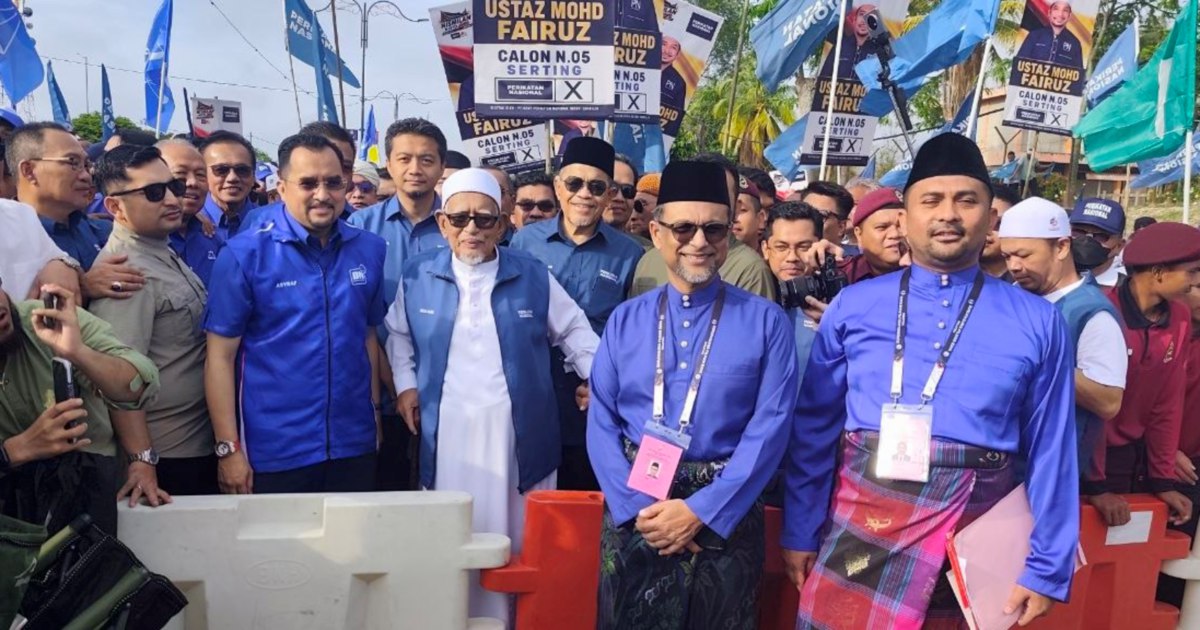
Perikatan Nasional has committed to bolstering Barisan Nasional's campaign machinery during the forthcoming Negri Sembilan state election, according to a statement from PAS president Tan Sri Abdul Hadi Awang at a campaign event in Jempol. The alliance between the two major coalition blocs signals a coordinated approach to the state polls and underscores their combined political ambitions in one of Malaysia's most strategically important states.
The pledge represents a significant development in Malaysia's evolving political landscape, where coalition partnerships have become increasingly fluid and context-dependent. Rather than competing independently, Perikatan Nasional and Barisan Nasional have opted for a collaborative strategy in Negri Sembilan, a state that has witnessed considerable political volatility in recent election cycles. This arrangement stands in contrast to several other states where the two coalitions have maintained competitive positioning, reflecting the nuanced calculations political leaders make based on local conditions and demographic considerations.
Negri Sembilan holds particular significance within Malaysia's political hierarchy due to its diverse socioeconomic profile and its position as a microcosm of broader national voting patterns. The state has traditionally served as a bellwether for national political sentiment, making its electoral outcomes closely watched by analysts and rival parties alike. With recent shifts in the state's political composition, both Barisan Nasional and Perikatan Nasional recognise the strategic value of pooling resources and coordinating messaging rather than fragmenting their electoral efforts through competition.
The cooperation carries implications extending far beyond Negri Sembilan's boundaries. By joining forces in a state election, the two coalitions are essentially rehearsing governance models that could influence how they approach future federal and state-level contests. Such collaborative frameworks provide valuable data about voter reception to joint messaging and help political leaders test ground-level support across different constituencies. For PAS specifically, participation in mainstream Barisan Nasional-led campaigns offers opportunities to strengthen its standing with broader audiences beyond its traditional base.
Tan Sri Abdul Hadi Awang's announcement during the Jempol campaign stop reflects PAS's strategic positioning within Perikatan Nasional. The Islamic party has increasingly sought to broaden its political influence beyond its core constituencies, and cooperative campaigns with Barisan Nasional represent one avenue toward this objective. This approach also demonstrates how Malaysian political dynamics have evolved toward pragmatic coalition management rather than zero-sum electoral competition across all contests.
From a Barisan Nasional perspective, securing Perikatan Nasional's campaigning assistance addresses the coalition's need to rebuild electoral machinery and voter enthusiasm following its decade-long period outside federal government. The provision of additional campaign resources, party volunteers, and organisational support can meaningfully impact grassroots mobilisation, particularly in constituencies where either coalition has stronger organisational presence. Such cooperation allows Barisan Nasional to concentrate its finite resources on marginal constituencies while benefiting from broader reach through Perikatan Nasional channels.
The Negri Sembilan election also arrives amid broader national discussions about state governance, economic recovery, and social cohesion. Both coalitions will likely frame their Negri Sembilan campaign around these national narratives while emphasising local development priorities. The state's economy, which depends significantly on manufacturing, agriculture, and services sectors, makes infrastructure investment and business-friendly policies key campaign themes likely to resonate across multiple constituencies regardless of which coalition ultimately wins.
Historically, Negri Sembilan has demonstrated consistent levels of competitive equilibrium between major political forces. The decision to campaign jointly rather than competitively represents a calculated judgment about optimal strategies for maximising combined support without fragmenting the vote against a unified opposition. Such assessments typically emerge from sophisticated internal polling and demographic analysis conducted months before official campaign periods commence.
Peikatan Nasional's commitment extends the pattern of tactical cooperation observed during recent legislative elections, where the two coalitions coordinated positioning on specific issues despite maintaining separate party structures and leadership hierarchies. This flexibility in coalition arrangements reflects maturation within Malaysia's political ecosystem, where leaders increasingly prioritise electoral outcomes in specific jurisdictions over rigid ideological purity or historical rivalries. The willingness to collaborate strategically suggests both coalitions recognise that electoral success requires pragmatic judgment rather than reflexive antagonism.
For Malaysian voters in Negri Sembilan, the coalition arrangement means confronting a consolidated campaign presence from two major political blocs, with Perikatan Nasional functioning essentially as an adjunct force supporting Barisan Nasional's primary campaign structure. This configuration may influence voter perception of the election's fundamental choice, potentially simplifying messaging around which coalition voters should support while potentially complicating the picture for those seeking alternatives to both major blocs. Opposition parties will likely highlight the cooperation as evidence of political establishment alignment against challenger groups.

