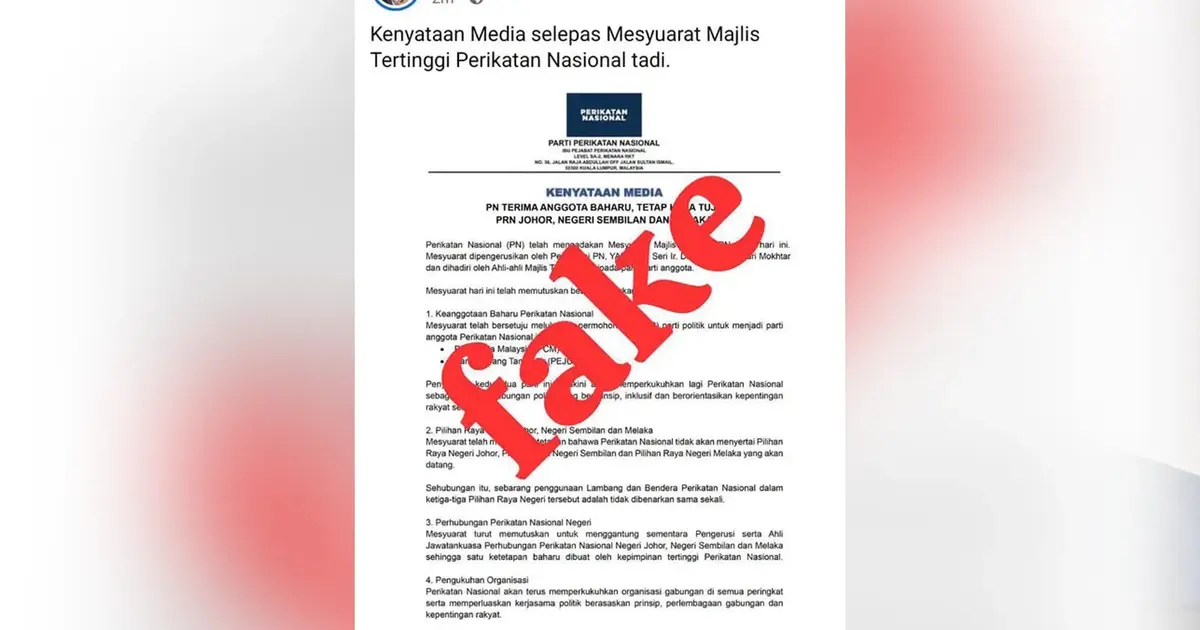
Perikatan Nasional moved swiftly to refute circulating claims that the opposition coalition intends to skip participation in three forthcoming state elections, branding the allegation a fabrication intended to mislead the public. The coalition's categorical denial underscores mounting concerns about the circulation of disinformation in Malaysia's political landscape, particularly as the country navigates a complex electoral calendar with multiple state-level contests on the horizon.
The false statement appears designed to undermine confidence in PN's commitment to electoral competition and contest the coalition's credibility among supporters and undecided voters. Such claims, regardless of origin, carry significant implications for PN's political positioning ahead of anticipated state contests, as electoral participation serves as a fundamental demonstration of a coalition's viability and determination to challenge incumbent administrations.
In Malaysia's multi-layered political system, state elections hold particular importance as pathways for opposition coalitions to build electoral momentum, consolidate regional power bases, and demonstrate administrative capacity. For PN, active participation across all available electoral opportunities remains strategically essential given the coalition's continued efforts to establish itself as a credible national alternative following the 2022 general election results.
The deliberate spreading of election-related misinformation reflects a troubling trend in Southeast Asian politics, where false narratives regarding candidate participation, polling schedules, or coalition strategies circulate rapidly through digital channels before fact-checking mechanisms can intervene. Malaysian voters have encountered repeated instances of such disinformation, creating an environment where distinguishing credible political information from fabricated claims demands increasing vigilance.
PN's swift response demonstrates the coalition's awareness of reputational damage such claims could inflict if left uncontested. In contemporary Malaysian politics, where social media amplification can rapidly transform fringe claims into seemingly widespread narratives, rapid denial and clarification have become essential components of political communication strategy. The coalition's emphatic rejection serves to protect its electoral credibility and signal to supporters that persistent engagement in electoral competition remains non-negotiable.
The emergence of this false statement coincides with a period of significant political realignment in Malaysia, where shifting coalitions and changing electoral alliances continue reshaping the competitive landscape. State elections represent crucial opportunities for PN to test its appeal beyond its core constituencies and potentially expand its electoral footprint across different regions and demographic groups.
For Malaysian voters seeking reliable information about upcoming electoral contests, the circulation of such fabrications underscores the importance of consulting official coalition statements and reputable news sources before accepting claims about political participation. The speed with which false narratives can proliferate demands that citizens exercise heightened discernment regarding political information, particularly regarding participation decisions that fundamentally shape electoral outcomes.
PN's position on participating in state elections carries broader implications for Malaysia's democratic health, as opposition participation ensures competitive contests that reflect genuine voter preferences rather than predetermined outcomes. The coalition's commitment to contesting available elections reinforces the principle that democratic alternation depends upon multiple political actors actively seeking voter support across different levels of government.
The incident also highlights ongoing challenges in regulating political communication during electoral periods, with enforcement mechanisms struggling to contain misinformation before it achieves significant circulation. Malaysia's media landscape, while increasingly diverse, still lacks comprehensive fact-checking infrastructure capable of immediately countering false claims as they emerge.
Looking forward, the trajectory of upcoming state elections will provide concrete evidence regarding PN's actual commitment to electoral participation, allowing voters to evaluate claims against demonstrated behavior. Such contests will reveal whether the coalition can effectively mobilize supporters, articulate compelling platforms, and translate electoral participation into meaningful political gains across different states and regions.
The false statement's circulation, regardless of its source or immediate impact, serves as a reminder that Malaysian politics continues navigating a complex information environment where coordinated campaigns, deliberate disinformation, and opportunistic fabrications intermingle with legitimate political debate and criticism. PN's refutation, while necessary, represents merely one response to a broader phenomenon requiring systemic attention from media institutions, civil society organizations, and political actors themselves.

