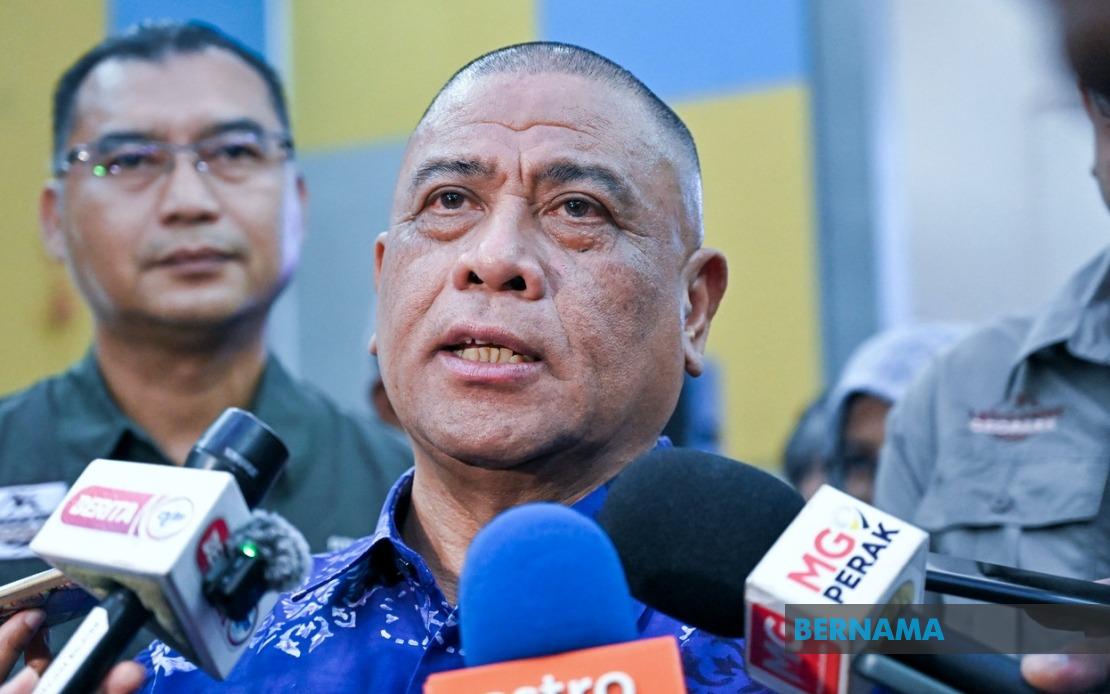
Perak's state government maintains that the proliferation of religiously unorthodox teachings across the state remains manageable, even as proponents increasingly exploit digital channels and operate from beyond national boundaries. Menteri Besar Datuk Seri Saarani Mohamad made this assertion while addressing concerns about the evolving threat landscape, emphasizing that multiple layers of monitoring and coordination are in place to detect and counter such movements before they gain ground.
The oversight mechanism relies substantially on intelligence gathered through the State Security Committee, which Saarani chairs personally, supplemented by regular updates from the Perak Islamic Religious Department (JAIPk) and the Perak Mufti Department. This institutional structure reflects the seriousness with which the state administration treats the issue, with leadership involvement signaling both commitment and awareness of the phenomenon's potential consequences. The integration of these bodies creates a framework designed to share information quickly and enable coordinated responses across religious, security and administrative domains.
Sultan Nazrin Shah, the constitutional head of Islam in Perak, is similarly kept abreast of developments, underscoring the issue's resonance at the highest levels of state governance. Recent briefings by Deputy Mufti Datuk Zamri Hashim and JAIPk Director Datuk Harith Fadzilah Abdul Halim to the Sultan demonstrate that intelligence flows to the monarchy, ensuring the throne maintains situational awareness on religious matters falling within its custodial purview. This alignment between executive and religious authority appears designed to present a unified front against theological deviation.
The state government's response protocol centers on systematic investigation of public complaints and concerns brought to JAIPk and the Mufti's office. Rather than relying on reactive enforcement alone, authorities emphasize adherence to established procedures before taking coercive action, suggesting a preference for proportionate responses that balance security concerns with due process. This measured approach reflects broader Islamic jurisprudential principles around evidence and procedure, though it also creates potential vulnerabilities if investigation timelines prove too lengthy.
At the federal level, Minister in the Prime Minister's Department (Religious Affairs) Senator Datuk Zulkifli Hasan has articulated a whole-of-government strategy aimed at curbing doctrinal aberrations across Malaysia. This approach enlists JAKIM, the federal Islamic development authority, alongside state religious departments in a coordinated effort that attempts to leverage both national and subnational resources. The emphasis on inter-agency cooperation suggests recognition that no single institution possesses sufficient reach or expertise to address the challenge independently.
The evolution of how deviant teachings propagate has fundamentally altered the enforcement landscape. Where such movements once operated through clandestine physical gatherings, they have increasingly migrated to social media platforms, encrypted messaging applications, and other digital spaces. This transition complicates detection and intervention because digital dissemination is inherently borderless, operates at scale, and can rapidly reach isolated individuals who might otherwise encounter no opportunities for radicalization. The speed at which digital content spreads vastly outpaces traditional monitoring capabilities designed for physical-world threats.
Contemporary purveyors of religiously unorthodox teachings have grown tactically sophisticated in their deployment strategies. Many now disguise their messaging within seemingly innocuous frameworks, marketing their content as self-improvement programmes, charitable enterprises, holistic wellness initiatives, or informal religious instruction. This camouflage makes identification substantially more challenging for enforcement agencies, as distinguishing between legitimate Islamic educational activities and those concealing heterodox teachings requires substantive theological expertise, cultural awareness, and investigative resources that many state agencies lack in adequate measure.
For Malaysian readers and policymakers, the Perak case illustrates broader vulnerabilities in the nation's capacity to police religious orthodoxy in an era of digital connectivity. The state's confidence in current control measures must be weighed against documented international examples where deviant teachings proliferated through precisely these digital channels before authorities achieved adequate intervention capacity. The challenge becomes especially acute in a multicultural democracy where religious policing must respect constitutional protections for freedom while preventing genuine threats to social cohesion and individual welfare.
The implications extend beyond Perak to other Malaysian states grappling with similar theological challenges. As border-crossing teachings and digital propaganda respect no administrative boundaries, federal-state coordination mechanisms become essential. However, the reported reliance on JAKIM and state departments may require significant capacity enhancement, particularly regarding digital forensics, theological analysis of online content, and counter-narrative capabilities that can engage adherents through the same platforms authorities seek to monitor.
Underlying these efforts sits a fundamental tension between prevention and persecution. Authorities must distinguish between teachings that genuinely threaten public order or individual welfare and those that merely diverge from mainstream Islamic interpretation while remaining theologically coherent and personally harmless. This distinction demands theological sophistication and careful judgment, qualities not universally present across enforcement agencies. Missteps risk alienating communities, driving movements further underground, or appearing religiously sectarian rather than genuinely protective of public welfare.

