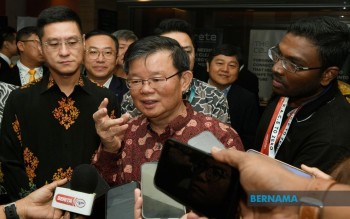
The Penang Climate Mitigation Fund has galvanized significant interest from the manufacturing sector, with 25 companies actively exploring financing opportunities under the scheme. Five applicants have already entered the formal assessment phase, according to Chief Minister Chow Kon Yeow, signalling strong momentum for the initiative launched under the Penang Green Industry Programme in collaboration with Alliance Bank.
The fund commenced operations with RM20 million in seed capital, split evenly between a RM5 million state government contribution and RM15 million from Alliance Bank. More significantly, stakeholders have committed to expanding the pool substantially, with pledges potentially pushing total resources to RM100 million. This scaling trajectory reflects growing recognition among both public and private sectors that environmental sustainability has become inseparable from economic competitiveness in Malaysia's manufacturing landscape.
Eligible small and medium enterprises alongside mid-tier companies can access preferential financing arrangements capped at RM500,000 per applicant. Critically, the fund structure extends beyond simple loan provision. Recipients benefit from bundled support encompassing sustainability assessments, expert advisory consultations, and grant components that reduce the effective cost of transitioning to greener operations. This comprehensive approach acknowledges that many manufacturers lack in-house expertise to navigate energy audits, renewable energy integration, and emissions accounting independently.
Penang's particular urgency around clean energy adoption stems from its outsized role in Malaysia's electronics manufacturing sector. The state generated RM436.9 billion in electrical and electronics exports during the previous financial year, representing approximately 68 percent of the nation's entire E&E export volume. This concentration creates both vulnerability and opportunity. Global multinational corporations increasingly embedding sustainability requirements into their supply chain specifications have transformed environmental credentials from peripheral concerns into central competitive factors.
Chow articulated this shift compellingly during his keynote address at the R.A.C.E To Zero: Penang Edition event, emphasizing that multinational purchasing decisions now routinely incorporate questions about energy sourcing alongside traditional metrics of talent availability, infrastructure quality, logistics efficiency, and operational costs. Companies explicitly demand renewable energy access and lower Scope 2 emissions from their suppliers. For Penang's manufacturing base, maintaining market access increasingly hinges on demonstrating credible progress toward cleaner energy profiles.
The state's broader energy transition strategy crystallized in the Penang Energy Framework unveiled in November 2024. This comprehensive roadmap targets dual objectives: reducing energy intensity across the economy by 25 percent while expanding renewable energy's share of the state's total energy mix to minimum 10 percent by 2030. These targets demand coordinated interventions across building codes, industrial practices, and public infrastructure. The ambitious renewable energy percentage proves particularly challenging given Penang's geographic constraints and high population density.
Rooftop solar installations emerge as the cornerstone solution within Penang's constrained landscape. New building regulations now mandate that commercial and industrial structures utilize at least 75 percent of available roof area for photovoltaic panels or alternatively meet renewable energy sourcing targets calibrated to individual TNB tariff classifications. This regulatory approach transforms roof space from wasted capacity into productive energy generation infrastructure. By making solar adoption mandatory rather than optional, the framework accelerates deployment while distributing transition costs across the development and operational phases of new construction.
Beyond rooftop installations, Penang authorities are exploring complementary renewable pathways. The Penang Water Supply Corporation is conducting feasibility studies for floating solar systems on existing dam surfaces, simultaneously addressing water management and energy generation. The Silicon Island development initiative incorporates renewable energy infrastructure from inception, including establishment of a Green Tech Park powered substantially by on-site solar capacity. These diversified approaches prevent excessive reliance on single technologies whilst creating demonstration sites that build investor confidence.
Energy efficiency represents the second pillar of Penang's decarbonization strategy, receiving equal emphasis alongside renewable deployment. The state is implementing energy intensity standards that enable systematic measurement, benchmarking, and progressive improvement of consumption patterns across facilities. Government and local authority properties face particular scrutiny, undergoing comprehensive assessments of their renewable energy and efficiency potential. For newly constructed public buildings, the target mandates that at least five percent of total energy consumption derives from renewable sources, with existing facilities encouraged toward equivalent standards.
Penang's policy architecture aligns deliberately with federal initiatives, particularly the National Energy Efficiency Action Plan 2.0 championed by the federal government. That national framework targets an 11.6 percent reduction in energy demand by 2035 through efficiency gains and behavioural shifts. By harmonizing state-level policies with federal objectives, Penang amplifies policy effectiveness whilst eliminating contradictions that might create implementation confusion. This vertical coherence signals to both domestic and international investors that Malaysia's energy transition enjoys consistent backing across governance levels.
The Climate Mitigation Fund represents more than financial mechanism; it embodies recognition that sustainable industrial transformation requires deliberate state support infrastructure. Manufacturers contemplating expensive facility upgrades, solar installations, and energy management systems face genuine barriers to autonomous investment. Preferential financing reducing capital requirements, combined with technical advisory services addressing implementation complexity, substantially lowers participation barriers. Early deployment stages will generate case studies demonstrating feasibility, economic returns, and operational improvements that catalyze broader sectoral adoption.
For Malaysian stakeholders beyond Penang, this initiative offers instructive lessons about reconciling environmental objectives with manufacturing competitiveness. The fund's design acknowledges that sustainability transitions impose real transition costs, yet demonstrates that strategic state facilitation can align private sector interests with public environmental goals. As global supply chains increasingly penalize carbon-intensive operations, similar financing mechanisms may prove essential for manufacturing hubs across Southeast Asia seeking to maintain export market access while progressing toward genuine emissions reductions.

