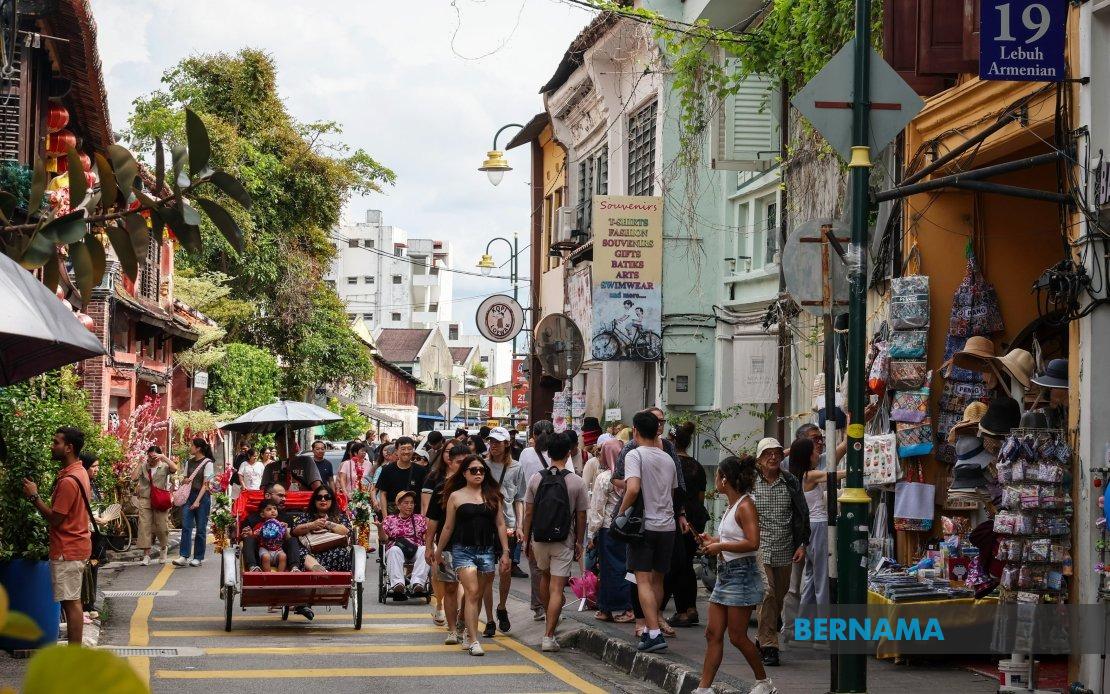
Penang's authorities have moved swiftly to address public safety concerns after a dramatic incident on Armenian Street in George Town yesterday, where structural debris from a heritage shophouse cascaded onto tourists, leaving two visitors from Sri Lanka injured. The state government's response signals a broader recognition that preserving the island's cherished architectural legacy cannot come at the expense of visitor and resident safety—a delicate balance that heritage-dependent economies like Penang must continually navigate.
State Local Government and Town and Country Planning Committee chairman Jason H'ng Mooi Lye announced that an independent structural engineer will be engaged in consultation with the National Heritage Department to conduct a comprehensive evaluation of heritage buildings throughout Penang. This assessment will systematically identify properties at risk and determine which buildings require immediate intervention to prevent further incidents. Once this study concludes, the Penang Island City Council will have the authority to issue formal notices to property owners, compelling them to undertake restoration and reinforcement works as deemed necessary by the structural assessment.
The incident itself provides a stark illustration of the challenges facing heritage preservation. Two tourists, identified as Mohamad Ammtar, 66, and his wife Fatimah, 55, suffered injuries when wooden beams and concrete fragments fell from the structure. Initial investigations traced the collapse to termite damage—a common but often underestimated threat to wooden elements in tropical heritage buildings. While the male victim has since been discharged from Penang Hospital following treatment, his wife remained hospitalized and required a computerised tomography scan to determine the full extent of her injuries.
The Armenian Street incident underscores a tension inherent in heritage tourism. George Town's World Heritage status, granted in 2008, has been transformative for the state's economy and cultural profile, yet it also creates obligations. Historic buildings, by definition, embody materials and construction techniques of their era—wooden beams, lime mortar, and traditional brick—components that, while architecturally authentic, can deteriorate in ways that threaten structural integrity. For a destination that draws international visitors specifically to experience authentic heritage, this paradox demands sophisticated solutions.
H'ng's statement that conservation efforts must not compromise safety indicates a pragmatic evolution in Penang's heritage management philosophy. He acknowledged that while restoration work must preserve original architectural character, using more durable and weather-resistant materials—particularly as replacements for wood that has become compromised—represents a necessary adaptation. This approach differs from rigid purist conservation, which would insist on matching original materials regardless of performance. In Southeast Asia's humid, tropical climate, such flexibility may prove essential for sustaining both heritage and safety simultaneously.
The state tourism apparatus has also mobilized in response. Wong Hon Wai, chairman of the State Tourism and Creative Economy Committee, directed both George Town World Heritage Incorporated and the Penang Island City Council to issue safety advisories to heritage property owners. These communications serve a dual purpose: alerting owners to potential risks within their properties while simultaneously signaling to the tourism industry and international visitors that safety remains paramount. For Penang, whose economy relies substantially on heritage tourism revenue, such proactive messaging helps maintain confidence in the destination.
The timing of this intervention matters considerably for the broader Southeast Asian heritage tourism sector. As regional destinations compete to attract international visitors—particularly post-pandemic recovery efforts—incidents like the Armenian Street collapse can generate negative publicity disproportionate to their frequency. By responding comprehensively rather than dismissively, Penang demonstrates that heritage management and visitor safety are complementary objectives rather than conflicting demands. This approach may serve as a model for other heritage-designated cities in Malaysia and the region facing similar challenges with aging building stocks.
Implementing a state-wide structural survey will require significant coordination and resources. The appointment of independent engineers, the assessment of what may number in the hundreds of heritage properties, and the subsequent notification and supervision of remedial works represents a substantial undertaking. Yet the alternative—reactive management responding only to incidents—proves more costly in both human and economic terms. A proactive audit establishes a baseline of building conditions and prioritizes interventions based on risk assessment rather than crisis response.
For property owners of heritage buildings, the upcoming notices may impose financial and logistical burdens. However, the state's willingness to engage with the National Heritage Department rather than imposing unilateral demands suggests a collaborative approach. Building owners who invest in compliant restoration work may also benefit from heritage preservation incentives that several Malaysian states offer, including potential tax breaks or tourism development opportunities. The framing of safety assessment as a partnership exercise, rather than punitive enforcement, increases the likelihood of willing compliance.
The broader implications extend beyond Penang's borders. Malaysia's other World Heritage sites—including the historic cities of Melaka and the Georgetown-Penang component of the Melaka and George Town Historic Cities—face analogous challenges. A successful, well-documented safety assessment program in Penang could inform best practices across the nation. Given that heritage tourism contributes meaningfully to Malaysia's cultural economy and regional soft power, ensuring that visitors feel secure in these destinations strengthens the entire sector.
Looking forward, Penang authorities will need to establish ongoing maintenance protocols beyond the initial assessment phase. Heritage building preservation is not a one-time intervention but a continuous process. Regular inspections, particularly in tropical climates where deterioration accelerates, combined with owner education programs and technical support for appropriate repairs, will be necessary to sustain both safety and authenticity. The Armenian Street incident, while unfortunate, has catalyzed a systematic approach that—if executed thoughtfully—may ultimately strengthen George Town's position as a premier heritage destination while genuinely protecting those who inhabit and visit its historic streets.

