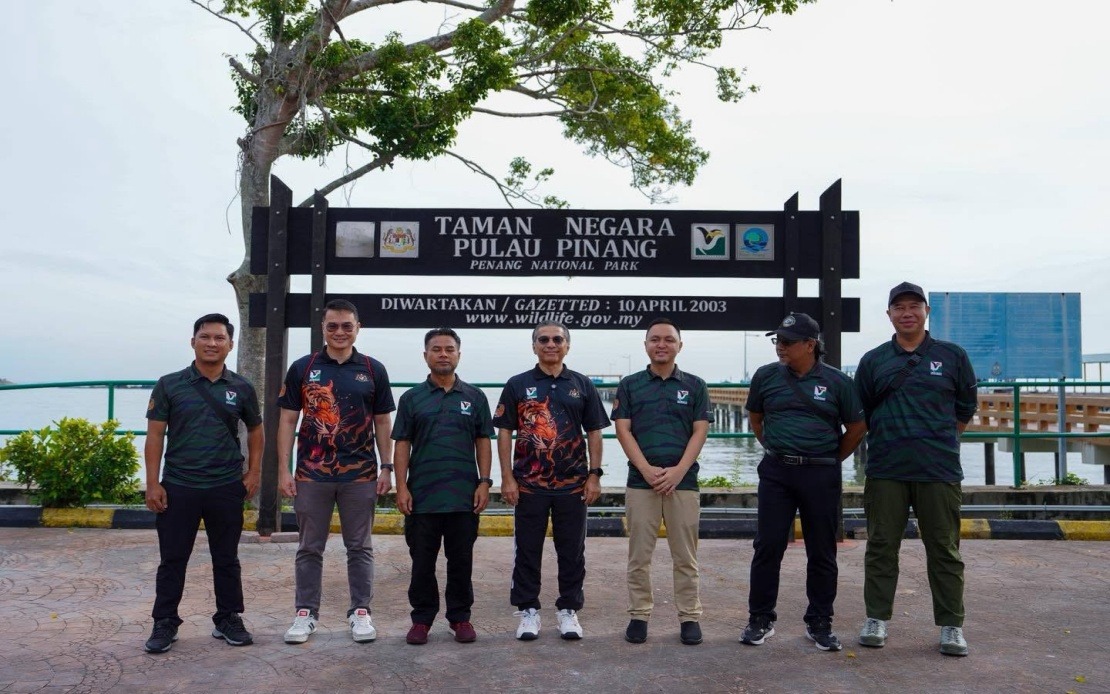
Penang National Park in Teluk Bahang represents one of Malaysia's most ecologically significant areas, yet its future preservation increasingly depends on mobilizing public support rather than relying solely on traditional conservation methods. During a recent inspection of the park, Deputy Minister of Natural Resources and Environmental Sustainability Syed Ibrahim Syed Noh underscored this strategic reorientation, signaling that the Ministry of Natural Resources and Environmental Sustainability (NRES) views community participation as integral to safeguarding the nation's natural heritage. The park encompasses a remarkable diversity of habitats—from dense forest to coastal wetlands—alongside wildlife sanctuaries and a meromictic lake, each component contributing to an intricate ecological web that demands sophisticated management approaches.
The ecosystem within Penang National Park defies easy categorization because of its structural complexity. Forests provide canopy coverage and breeding grounds for numerous species, while coastal margins support distinct communities adapted to tidal fluctuations and saline conditions. The meromictic lake—a water body with layers that do not naturally mix—represents a rare geological feature that creates specialized niches for adapted organisms. This layering of different habitat types within a relatively compact area means that conservation decisions affecting one zone inevitably ripple through others, requiring holistic management frameworks that consider interconnections rather than isolated protection of individual features.
Syed Ibrahim's field visit included consultation with the Penang Department of Wildlife and National Parks (PERHILITAN), whose staff provided technical briefings on current management practices and ecosystem dynamics. The delegation then conducted a coastal survey by boat, allowing direct observation of how marine and terrestrial systems interface. This hands-on assessment reflected a broader administrative philosophy—that effective policy requires grounded understanding of actual conditions rather than reliance on desk-bound analysis alone. Such field-based evaluation becomes increasingly important as Malaysia develops more sophisticated protected area networks that must balance preservation with sustainable use.
A particular focus of the visit centered on the Turtle Conservation Centre at Kerachut Beach, operated by the Department of Fisheries Malaysia. This facility addresses the conservation needs of Green Turtles and Olive Ridley Turtles, species that depend on Penang's beaches for nesting despite facing multiple threats including coastal development, light pollution, and marine habitat degradation. The existence of dedicated breeding and education infrastructure demonstrates that conservation in Malaysia now extends beyond simply designating land as off-limits; it involves active intervention, monitoring, and public awareness. For Malaysian policymakers, the turtle center exemplifies how conservation can generate employment and attract educational tourism while producing measurable conservation outcomes.
Education emerged as a central theme in Syed Ibrahim's remarks, with particular emphasis on how direct experience shapes public attitudes toward nature. The deputy minister noted that interactive learning opportunities enable citizens—particularly younger generations—to develop genuine appreciation for biodiversity rather than abstract environmental concern. Entopia Penang, visited during the inspection, represents this educational model in practice, offering experiences that connect visitors with conservation science through engaging formats. Such initiatives matter considerably for Malaysia because widespread environmental literacy strengthens political support for conservation policies and creates constituencies that resist pressures to convert protected areas for development.
The NRES position emphasizes that responsible ecotourism can serve dual functions: generating revenue streams that justify conservation investment while simultaneously creating incentives for local communities to support protection rather than exploitation. When managed carefully, ecotourism creates economic opportunities for guides, accommodation providers, and service workers, thereby distributing conservation's benefits beyond government agencies to local populations. This economic logic becomes especially powerful in regions where alternative livelihoods remain limited and where communities might otherwise view protected areas as restrictions imposed from above without tangible local benefit.
Penang's biodiversity challenges reflect broader patterns across Southeast Asia, where rapid urbanization, agricultural expansion, and coastal development threaten ecosystems at accelerating rates. The state's position as both a developed urban center and a location of significant ecological value creates particular tensions—residents and businesses compete for space with wildlife, while tourism pressures mount. How Penang resolves these competing claims will provide lessons for other Malaysian states and regional neighbors facing analogous dilemmas between economic development and environmental preservation. The emphasis on community engagement suggests authorities recognize that fortress conservation—simply excluding people from protected areas—has proven insufficient across the region.
The meromictic lake feature warrants particular attention because of its rarity and ecological significance. Few such lakes exist globally, and their unusual stratification creates scientific opportunities for studying microbial ecology and biogeochemistry. Penang's meromictic lake thus possesses value extending beyond recreation or wildlife habitat; it represents a natural laboratory for understanding fundamental ecological processes. Protecting such features requires public understanding of their uniqueness and significance, since communities are more likely to support constraints on development when they grasp what they're protecting and why.
Implementing community-centered conservation requires institutional coordination across multiple agencies—wildlife departments, fisheries authorities, local governments, and educational institutions must align their objectives and share information. Syed Ibrahim's statement and field visit appear designed partly to signal high-level commitment to such coordination, demonstrating that biodiversity conservation ranks among government priorities deserving ministerial attention. This signaling matters because it can influence bureaucratic resource allocation and encourage officials at lower administrative levels to prioritize conservation-community partnerships.
For Malaysia's biodiversity objectives, the Penang approach suggests that future conservation success will depend on treating the public as stakeholders in protection rather than merely as external beneficiaries of preserved nature. Educational initiatives, managed tourism, and community employment create multiple pathways for people to develop interests in conservation beyond simple environmental philosophy. This pragmatic approach acknowledges that while some conservation motivation stems from ethical concern for nature, durable protection also requires alignment with economic self-interest and cultural identity. Penang's experience will likely influence how other Malaysian states design their own conservation programs, making the principles articulated during this field visit potentially consequential for national biodiversity outcomes.

