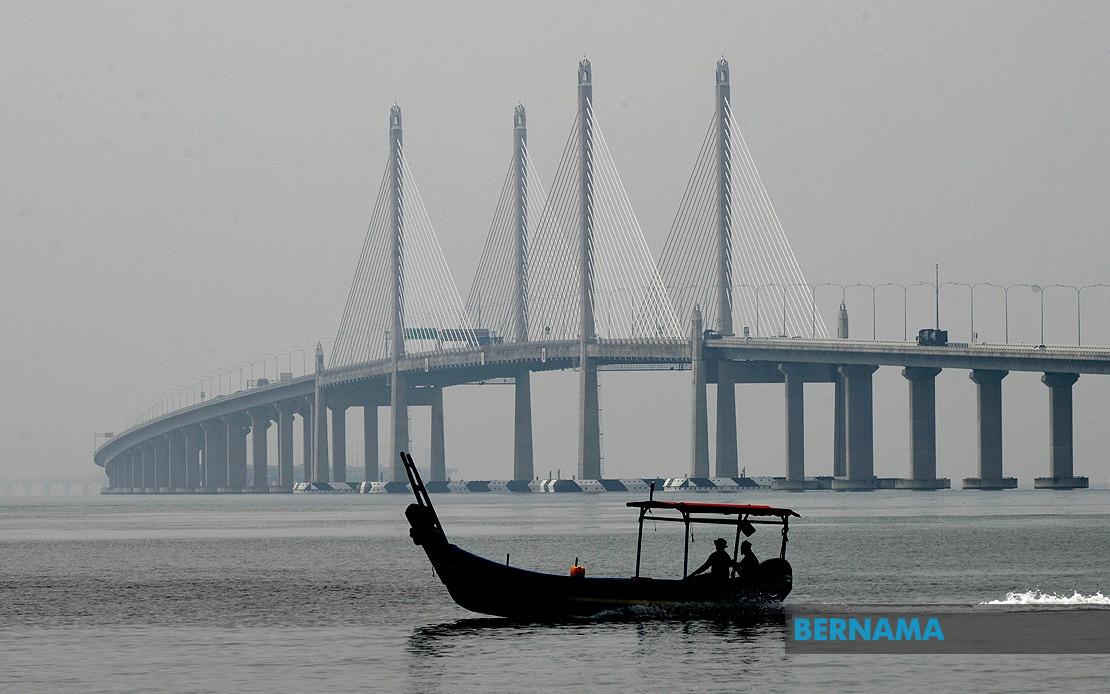
Penang authorities are preparing for discussions aimed at resolving tensions between security requirements and economic hardship created by restrictions on fishing activities beneath two major bridge crossings linking the island to the mainland. The deliberations, set to commence next week, will bring together stakeholders to examine how enforcement of the fishing ban can be refined without compromising safety protocols or leaving maritime-dependent communities worse off.
Datuk Rashidi Zinol, chairman of the Penang Rural Development, Agro-technology and Food Security and Entrepreneurship Committee, disclosed that the initiative emerged from recent consultations with fishing boat and tourist boat operators who raised alarm about the practical consequences of the policy. These industry representatives outlined how the prohibition has created measurable downturn in activity and revenue, prompting the committee to explore whether a more calibrated implementation is feasible.
The two bridges in question—the Penang Bridge and the Sultan Abdul Halim Mu'adzam Shah Bridge, commonly referred to as the Second Penang Bridge—occupy strategic positions as National Key Points, formally designated as restricted and prohibited areas under the Protected Areas and Protected Places Act 1959. This classification reflects their critical infrastructure status and necessitates robust security measures to protect against potential threats. The challenge confronting policymakers is reconciling this legitimate security imperative with the economic realities of communities whose traditional livelihoods depend on accessing these waters.
Beyond the immediate operators of fishing and tour boats, the ripple effects of the restriction extend across a substantial supply chain. Equipment suppliers, ice producers, food vendors, and numerous small businesses dependent on servicing the maritime sector have experienced declining demand. Rashidi acknowledged this broader economic footprint when he noted that the impact transcends the primary fishing community and encompasses the entire ecosystem of supporting businesses that collectively employ many workers and sustain household incomes across Penang.
The core tension underlying these discussions reflects a broader pattern in rapidly developing regions where security concerns, environmental management, and economic livelihoods frequently collide. Maritime zones adjacent to critical infrastructure present particularly acute challenges because they involve coordinating multiple government agencies with different mandates—coastal security, environmental protection, port authority operations, and socioeconomic development—while simultaneously protecting vulnerable populations whose alternatives for income generation are limited.
Rashidi's commitment to seeking a "balanced approach" signals that the state government recognizes the legitimacy of both sides of this equation. Rather than simply maintaining the status quo or capitulating entirely to business pressure, the proposed consultations suggest an attempt to identify whether modifications to enforcement—perhaps through designated fishing windows, specific permissible zones, enhanced security protocols for permitted activities, or staged implementation—might be workable. Such solutions require technical expertise to assess whether they adequately maintain security while restoring viable economic access.
The maritime sector's particular vulnerability in Penang stems from the state's historical dependence on fishing and fishing-related industries. While Penang has diversified significantly into manufacturing, services, and tourism, coastal communities have not benefited equally from that transition. Many fishing families lack capital to shift into entirely different occupations or geographical relocation. This demographic reality means that restrictions affecting water access carry disproportionate weight for those communities, warranting careful consideration of mitigation measures.
The forthcoming meetings will necessarily involve representatives from multiple quarters: the boat operators directly affected; local government bodies responsible for economic development; security and police authorities tasked with protecting National Key Points; port and maritime regulatory bodies; and possibly environmental agencies with interest in coastal management. Achieving consensus across such diverse interests requires negotiation skills and creative problem-solving capacity, particularly when safety cannot be compromised.
For Malaysia more broadly, this situation encapsulates a contemporary governance challenge facing many Southeast Asian nations. As countries strengthen security infrastructure and designate strategic zones requiring heightened protection, managing the collateral economic impact on local populations becomes increasingly important for social stability and public acceptance of security measures. Solutions that merely impose restrictions without addressing livelihood consequences risk breeding resentment and non-compliance.
The outcome of Penang's deliberations may establish precedent for how other Malaysian states and Southeast Asian countries approach similar conflicts. If the discussions yield a model that successfully maintains security while preserving economic access through thoughtful operational adjustments, the approach could prove instructive elsewhere. Conversely, if the exercise merely confirms that security imperatives must override economic concerns without negotiation, that conclusion itself carries implications for how dependent communities view government responsiveness to their circumstances.
The timing of these consultations is significant given increased scrutiny globally around critical infrastructure protection following various security incidents. Penang's attempt to thread this needle—acknowledging security realities while seeking feasible accommodations for affected livelihoods—demonstrates pragmatic governance. The ultimate success depends on whether proposed solutions can genuinely address security concerns while restoring sufficient economic viability for maritime workers, or whether fundamental conflicts make any middle ground illusory.

