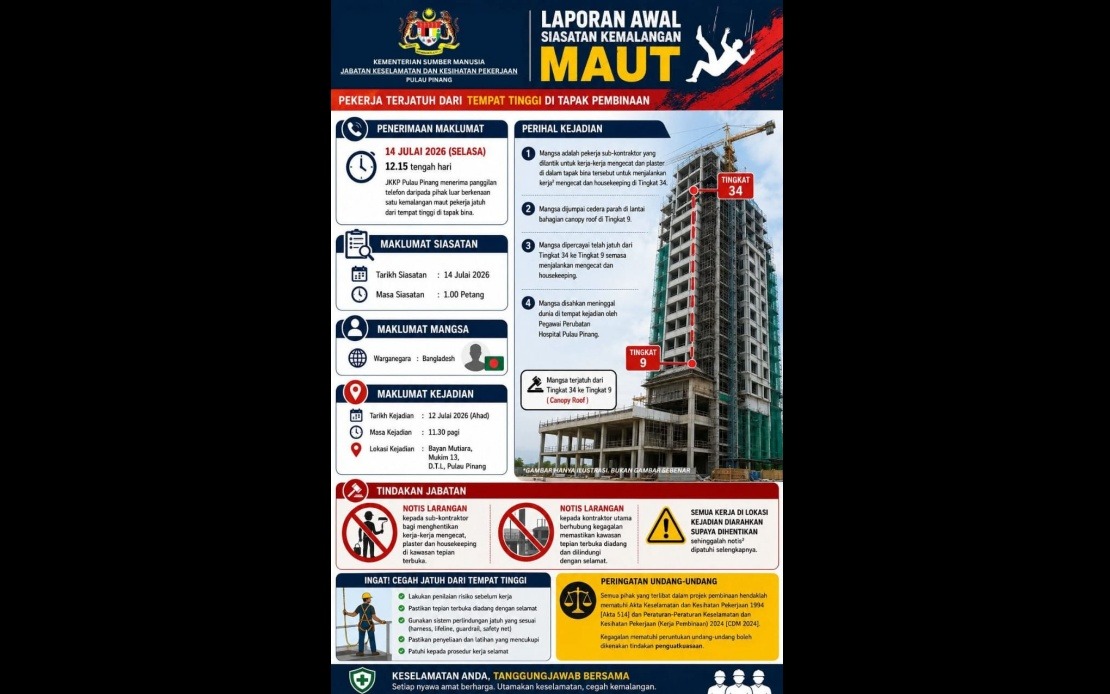
Penang's Department of Occupational Safety and Health has launched an investigation into the fatal fall of a Bangladeshi worker at a high-rise construction project in the Bayan Mutiara area of George Town. The incident, which occurred on July 14, claimed the life of a worker employed by a subcontractor handling finishing works on the site, raising fresh concerns about safety compliance in Malaysia's busy construction sector.
According to Penang DOSH director Hairozie Asri, the department received notification of the incident from an external party at 12:15 pm, prompting the immediate dispatch of investigating officers to the location. The response followed standard protocols for workplace fatalities, with the focus on determining exactly how the accident transpired and what preventative measures may have been overlooked.
The victim was working on the 34th floor of the building, where he was engaged in painting, plastering, and housekeeping activities as part of the subcontracting team. Investigators discovered that despite working at such a significant height, the worker somehow fell approximately 25 floors before coming to rest on the canopy roof at Level 9. Medical personnel from Penang Hospital subsequently attended the scene, where they pronounced the worker deceased on arrival.
This tragic incident underscores the heightened vulnerability of migrant workers in Malaysia's construction industry, who frequently undertake hazardous roles with varying degrees of safety oversight. Bangladeshi workers represent a significant portion of Malaysia's foreign labour force in construction, often filling positions that expose them to considerable occupational risks. The circumstances of this particular case—a worker falling such a dramatic distance—suggest potential gaps in fall prevention systems that should have been mandatory at such heights.
Immediate regulatory action followed the discovery of the fatality. DOSH issued a prohibition notice to the subcontractor, effectively banning all painting, plastering, and housekeeping work in areas with open edges until safety measures meet departmental requirements. A similar prohibition notice was also directed to the main contractor overseeing the broader project. These orders represent binding legal instruments that prevent work resumption without explicit compliance verification.
All construction activities connected to the accident site have been suspended indefinitely, halting progress on what is presumably a significant commercial or residential development in one of Penang's prominent districts. This cessation serves multiple purposes: it prevents further potential incidents while the investigation proceeds, it forces a comprehensive safety audit of systems and procedures, and it signals regulatory intent to enforce workplace safety standards without exception.
The incident reflects broader structural challenges within Malaysia's construction safety framework. While DOSH maintains enforcement powers and can issue prohibition notices, questions persist about the adequacy of initial site inspections and safety briefings, particularly for migrant workers who may face language barriers or pressure to accept unsafe working conditions. The fall from such an extreme height suggests either catastrophic failure of personal protective equipment and fall arrest systems, or potentially the complete absence of such safeguards in the open-edge work areas.
For Penang's construction industry, this tragedy arrives during a period of significant building activity, with multiple high-rise projects transforming the urban landscape. The regulatory response by DOSH sends a clear message that safety compliance is non-negotiable, and that contractors—whether primary or subcontracted—will face serious consequences for lapses that result in worker deaths. The financial and schedule implications of work stoppages may incentivise more rigorous safety protocols across the sector.
The investigation will likely examine multiple factors including whether proper fall arrest systems were installed and maintained, whether the worker received adequate safety training and induction, and whether supervision was adequate for such inherently dangerous work. Additionally, authorities will scrutinise whether the subcontractor possessed appropriate certifications and insurance, and whether the main contractor exercised adequate oversight of subcontracted operations.
This incident contributes to an ongoing conversation in Southeast Asia about the protection of migrant workers, who constitute a vulnerable demographic despite making substantial contributions to host economies. Malaysia's reliance on foreign labour in construction means that strengthening safety cultures and enforcement mechanisms directly protects a substantial portion of the workforce. The case also highlights how individual tragedies can catalyse systemic improvements when regulators respond swiftly and decisively.
Stakeholders including worker advocacy groups, construction industry associations, and government agencies will likely view this incident through the lens of occupational safety trends. The Penang case demonstrates that even major urban projects can experience fatal lapses, reinforcing the importance of continuous vigilance and regular safety audits. Moving forward, the investigation findings may influence safety standards, inspection protocols, and enforcement approaches across Malaysia's construction sector, with implications extending throughout the region's developing economies where similar safety challenges persist.
As the investigation progresses, the findings will be scrutinised not only by regulators but also by industry observers seeking lessons that might prevent similar tragedies. The tragic loss of this Bangladeshi worker underscores the human cost of inadequate safety systems and the critical importance of treating occupational health and safety as a foundational operating principle rather than a regulatory checkbox.

