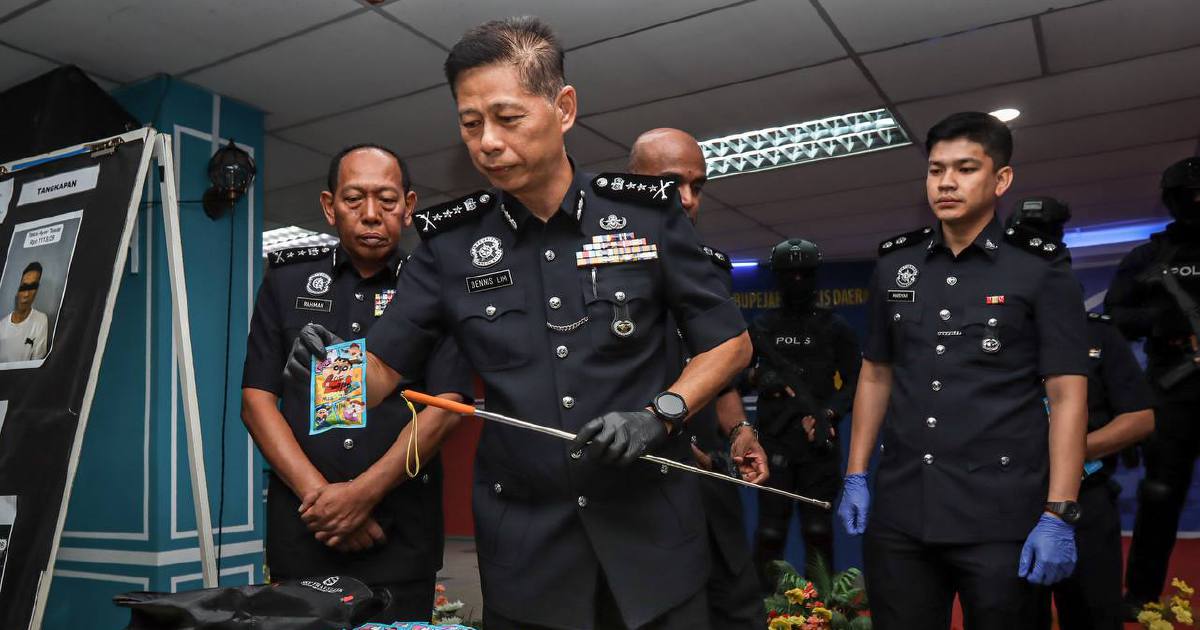
Authorities in Penang have made a substantial seizure in their ongoing fight against synthetic drug trafficking, recovering more than three kilograms of MDMA—commonly known as ecstasy—during an enforcement operation conducted in Teluk Air Tawar on Sunday. The contraband, estimated at approximately RM470,000 in street value, represents a significant disruption to the regional narcotics supply chain and marks another success for local law enforcement in combating the proliferation of party drugs across the northern states.
The raid resulted in the arrest of a suspect, though additional details regarding the individual's background and suspected involvement in the trafficking network remain under investigation. Police have indicated that the case falls within their broader crackdown on organised drug distribution operations that have increasingly targeted urban and semi-urban areas throughout Penang and the surrounding region. The swift execution of the operation underscores the intelligence-gathering capabilities developed by state narcotics units in recent years.
Ecstasy, or MDMA, has emerged as a persistent concern across Malaysia's recreational drug market, particularly in urban centres where nightlife and entertainment venues attract young users. Unlike heroin or methamphetamine, which remain the traditional focus of enforcement efforts, synthetic drugs like MDMA have created a distinct enforcement challenge due to their popularity among more affluent demographics and their integration into the party and festival culture. The relatively high street value of confiscated quantities reflects both the demand and the profit margins involved in this particular trafficking niche.
Teluk Air Tawar, a district within Penang, has experienced increased police attention in recent months as part of a widened strategy to address drug-related crime in residential and commercial areas. The selection of this location for the raid suggests that intelligence operatives had identified the site as a potential distribution point or storage facility within a larger trafficking network. Such precision in targeting reflects the evolution of drug enforcement methodology beyond simple street-level interdiction toward dismantling organised supply chains.
The RM470,000 valuation of the seized MDMA provides insight into the lucrative nature of synthetic drug trafficking in Malaysia. These price points, which include wholesale markups substantially above international procurement costs, demonstrate why such operations remain attractive to organised crime groups despite the severe penalties under Malaysian drug laws. The Dangerous Drugs Act mandates punishment ranging from lengthy imprisonment to capital punishment for trafficking offences involving quantities exceeding specified thresholds, yet the profit potential continues to draw perpetrators willing to accept the risks.
This seizure contributes to a pattern of drug enforcement activity that has intensified throughout 2024 across multiple Malaysian states. Penang, as a major port and urban centre with significant cross-border connectivity to Thailand and substantial international tourist traffic, represents a strategic location within regional drug distribution networks. The northern corridor's geographic positioning makes it both a transit point for drugs moving south toward the Klang Valley and Johor, and a destination market for end-user consumption.
The arrest and forthcoming investigation will likely reveal details about the operational structure of this particular trafficking cell, including relationships with higher-level distributors and downstream retail networks. Such intelligence typically proves invaluable to police in mapping larger criminal organisations and identifying additional targets for enforcement action. Collaboration between Penang police and federal narcotics units often accelerates the process of identifying connections across state lines.
For Malaysian readers, these enforcement successes offer reassurance that substantial resources remain dedicated to narcotics control, though experts acknowledge that supply reduction through seizures must be complemented by demand-side interventions and rehabilitation services. The sheer quantity of drugs intercepted in individual operations suggests that the total volume reaching consumers remains substantial despite high-profile busts. Public awareness campaigns targeting youth, particularly regarding synthetic drugs and their health risks, remain critical components of holistic drug policy alongside law enforcement.
The broader regional context is significant: Southeast Asia continues to grapple with synthetic drug manufacturing, particularly methamphetamine and fentanyl production in border areas and within Myanmar. While MDMA is less commonly manufactured within the region compared to amphetamines, the market for party drugs remains sufficiently profitable that trafficking networks continue to operate across national boundaries. Penang's enforcement success reflects similar operations occurring throughout Thailand, Singapore, and Indonesia as regional authorities coordinate increasingly sophisticated responses.
Government officials in Penang have signalled their commitment to sustained operations against drug trafficking organisations, indicating that resources will continue to flow toward intelligence gathering and enforcement activities. The Police Special and Tactical (PSAT) unit and narcotics divisions maintain regular operations designed to disrupt distribution networks before drugs reach street level. However, the challenge of addressing drug-related crime extends beyond enforcement alone, requiring sustained investment in community education, treatment facilities, and economic opportunities in areas vulnerable to drug trade infiltration.

