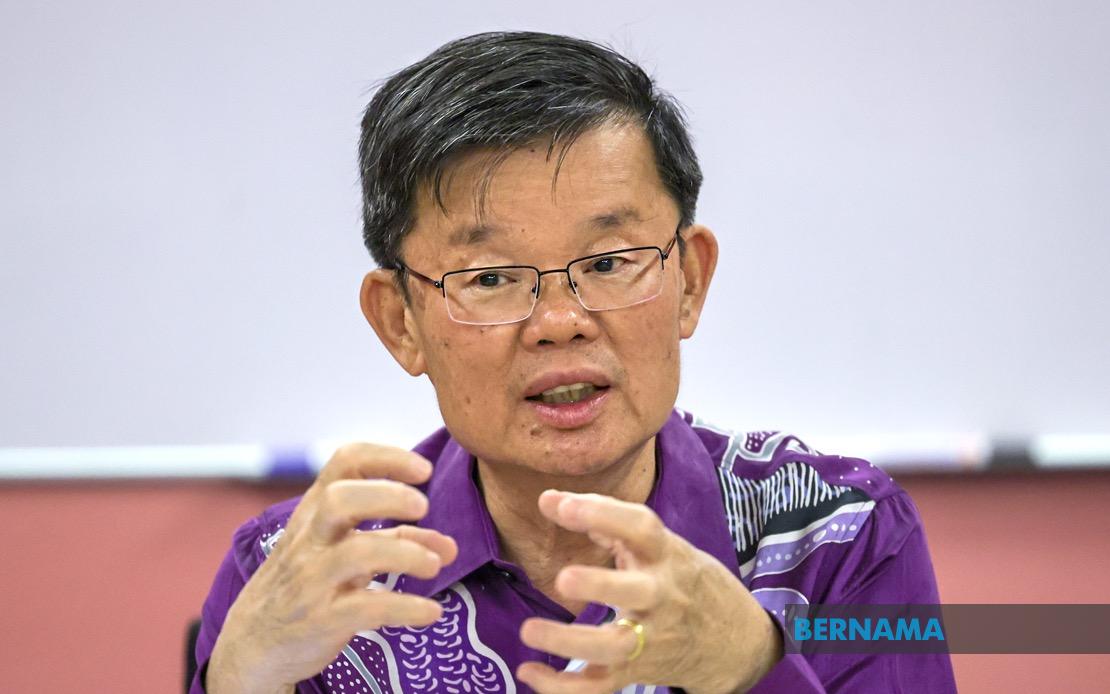
Penang's ruling Pakatan Harapan coalition will maintain the presence of its Barisan Nasional partner in the state executive council through the next general election, Chief Minister Chow Kon Yeow announced following a party meeting in George Town on August 8. The decision underscores the continuation of the Unity Government framework that emerged from the 2023 state poll, when both coalitions jointly secured command of the state assembly. This commitment to preserving the power-sharing arrangement signals that Penang's political leadership believes the existing partnership remains viable and mutually beneficial despite the approaching electoral cycle.
The retained BN executive councillor is Datuk Rashidi Zinol, who chairs the State Rural Development, Agrotechnology and Food Security Committee. His presence in the cabinet reflects a deliberate strategy by PH to demonstrate continuity and cross-coalition cooperation on key development initiatives affecting rural communities across the state. The decision was formalised at the Penang PH meeting and represents a calculated move to avoid the instability that could arise from prematurely dismantling the power-sharing framework ahead of the 16th general election.
Chow's explanation for the decision provides insight into PH's strategic calculus. The coalition believes that maintaining cooperation with BN component parties creates space to advance what it describes as a reform agenda central to PH's political identity. Rather than viewing the BN councillor's continued presence as a concession, PH leadership frames it as an opportunity to consolidate achievements and demonstrate that ideological differences need not prevent practical governance. This narrative matters significantly in Malaysian politics, where voters increasingly evaluate coalitions based on their ability to deliver stable administration and tangible benefits.
The timing of this announcement reflects lessons drawn from recent electoral setbacks in other states. Results from the Johor and Negeri Sembilan state elections prompted PH to conduct deeper analysis of its performance across all constituencies in Penang. This forensic approach to understanding voter behaviour acknowledges that the 2023 victory, while substantial, cannot be taken as an indicator of guaranteed success in the forthcoming general election. The coalition recognises that state-level contests can reveal shifts in public sentiment that foreshadow broader national trends.
Penang PH's strategy for the general election incorporates several modernisation elements aimed at broadening appeal and engagement. The coalition intends to strengthen its political messaging by openly acknowledging shortcomings and areas requiring improvement, a departure from the typical Malaysian political approach of emphasising accomplishments while downplaying difficulties. This transparent posture may resonate with increasingly discerning voters who value honesty about governance challenges. Simultaneously, PH plans to leverage digital platforms more effectively, recognising that online spaces have become crucial battlegrounds for political discourse, particularly among younger demographics.
A particular focus of the coalition's campaign preparation involves engaging with Undi18 voters—young citizens who gained voting rights through the lowering of the electoral age. This demographic represents a significant expansion of the electorate, particularly in urban constituencies where Penang has traditionally performed well. Understanding and mobilising this cohort requires different messaging approaches and engagement strategies than those effective for older voters, presenting both opportunities and risks for established parties.
Chow emphasised that despite confidence in PH's foundational strengths—the stability of state administration, institutional integrity, economic expansion efforts, and investor attraction—complacency poses a genuine threat. He highlighted the volatile nature of public perception, noting that voter sentiment can shift more rapidly than the underlying facts of governance performance. This acknowledgement reveals sophisticated political understanding; Malaysian voters have demonstrated their willingness to change electoral preferences when dissatisfied, regardless of concrete improvements in services or economic conditions.
The 2023 Penang state election established the numerical foundation for the current Unity Government arrangement. DAP's sweep of all 19 contested seats provided PH with dominant representation, complemented by PKR's seven seats and Amanah's single seat, while BN secured two seats. This composition gives PH overwhelming control of the state assembly and executive decision-making, yet the decision to retain the BN councillor reflects a choice to preserve coalition architecture rather than a necessity imposed by numerical realities. Such restraint signals confidence in the value of maintained relationships.
For observers across Southeast Asia, Penang's political trajectory offers instructive lessons in post-election coalition management. The state has demonstrated that ideologically distinct parties can govern together when united by commitment to administrative competence and mutual electoral interest. However, the approaching general election will test whether such arrangements can survive the renewed competitive pressures of a national campaign, when parties face incentives to differentiate themselves and mobilise distinct voter bases.
The decision also carries implications for PH's positioning in national politics. By sustaining the Unity Government in Penang rather than attempting a more confrontational approach toward BN, the coalition demonstrates pragmatism and willingness to prioritise governance stability over short-term partisan advantage. This approach contrasts with more adversarial political models and may influence how Malaysian voters evaluate PH's suitability for national leadership, where such coalition-building skills would prove essential.
As campaign machinery gradually activates across the country, Penang's political leadership has essentially signalled that the 2023 settlement remains operative and valuable. Whether this partnership survives the intensity of a general election campaign remains uncertain, but the deliberate choice to maintain it through 16th GE preparations indicates that both PH and BN see mutual benefits in the arrangement. The state's experience will likely inform broader national discussions about coalition politics and the possibilities for power-sharing beyond traditional zero-sum electoral competition.

