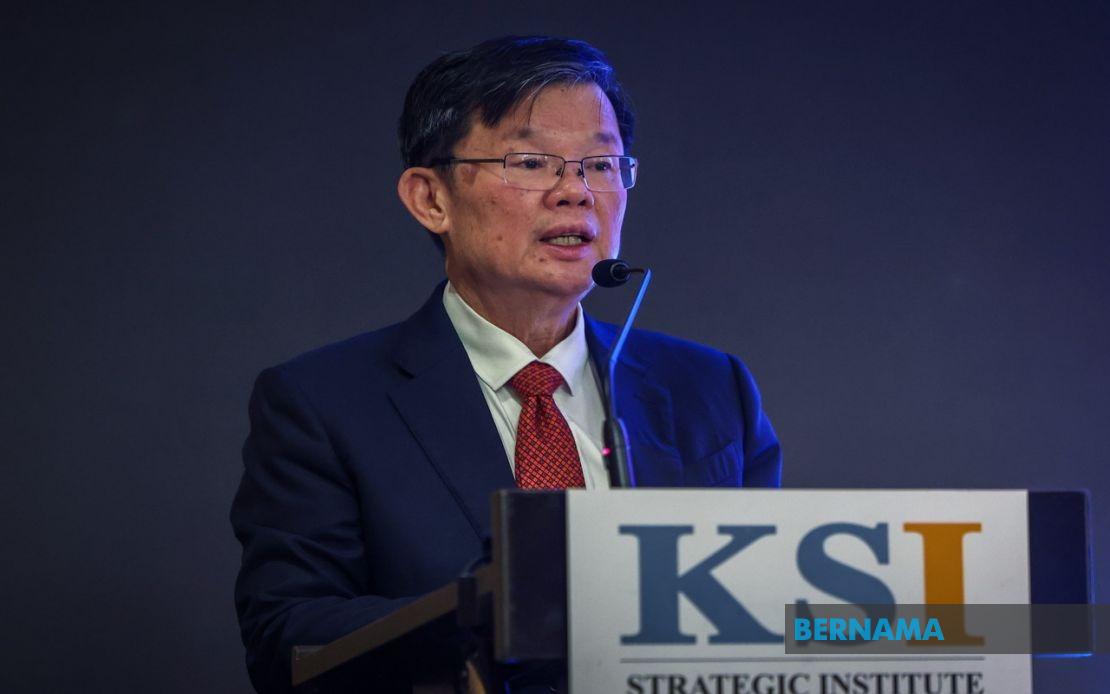
Penang's ruling Pakatan Harapan coalition has renewed its commitment to fielding increased numbers of women candidates in the next state election, yet officials acknowledge the path forward remains hampered by a persistent shortage of potential candidates willing to enter the political arena. Speaking at the World Women Economic and Business Summit 2026 in George Town, Chief Minister Chow Kon Yeow emphasised the party's ambition to boost female representation while candidly admitting that translating this goal into reality requires overcoming substantial recruitment hurdles.
The Penang PH leadership has aligned itself with Malaysia's 30 per cent women representation target, a benchmark established in 2009 that remains largely unmet across the country. Currently, women comprise just 13.5 per cent of Members of Parliament and 12 per cent of state assemblypersons nationwide—a disparity that underscores the gap between rhetorical commitment and actual progress. Penang's approach seeks to address this imbalance at the state level, though the coalition recognises that numerical targets alone cannot overcome the deeper structural and cultural barriers that discourage women from pursuing political office.
Chow articulated the fundamental challenge confronting his party and the broader Malaysian political establishment: while the supply of qualified female candidates must improve significantly, demand within the existing candidate pool remains inadequate. The Chief Minister stressed that even with strong party backing, identifying sufficient numbers of women who possess both the necessary qualifications and willingness to contest remains genuinely difficult. This candour reflects a growing recognition within PH that the bottleneck is not simply about party preference but involves deeper questions about women's perception of political life and its demands.
Paradoxically, female advancement in other professional spheres demonstrates no comparable deficit. Women have made substantial inroads into education, business, engineering, and public service sectors across Malaysia, establishing themselves as capable professionals and leaders. Yet the transition from success in these domains to political candidacy appears markedly constrained. Chow's observation highlights a curious phenomenon: competence and capability alone do not translate into political participation, suggesting that factors beyond qualification—including concerns about safety, work-life balance, and the particular pressures of electoral competition—actively discourage qualified women from entering politics.
The experience of potential candidates matters significantly. During Penang PH's selection processes, relatively few women come forward to offer themselves as candidates, despite concerted party efforts to encourage participation. This suggests that informal networks, mentorship structures, and cultural messaging within communities may not be adequately preparing or inviting women to consider political careers. The party's recognition of this gap represents an important first step, as acknowledging a problem is prerequisite to systematic solutions.
Penang PH's stated approach involves institutionalising the 30 per cent target within formal candidate selection procedures. By embedding female representation requirements into party mechanisms rather than treating them as aspirational goals, the coalition seeks to create structural incentives for identifying and nominating women candidates. This institutional approach differs markedly from previous efforts that relied primarily on goodwill and case-by-case decisions, which historically proved insufficient to shift representation patterns meaningfully.
Beyond candidate selection mechanisms, Chow identified additional measures that Malaysian political parties should implement to support women's political participation. Equal representation of women on decision-making committees would signal institutional commitment beyond electoral cycles and ensure that women have genuine influence over party strategy and resource allocation. Furthermore, strengthening access to mentoring programmes and financial resources specifically designed for emerging women leaders would address practical barriers that deter potential candidates from entering politics.
The Malaysian context adds particular urgency to this challenge. As a middle-income nation aspiring to greater economic development and democratic maturity, persistent gender disparities in political representation carry reputational and substantive costs. International comparisons show that countries with higher female political participation demonstrate different policy priorities and often achieve better outcomes in areas ranging from social safety nets to education investment. For Penang, which positions itself as Malaysia's most progressive state and as a laboratory for new governance approaches, the failure to achieve gender parity becomes increasingly untenable.
For Southeast Asia more broadly, Malaysia's struggle with women's political representation reflects regional patterns. While countries like the Philippines and Indonesia have elected female leaders, broader parliamentary representation remains below optimal levels across the region. Penang's efforts matter not only locally but also as a potential model—either positive or cautionary—for other Malaysian states and Southeast Asian jurisdictions grappling with similar challenges.
Chow's public acknowledgement of difficulty also serves an important symbolic function. Rather than claiming false progress or pretending that barriers do not exist, the Chief Minister's transparent assessment may help shift political culture toward more honest conversations about what gender parity genuinely requires. This frankness could encourage other party leaders to examine their own recruitment and retention practices and to consider whether their strategies adequately address the specific concerns and constraints facing potential women candidates.
Moving forward, Penang PH's success will depend on translating rhetorical commitment into systematic institutional change. Creating mentorship pathways, ensuring financial parity in campaign support, and actively cultivating candidate pools years before elections all require sustained resources and genuine organisational priority. The 30 per cent target remains achievable, but only through deliberate, multifaceted strategies that address both supply and demand sides of the candidate equation—expanding the pool of qualified women willing to contest while simultaneously transforming the political environment to make participation more accessible and attractive.