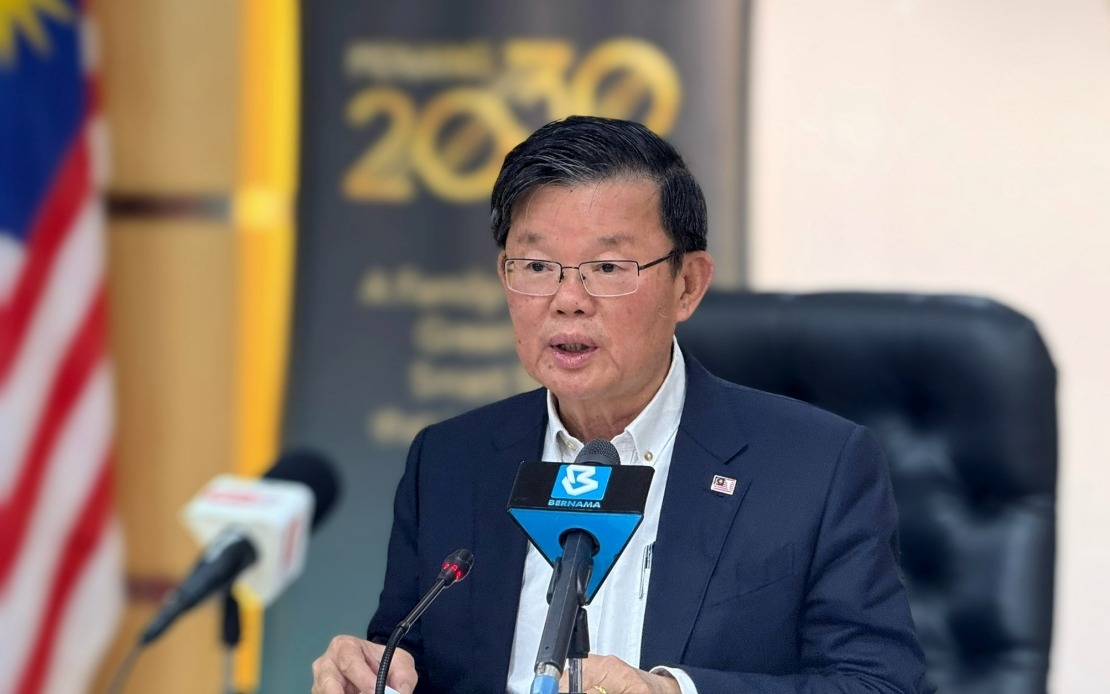
Penang's ruling Pakatan Harapan coalition is embarking on a comprehensive strategic review ahead of the next general election, with all subcommittees ordered to present detailed progress reports by early August. Penang Chief Minister Chow Kon Yeow issued the directive while addressing journalists in George Town, signalling that the coalition intends to conduct a thorough assessment of both its strengths and shortcomings as it prepares for electoral challenges ahead. The exercise reflects a broader pattern among ruling coalitions in Malaysia of conducting regular health checks on organisational readiness and voter appeal.
The timing of this strategic overhaul is noteworthy for the region. Although no federal election date has been announced, political observers across Southeast Asia recognise that Malaysian electoral cycles create momentum well in advance of polling day. For Penang specifically, the move underscores the coalition's determination to retain the state's administration after the 2023 state election delivered it a commanding mandate. By consolidating lessons learned during that contest and addressing identified gaps now, Pakatan Harapan is attempting to move beyond reactive campaigning toward more systematic, data-driven preparation.
Chow emphasised that the review would not merely celebrate past victories but would critically examine organisational performance across multiple dimensions. The coalition explicitly welcomes external feedback and suggestions from stakeholders, party members, and sympathetic observers. This openness to constructive criticism distinguishes the exercise from mere propaganda or cheerleading; the stated intent to "strengthen our advantages and reorganise our strategies" implies recognition that no political organisation is beyond improvement, regardless of recent electoral success.
The 2023 Penang state election provided Pakatan Harapan with a particularly robust foundation for federal ambitions. The coalition captured 29 of 40 contested seats, with the Democratic Action Party alone securing all 19 seats it fielded—a dominant performance that cemented DAP's position as Penang's leading political force. The People's Justice Party contributed seven seats, while the Malaysian United Democratic Alliance added one, and Barisan Nasional managed two. These results translated into the Unity Government that now governs the state, a coalition arrangement that bridges the federal government's broader coalition while maintaining regional stability.
Maintaining this Unity Government's cohesion represents a parallel challenge to electoral preparation. Chow has confirmed that cooperation among component parties remains harmonious, with no significant friction or divergent directional pressures emerging. The chief minister characterised the current arrangement as "status quo," emphasising that no party has initiated destabilising moves or attempted to shift the coalition's strategic orientation. For Malaysia's multiethnic and multi-party political landscape, such stability is genuinely valuable—it signals to voters that power-sharing agreements can function without constant internal turmoil.
The stability assertion carries particular weight in the Malaysian context, where coalition arrangements frequently experience strain and friction. The Unity Government model, which brings together Pakatan Harapan and Barisan Nasional at both federal and state levels, represents an experimental approach to managing political competition within a framework of underlying cooperation. Penang's apparent success in maintaining this balance provides a proof-of-concept that could influence discussions about coalition arrangements elsewhere in Malaysia.
From a regional perspective, Penang's electoral preparations also reflect broader Southeast Asian political dynamics. The state functions as a crucial economic and political hub within Malaysia, hosting key port facilities and serving as home to semiconductor and manufacturing clusters integral to regional supply chains. Electoral stability in Penang therefore extends beyond local significance into questions affecting the entire region's investment climate and developmental trajectory. Political uncertainty affects business confidence, currency valuations, and capital flows across borders.
The subcommittee reporting structure indicates a hierarchical, methodical approach to review and planning. Rather than conducting strategic analysis at the top leadership level alone, the coalition is distributing this responsibility across multiple working bodies charged with examining specific domains. This distributed model allows for granular examination of distinct policy areas, organisational functions, and electoral mechanics, with findings then consolidating toward central decision-making. The August reporting deadline creates a concrete timeline for completion, avoiding indefinite postponement.
For Malaysian voters generally, this activity demonstrates that electoral campaigns increasingly operate on extended timescales with sophisticated preparation phases. The days of purely grassroots, improvised campaigning have largely given way to professionalized operations incorporating data analysis, message development, and organisational restructuring. Pakatan Harapan's deliberate preparation reflects recognition that electoral success requires continuous attention, not merely periodic effort during official campaign periods.
Looking forward, the coalition's willingness to acknowledge potential weaknesses while building on successes suggests a realistic rather than triumphalist approach. In Penang's multiethnic context, where constituencies contain complex demographic mixes and voter preferences shift across issues ranging from governance to development, maintaining electoral appeal demands constant recalibration. The party recognises that yesterday's winning formula does not automatically guarantee tomorrow's victory, particularly as new challenges emerge and voter concerns evolve.
The initiative also reflects internal party dynamics within Pakatan Harapan more broadly. DAP's dominance in Penang government means that PH's direction in the state substantially reflects DAP decision-making, yet the coalition structure requires consultation and consensus-building with allied parties. The subcommittee review creates formal channels for input from all coalition members, enhancing legitimacy of eventual strategic decisions among party structures and membership.
Ultimately, Penang's strategic recalibration represents standard political housekeeping conducted with greater transparency and advance planning than many Malaysian voters might expect. The coalition's emphasis on addressing weaknesses while acknowledging strengths suggests confidence tempered by realism—a posture likely to resonate with voters seeking serious governance rather than perpetual campaign mode. As Malaysia's political landscape continues evolving and new federal elections approach, Penang's preparation provides a case study in how governing coalitions attempt to balance current stability with future electoral ambitions.

