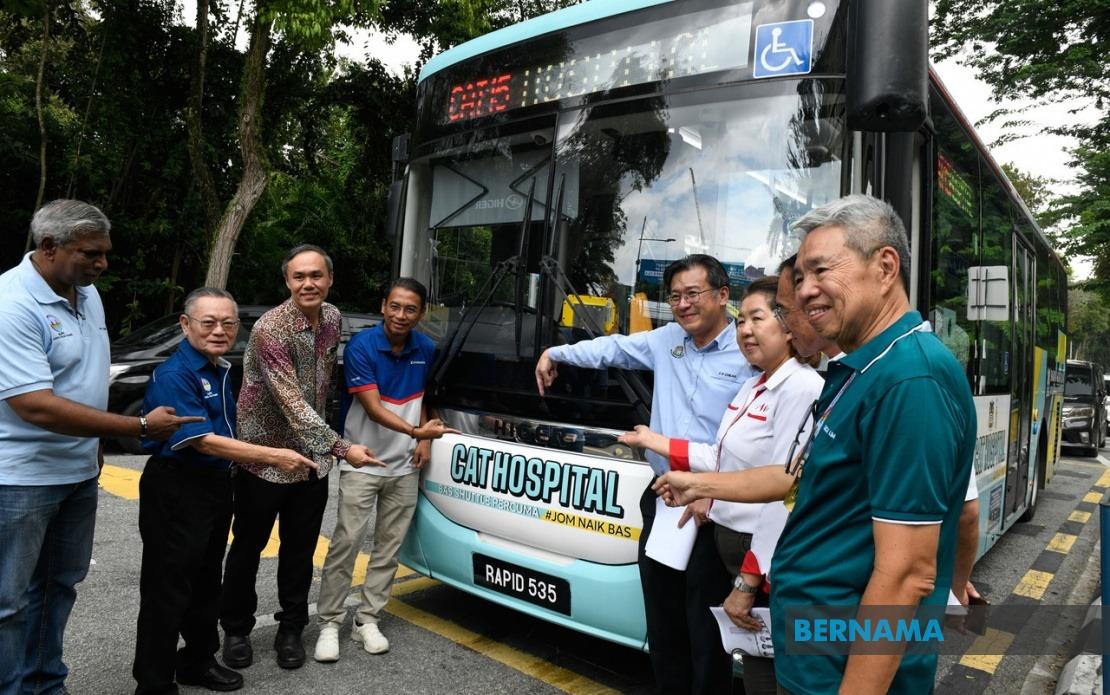
The Penang Island City Council (MBPP) has committed RM900,000 in annual funding to operate a free shuttle bus service that connects major transport hubs with Penang Hospital and surrounding healthcare facilities in the city centre. The Central Area Transit (CAT) service, which commenced operations on January 1, represents a significant public health infrastructure investment targeting the chronic parking and congestion issues that have plagued the hospital precinct. The initiative reflects growing recognition among Malaysian municipal authorities that healthcare accessibility extends beyond medical provision to encompass the practical challenges patients and caregivers face in reaching treatment centres.
According to MBPP Engineering Director Cheah Chin Kooi, the shuttle network serves Komtar as its primary interchange point, with routes encompassing Penang Hospital, three private healthcare institutions, and several other medical facilities clustered throughout the downtown area. The decision to launch the service followed a detailed survey by MBPP that examined transportation barriers created by Penang Hospital's expansion project, which intensified demand for parking and access routes in an already congested urban zone. The council's approach signals a shift toward integrated urban planning that acknowledges how transportation infrastructure directly impacts healthcare utilisation and patient outcomes.
The operational parameters reveal a thoughtfully structured system designed for high accessibility. Three Rapid Penang buses traverse the eight-kilometre route daily between 6 am and 8 pm, with services scheduled at twenty-minute intervals generating thirty-six trips per operating day. This frequency aims to provide reliable connections for patients with medical appointments, elderly residents requiring hospital visits, and family members acting as caregivers. The geographic focus on the city centre reflects MBPP's strategy to leverage existing transit infrastructure while addressing a specific urban health challenge.
Early performance metrics suggest the initiative has resonated with the public. Since launch, ridership has nearly doubled from approximately three hundred daily passengers to around six hundred currently. This trajectory indicates growing awareness and acceptance of the free service among hospital users and the broader community. The uptake pattern suggests that removing financial barriers—a significant consideration for lower-income households navigating healthcare systems—can meaningfully influence public transport adoption, particularly for essential trips to medical facilities.
The service embodies multiple policy objectives simultaneously. By facilitating easier hospital access through public transport, MBPP addresses the acute parking shortage that has frustrated both patients and hospital staff. The initiative simultaneously aligns with broader urban sustainability goals, encouraging modal shift away from private vehicles and reducing overall traffic congestion in the city centre. For a coastal metropolitan area like George Town already managing considerable tourist and commercial traffic, redirecting hospital-bound trips toward mass transit provides measurable congestion relief.
Penang Hospital director Dr Goh Hin Kwang emphasised complementary infrastructure enhancements, noting that the hospital has upgraded pedestrian pathways along Jalan Residensi and is undertaking improvements to the main entrance on Jalan Utama. These investments acknowledge that effective public transport connectivity requires seamless integration with destination facilities. Many Malaysian hospitals, particularly older institutions, were not designed with modern transit interchange expectations, making these access improvements essential to realising the shuttle service's full potential.
The project demonstrates collaborative governance involving multiple stakeholders. MBPP's financing and route planning partnership with Rapid Bus Sdn Bhd Northern Region, represented by Mohd Amir Abd Halim, shows how municipal and commercial transport operators can align interests around public health objectives. The presence of representatives from the Penang Women's Development Corporation at the inspection underscores recognition that healthcare accessibility disproportionately affects vulnerable populations, including elderly persons and single carers who face particular barriers to hospital access.
Within the Malaysian context, where healthcare financing and transportation integration remain developing policy areas, MBPP's initiative offers a replicable model for other states. The relatively modest annual allocation of RM900,000 generates substantial accessibility improvements while simultaneously addressing traffic management challenges. This cost-effectiveness becomes particularly relevant as Malaysia's urban centres grow and hospital demand intensifies, creating multiple pressures on city infrastructure.
The service's design targeting patients, seniors, and caregivers reflects evidence that healthcare facilities cannot isolate medical provision from the practical difficulties surrounding access. Malaysian healthcare policy increasingly recognises that transport barriers constitute a genuine health determinant, particularly affecting rural-to-urban referral patterns and elderly patients managing chronic conditions requiring regular appointments. Penang's initiative addresses this recognition through tangible investment.
However, the long-term sustainability of the service depends on continued political commitment and budget allocation. Municipal councils in Malaysia often struggle with competing capital demands, and discretionary services like free shuttles can face pressure during fiscal constraints. Demonstrating ongoing ridership growth and quantifiable health outcomes—such as improved hospital appointment attendance rates—will strengthen the case for maintaining and potentially expanding the service to other hospital catchments.
The initiative also invites consideration of broader public transport equity in Malaysia. Free or heavily subsidised transit for specific destinations like hospitals implicitly acknowledges that certain journeys serve essential purposes differing from discretionary travel. Extending similar approaches to other critical services like dialysis centres, cancer treatment facilities, and maternal health clinics could enhance system-wide healthcare accessibility while supporting vulnerable populations unable to absorb transport costs.

