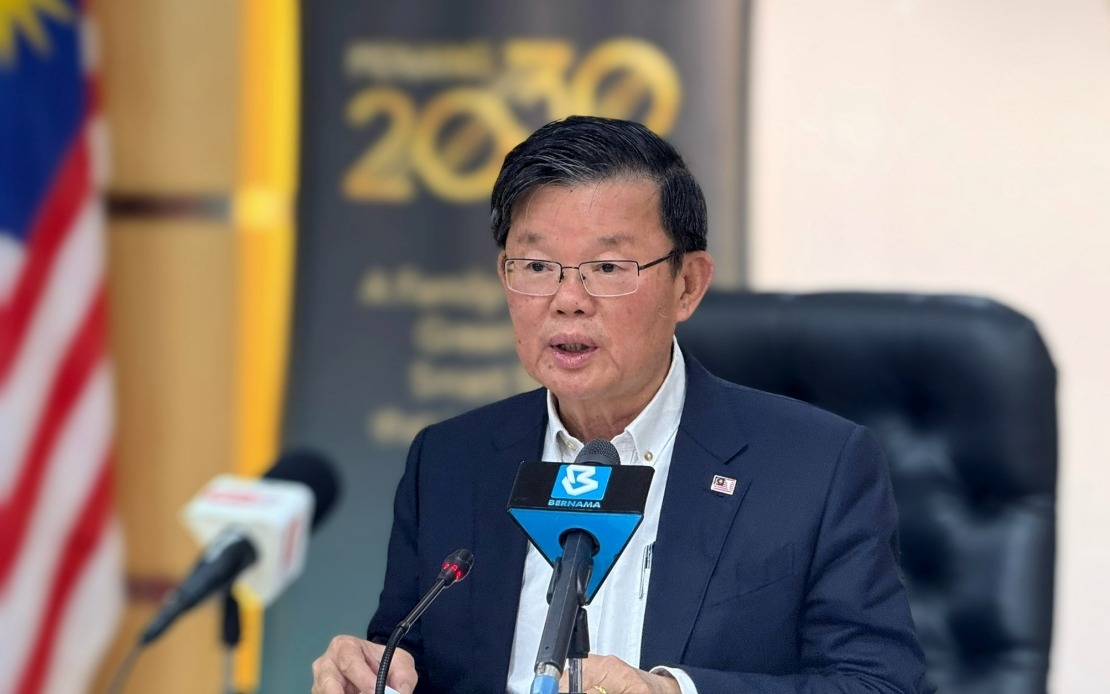
Penang has taken a significant step towards realizing its ambition to establish an international financial centre by appointing PricewaterhouseCoopers Advisory Services Sdn Bhd as the lead consultant for the initiative. Chief Minister Chow Kon Yeow announced that the Penang International Financial Centre (PIFC) Special Task Force Committee had green-lit the engagement, with the formal letter of appointment issued on June 15. The consultancy firm has been allocated 20 weeks to complete a series of foundational documents that will guide the development of what the state government envisions as a catalyst for regional economic transformation.
The scope of PwC's assignment extends across three interconnected deliverables designed to provide both strategic direction and practical implementation pathways. The White Paper will articulate the underlying strategic rationale for establishing the centre, establish a coherent regulatory framework, and delineate the broader vision guiding the initiative. Running parallel to this foundational document, PwC will also produce a Strategic Blueprint and accompanying Action Plan that address the critical operational dimensions of the proposal, including governance structures, physical and digital infrastructure requirements, fiscal incentives and other policy levers, and a phased rollout schedule spanning multiple years.
According to Chow, PwC presented a preliminary progress report to the task force during its July 17 meeting, revealing early analytical findings that shape the centre's strategic positioning. The consultant's initial assessment identifies Penang's established prowess in the global electrical and electronics supply chain as the natural foundation upon which the PIFC concept should be constructed. Rather than attempting to create a financial centre in isolation from the state's existing economic base, the framework being developed seeks to integrate financial services capabilities with the region's robust manufacturing and technology sectors, potentially enabling Penang to serve as a nexus for capital, innovation, and industrial development across Southeast Asia.
This alignment with existing comparative advantages is particularly strategic given the competitive landscape across the region. Several other jurisdictions in Southeast Asia have attempted to establish financial hubs with mixed results, and Penang's approach reflects a more nuanced understanding that successful international financial centres typically build upon recognizable industrial or sectoral strengths rather than emerging from greenfield ambitions alone. By anchoring the PIFC concept to the state's demonstrable capabilities in electronics manufacturing and related supply chain ecosystems, Penang increases the likelihood that such a centre would attract genuine investment and expertise rather than merely regulatory arbitrage.
The initiative is also framed as an instrument for catalyzing innovation and value-creation across interconnected industries beyond traditional financial services. Chow articulated that the PIFC concept could unlock opportunities for Penang to drive technological advancement and industrial diversification, strengthening the state's overall economic resilience and attractiveness as an investment destination. This positions the financial centre not as an end in itself, but as a component of a broader ecosystem-development strategy that recognizes the increasingly blurred boundaries between finance, technology, and manufacturing in the modern global economy.
PwC's engagement includes a mandate to conduct extensive stakeholder consultation spanning a wide spectrum of constituencies. The consultant is tasked with engaging strategic partners, domestic and international industry participants, regulatory authorities, academic institutions, and various other stakeholders to ensure that the resulting policy framework is grounded in practical feasibility, reflects best international practices, and harmonizes with Malaysia's broader technology ecosystem development priorities. This consultative approach is critical for building consensus among divergent interests and for ensuring that the eventual white paper and blueprint enjoy support from both the public and private sectors that will ultimately drive implementation.
The timeline for completion has been established with some urgency, reflecting the state government's determination to advance the initiative. The white paper was originally targeted for completion by late July or early August of the year the announcement was made, indicating that the task force views momentum as essential. This accelerated schedule suggests that political and economic considerations favour rapid progress, possibly reflecting competitive dynamics with other jurisdictions or windows of opportunity within Malaysia's broader policy environment.
Chow expressed confidence that the PIFC initiative would ultimately function as an engine for developing a technology-driven financial ecosystem capable of strengthening competitiveness across Malaysia's Northern Region. The framing of the initiative within a regional development context, rather than limiting its scope to Penang alone, signals an understanding that international financial centres operate within interconnected hinterlands and that the benefits of such an institution should accrue more broadly across the northern peninsula.
The appointment of PwC itself carries significance beyond mere project management. As one of the world's largest professional services firms with deep expertise in financial services regulation, tax policy, and transaction advisory services, PwC brings credibility and international standing to the initiative. The choice of such a globally recognized consultant signals to potential future investors and participants that Penang is approaching this ambition with professional rigour and access to world-class expertise, rather than through purely aspirational rhetoric.
From a Malaysian policy perspective, the PIFC initiative represents an attempt by a state government to carve out specialized economic roles and differentiated development pathways within the broader national framework. This trend of states pursuing targeted industrial strategies aligned with their existing strengths reflects a pragmatic recognition that Malaysia's future competitiveness depends not on uniform development across all regions, but on leveraging particular advantages where they exist. Penang's historical role as an electronics and manufacturing hub, combined with its established financial and professional services infrastructure and its geographic position as a gateway to Southeast Asia, creates genuine preconditions for success that distinguish this initiative from less rooted aspirations elsewhere.
The consultation process and stakeholder engagement that PwC will undertake over the coming months will be critical in testing the viability of the concept and refining its scope. The diversity of stakeholders involved—ranging from industry players and academics to regulators and international partners—will ensure that the final white paper reflects not merely the ambitions of the state government, but also the practical constraints, competitive realities, and genuine opportunities that characterize the contemporary financial services landscape in Southeast Asia. The robustness of this participatory process may ultimately determine whether the PIFC remains a policy document on a shelf or becomes the foundation for meaningful institutional development.

