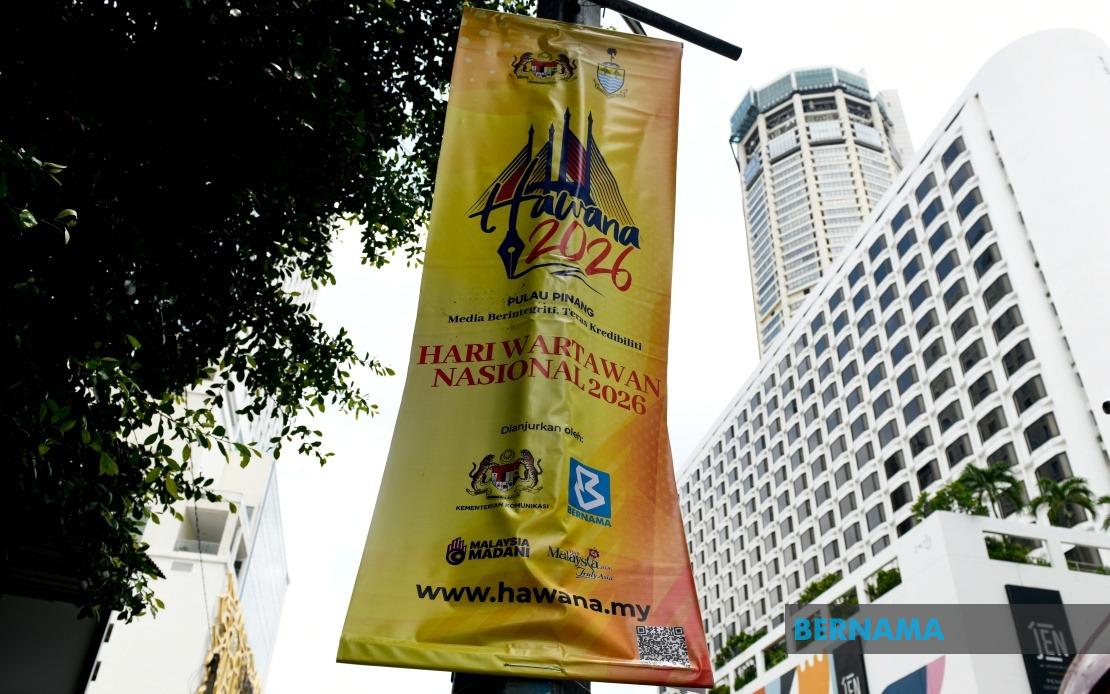
Penang is poised to host a landmark celebration of journalism this weekend, with state leadership expressing firm optimism that the National Journalists' Day 2026 (HAWANA 2026) gathering will reinforce the importance of credible reporting to Malaysian society. Chief Minister Chow Kon Yeow outlined the state government's readiness during a media briefing in George Town on Tuesday, emphasising that months of collaborative planning with the Communications Ministry have laid the groundwork for what is expected to be a major milestone for the profession.
The centrepiece of the celebration, the HAWANA 2026 Summit, commences this Saturday at the PICCA Convention Centre in Butterworth, with expectations that approximately 1,000 journalists and media professionals from Malaysia and internationally will gather under the thematic banner "Media Integrity Strengthens Credibility." The event represents far more than a ceremonial occasion; it reflects ongoing efforts by the government and media industry to underscore journalism's fundamental role in democratic discourse and public trust. Prime Minister Datuk Seri Anwar Ibrahim will formally open the summit, lending significant political weight to proceedings and signalling the federal administration's commitment to recognising media's societal value at a time when trust in institutions has become increasingly scrutinised globally.
Chow's remarks highlight the sustained engagement between state authorities and the Communications Ministry over the preceding two to three months, indicating that preparation has extended well beyond logistical basics into substantive coordination of a complex multi-day programme. This collaborative approach reflects recognition that successful national events require alignment across multiple government levels and stakeholder groups. The Chief Minister's explicit mention of state government contributions to the initiative underscores Penang's proactive role in supporting the event, rather than simply providing a venue.
Beyond the professional summit, organisers have scheduled a formal Media Dinner hosted by Penang Governor Tun Ramli Ngah Talib, creating an opportunity for government leaders and journalists to engage in more intimate settings. This pairing of large-scale professional forums with smaller networking occasions has become standard practice at major industry gatherings, allowing for both broad-based discourse and individual relationship-building that can influence media-government interactions for years to come.
The broader celebration extends into public space through the RIUH Pi HAWANA Carnival, a three-day entertainment and commercial initiative that transforms the summit into a community-facing spectacle. Organisers project that approximately 30,000 members of the public will visit the carnival, indicating an intention to move conversations about media from professional circles into everyday awareness. This democratisation of a journalism celebration reflects contemporary recognition that public literacy regarding news credibility and ethical reporting serves everyone's interests.
The carnival itself showcases 24 local creative product brands alongside 20 food and beverage vendors, creating an ecosystem that positions media discussion within broader cultural and economic contexts rather than isolating it as a niche professional concern. Such integration acknowledges that sustainable media industries depend not only on practitioners' professional standards but also on vibrant creative economies and community engagement. The inclusion of interactive workshops offers visitors hands-on exposure to creative processes, potentially inspiring younger participants to consider media careers or at minimum to develop more sophisticated media consumption habits.
Entertainment programming features 16 free performances from prominent Malaysian artists including Exists, Bunkface, Masdo, Sakura Band, Budak Nakal Hujung Simpang and Chelsea Ng, demonstrating that the organisers understand media celebration functions most effectively when paired with cultural attractions that naturally draw diverse crowds. This approach differs markedly from insular professional conferences and instead mimics successful international journalism festivals that integrate artistic performance with substantive discourse.
The selection of Penang as host state holds particular significance for Malaysia's media landscape. The northern state occupies a distinctive position in Malaysia's political and cultural geography, maintaining a reputation for relatively robust civil society engagement and historical importance to Malaysian journalism. Hosting HAWANA 2026 positions Penang as a centre for media discourse and potentially establishes precedent for the state's ongoing role in supporting journalism's institutional health.
The thematic focus on media integrity and credibility emerges at a crucial historical moment when journalism faces simultaneous pressures from technological disruption, economic transformation, and erosion of public trust globally. Malaysia's media landscape reflects these international challenges while navigating distinctly local political and regulatory contexts. By elevating integrity as the central organising concept, HAWANA 2026 signals that the profession and government view rebuilding credibility as foundational to media's future sustainability.
The event's coordination through the Ministry of Communications and implementation by Bernama, Malaysia's national news agency, establishes clear institutional ownership while positioning the national news service as custodian of professional standards discourse. This arrangement ensures that the celebration reflects not only practitioner perspectives but also government's stake in a functional media ecosystem.
For Malaysian and Southeast Asian media observers, HAWANA 2026 offers several implications. The substantial international attendance expected indicates Malaysia's positioning within regional journalism networks and provides opportunity for local practitioners to benchmark practices against peers facing similar digital and political pressures across Asia. The scale of public engagement through the carnival suggests growing recognition that media sustainability depends on cultivating public understanding of journalism's value, not merely defending professional interests to government and advertisers.
Chow's confident framing reflects state government's expectation that executing a high-profile media celebration successfully will yield reputational benefits while demonstrating administrative capacity to manage complex events. For journalists attending, the occasion provides opportunity to discuss common challenges in intimate settings with government leadership, potentially opening channels for dialogue that might otherwise remain constrained by formal protocols. Whether HAWANA 2026 ultimately catalyses substantive improvements in media-government relations and public trust remains to be seen, but the ambition evident in its scale suggests serious investment in the exercise.

