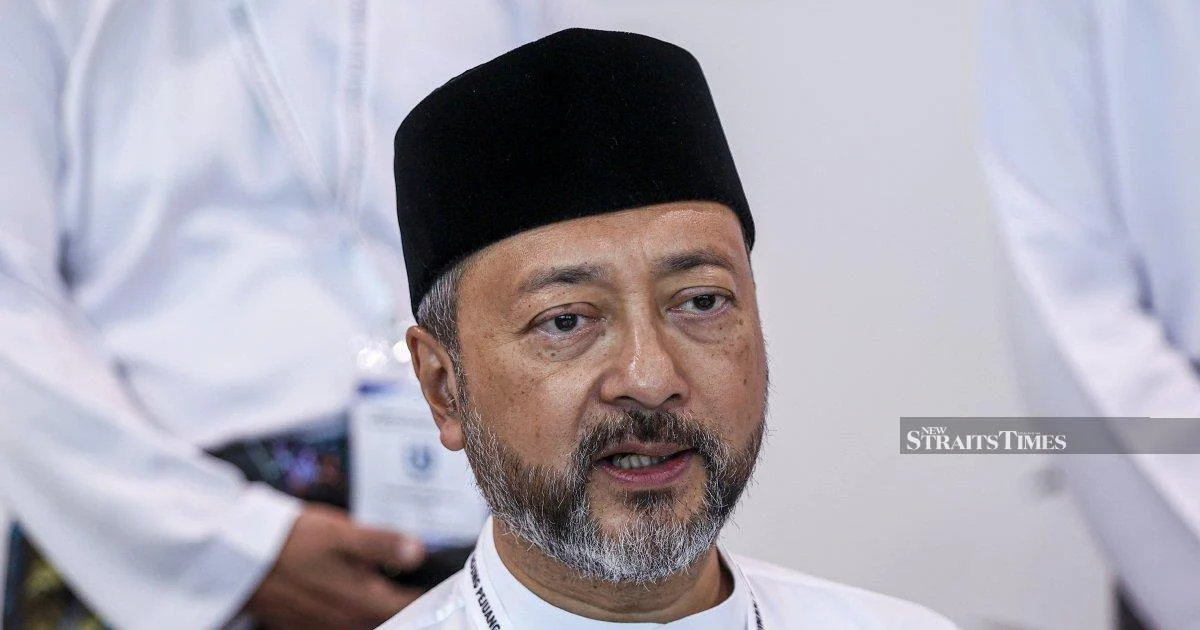
Parti Pejuang Tanah Air's admission into Perikatan Nasional constitutes a foundational move in a comprehensive endeavour to consolidate disparate political factions and tackle mounting pressures confronting the nation, according to the party's leader Datuk Seri Mukhriz Mahathir. The development signals a meaningful shift in Malaysia's fractured opposition landscape, where various coalitions have struggled to present a unified front against the governing Barisan Nasional and its allies.
The merger brings together two significant stakeholders in the anti-government political ecosystem, each contributing distinct constituencies and ideological positions. Pejuang, established by veteran politician Mahathir Mohamad, has cultivated support among segments seeking alternative leadership narratives and reform agendas. By integrating into Perikatan Nasional—an alliance that already encompasses the Pan-Malaysian Islamic Party (PAS), Bersatu, and the Malaysian United Democratic Alliance (MUDA)—Pejuang potentially amplifies the collective's capacity to mobilise voters across multiple demographic and geographic segments.
For Malaysian observers of political realignment, the timing carries substantial implications. The nation continues grappling with persistent governance challenges, economic uncertainties, and institutional tensions that have fractured public confidence across administrations. Opposition unity has historically proven elusive, with programmatic disagreements and personality-driven divisions preventing coherent alternative governance frameworks. Pejuang's formal integration suggests recognition among opposition strategists that electoral competitiveness requires organisational coherence rather than fragmentation.
Mukhriz's characterisation of the development as addressing "growing national challenges" reflects the framing opposition leaders increasingly adopt when justifying political consolidation. Whether encompassing healthcare accessibility, cost-of-living pressures, educational quality, or institutional accountability, these challenges transcend traditional partisan boundaries and affect voters across the political spectrum. By coupling institutional merger with problem-focused rhetoric, opposition coalitions attempt to transcend purely adversarial positioning and construct alternative governance narratives grounded in substantive policy domains.
The integration also carries implications for Perikatan Nasional's internal equilibrium. As a coalition housing ideologically diverse partners—from PAS's Islamist orientation to MUDA's youth-focused progressivism—incorporating Pejuang requires careful negotiation over policy priorities, leadership representation, and candidate selection mechanisms. Mukhriz's presence introduces additional stature and political lineage, potentially enhancing coalition credibility among constituencies sceptical of previous opposition configurations.
Regionally, Malaysia's opposition consolidation patterns attract attention from observers across Southeast Asia monitoring how democratic systems manage coalition politics. Indonesia's experience with multiple competing coalitions, Thailand's periodic coalition realignments, and the Philippines' shifting political partnerships all suggest that opposition unity remains perpetually contested terrain. Pejuang's merger into Perikatan Nasional provides a case study in how fractionalised opposition movements negotiate integration while preserving constituent interests and identities.
The broader political economy of this development warrants examination. Electoral mathematics in Malaysia's mixed federal-state system create incentives for coalition formation, yet pull factors toward fragmentation persist. Personalities, regional strongholds, and disagreements over seat allocation continuously test coalition cohesion. Pejuang's entry into Perikatan Nasional suggests organisational confidence that unified campaigning yields superior electoral prospects compared to independent competition. Conversely, sceptics question whether institutional merger without underlying strategic consensus merely creates larger vehicles for eventual fission.
For governing coalitions, opposition consolidation presents both challenge and opportunity. Enhanced opposition unity potentially concentrates anti-government sentiment more efficiently, threatening electoral margins previously assumed secure. Conversely, governing parties might exploit opposition coalition tensions, seeking to splinter unified fronts through targeted recruitment of ambitious figures or calculated policy concessions. The coming months will reveal whether Pejuang's integration strengthens Perikatan Nasional's competitive positioning or merely postpones inevitable internal reconfiguration.
Mukhriz's statement emphasises that Pejuang's participation represents beginning rather than completion of broader unification efforts. This characterisation acknowledges that Perikatan Nasional itself encompasses only partial opposition representation. Significant political movements remain external to this configuration, creating possibilities for either further coalition expansion or competing alliance formation. The assertion that unity efforts remain "broader" and ongoing suggests openness toward additional integrations should political calculations and partner interests align favourably.
For Malaysian voters observing opposition manoeuvrings, questions persist regarding substantive governance implications. Whether consolidated opposition coalitions translate merger into coherent policy platforms, credible governance alternatives, and institutional reform blueprints remains undemonstrated. Opposition unity focusing exclusively on institutional restructuring without corresponding policy articulation risks reproducing cycles where coalitions fragment once electoral imperatives diminish. Voters increasingly demand clarity regarding what opposition consolidation delivers beyond enhanced electoral machinery.
The institutional mechanics of Pejuang's integration into Perikatan Nasional will influence successor consolidation efforts. Should the merger prove administratively seamless while expanding coalition electoral appeal, it provides template for absorbing additional players. Conversely, should integration generate internal frictions or disappoint supporters, it signals consolidation challenges that deter further opposition coalition expansion. The coming electoral cycle will furnish empirical evidence regarding whether institutional realignment translates into tangible competitive advantage or represents merely transitional rearrangement pending subsequent fragmentation.