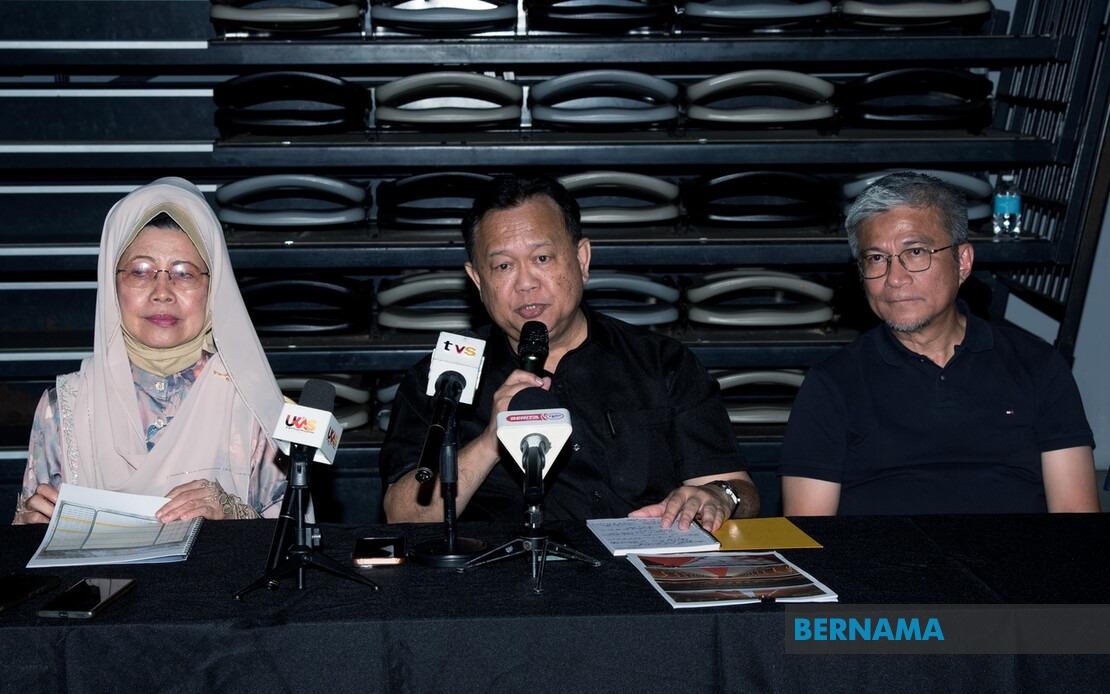
Sarawak's dominant political force, Parti Pesaka Bumiputera Bersatu (PBB), is preparing for a significant gathering in Sibu this month. The party's Central Zone Special Convention, scheduled for July 26 at the Sibu Indoor Stadium, will bring together more than 3,000 delegates representing 24 branches across the region. This substantial turnout reflects the party's organisational strength in its heartland and underscores the importance of the discussions slated for the event.
Party secretary-general Datuk Seri Alexander Nanta Linggi announced the forthcoming convention after chairing a meeting of the organising committee in Sibu. He confirmed that the central zone would be the first among four regional divisions to convene such a special gathering, with the southern, Betong, and northern zones scheduled to follow in succession. This sequencing suggests a carefully calibrated rollout of party messaging and policy positions across Sarawak's geographically dispersed constituencies.
The convention agenda reflects both historical reflection and contemporary governance priorities. A presentation on the Malaysia Agreement 1963 (MA63) will feature prominently, a choice that holds particular resonance for Sarawakians. This foundational document has remained central to Sarawak's political discourse and constitutional standing within Malaysia. Revisiting MA63 in formal party settings underscores PBB's commitment to safeguarding Sarawak's interests within the federation—a perennial concern for the state's political establishment and voters alike.
Beyond constitutional matters, the convention will also address forward-looking policy frameworks. Presentations on the Post COVID-19 Development Strategy 2030 (PCDS 2030) will enable party leaders to articulate their vision for economic recovery and long-term prosperity. This dual focus—anchoring discussions in historical agreement while projecting development ambitions—provides party delegates with a comprehensive narrative spanning both constitutional rights and economic opportunity.
The convention agenda extends to unspecified political matters, suggesting that intra-party deliberations and broader state political developments will occupy delegates' attention. In Sarawak's context, such discussions often encompass coalition dynamics at the state and federal levels, electoral positioning, and responses to opposition initiatives. For a party holding the state premiership and commanding the state parliament, such forums serve as critical venues for reinforcing party unity and mobilising grassroots support.
Sarawak Premier Tan Sri Abang Johari Tun Openg, who holds the concurrent position of PBB president, will officiate the convention and deliver the keynote address. His presence as both state leader and party chief amplifies the event's political weight. The premier's address will likely articulate the government's achievements and future direction while reaffirming PBB's pivotal role in Sarawak's governance and development trajectory. This ceremonial dimension reinforces hierarchical party structures and projects unified leadership to the broader public.
The decision to hold this convention reflects PBB's ongoing cycle of internal engagement and renewal. Political parties in Malaysia regularly convene such special conferences to refresh party structures, deliberate policy positions, and energise membership. For a party that has dominated Sarawak politics for decades, maintaining robust internal communication channels and demonstrating organisational vitality remains strategically important, particularly in an era of shifting electoral dynamics and evolving voter expectations.
The scale of delegate participation—exceeding 3,000 individuals from multiple branches—illustrates the logistical complexity involved in coordinating such an event. The Sibu Indoor Stadium's selection as venue indicates organisers anticipate substantial attendance and seek an accessible location for delegates travelling from across the central zone. Such attention to practical details reflects the party's institutional maturity and resource capacity.
For Malaysian political observers, especially those tracking Sarawak developments, this convention offers a window into how the state's dominant party frames contemporary issues and consolidates support among its grassroots base. The emphasis on MA63—a document that defines Sarawak's constitutional relationship with the federation—signals PBB's continued prioritisation of state-level interests and autonomy. Simultaneously, the focus on development strategy suggests party leadership recognises that voters ultimately judge political performance by economic outcomes and service delivery.
The sequential scheduling of conventions across the four zones also enables PBB to test messaging, gather feedback from delegates in different regions, and refine positions before subsequent events. This deliberate approach demonstrates how major political parties use internal forums not merely as ceremonial occasions but as strategic platforms for policy formulation and message refinement. The central zone convention, coming first, may therefore carry particular significance in setting the tone for subsequent regional gatherings.
Looking forward, the convention occurs in an environment where Sarawak politics continues evolving. While PBB remains unchallenged in terms of overall dominance, the party operates within increasingly competitive and complex political landscapes at both state and federal levels. Maintaining delegate engagement, reinforcing party discipline, and articulating clear positions on consequential issues like constitutional rights and economic development represent essential functions for party survival and electoral success. The July 26 gathering in Sibu thus represents far more than a routine internal meeting—it constitutes a significant political moment for Sarawak's ruling party.

