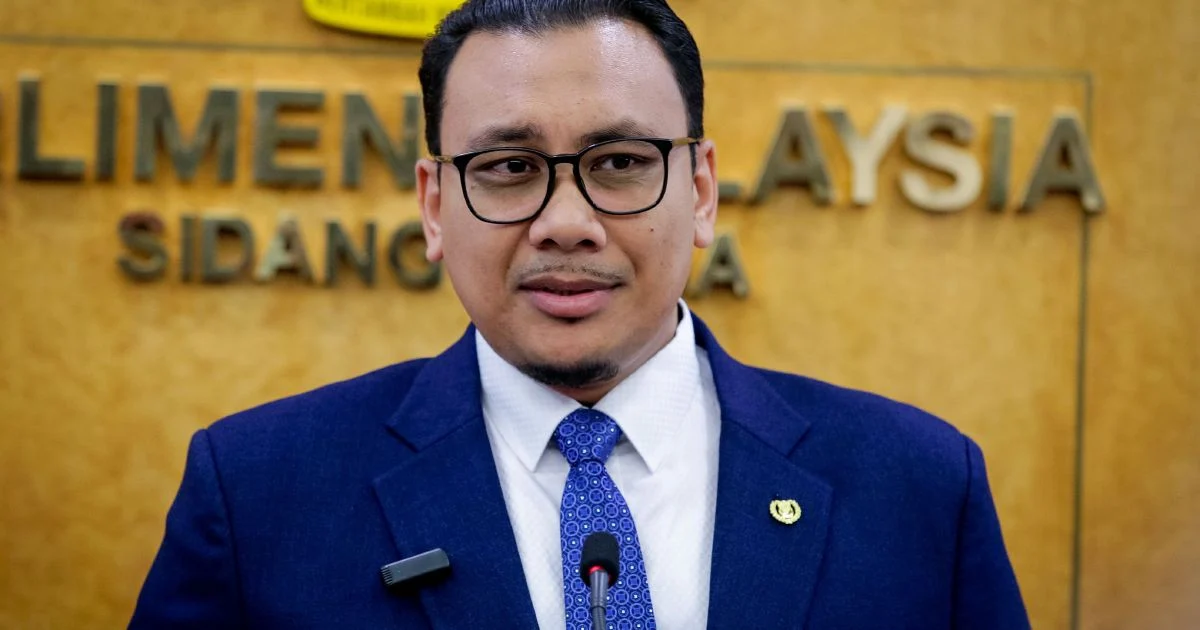
The youth wing of PAS has escalated a social media dispute into formal legal territory after its leader claimed a prominent Bersatu politician used Facebook to demean his family. Afnan Hamimi Taib Azamudden, who helms the Islamic party's youth division, has directed his legal representatives to commence proceedings based on allegations that the post contained derogatory remarks directed at his father. The move marks a turning point in what appears to be an increasingly fraught personal and political disagreement that has now crossed the threshold from public complaints into the civil courts.
The decision to pursue litigation reflects growing tensions between PAS and Bersatu, two parties that have navigated a complicated relationship within Malaysia's coalition politics. While both organisations have found themselves aligned at various points in the country's recent political realignments, their members have occasionally clashed over policy positions and internal party matters. The specific nature of the alleged insult and the full text of the Facebook post have not been detailed publicly, though such personal attacks targeting family members represent a significant breach of the unwritten codes that typically govern political discourse, even in an increasingly adversarial environment.
Social media has become a battlefield for Malaysian political figures in recent years, allowing party members to bypass traditional media gatekeepers and communicate directly with supporters. However, this direct engagement has also created numerous opportunities for inflammatory rhetoric and personal attacks that would previously have been filtered through formal party channels. The democratisation of political communication has lowered barriers to entry for expressing dissent, but it has simultaneously eroded the decorum that once governed inter-party relations. When disputes centre on attacks against family members rather than policy disagreements or legitimate political criticism, they typically provoke stronger responses from the targeted individuals.
The involvement of formal legal counsel signals that Afnan Hamimi Taib Azamudden views the allegations as sufficiently serious to warrant court intervention. Malaysian defamation law provides remedies for individuals whose reputations have been damaged through false or malicious statements, and social media posts fall squarely within the scope of actionable statements if they meet the legal threshold for liability. The fact that a political leader has chosen to engage the judicial system rather than rely on party mechanisms or media rebuttals suggests he believes the allegations are both significant and defensible in court.
From a broader perspective, this development underscores the persistent challenge facing Malaysian political parties in maintaining internal discipline and standards of conduct among their members. Political opponents and rival factions frequently resort to character assassination and personal attacks, yet these incidents often go unaddressed or are resolved through behind-the-scenes mediation rather than public legal proceedings. By escalating to court action, the PAS Youth chief is attempting to establish a precedent that personal attacks, particularly those targeting family members, will incur legal consequences. This approach may deter similar conduct within party circles, or it may simply invite further escalation.
The timing and context of the alleged Facebook post remain unclear from public announcements, though political observers will likely connect it to broader factional disputes or policy disagreements within Malaysian coalition politics. PAS and Bersatu have had opportunities to collaborate on various initiatives, yet their relationship has been marked by periodic friction over leadership positions, policy direction, and allocation of resources. When individual members become embroiled in public disputes that embarrass their party leadership, the fallout extends beyond personal grievances to affect party cohesion and public perception.
For Malaysian readers following coalition politics, this incident serves as a reminder that personality-driven politics and family networks continue to play substantial roles in how the country's political parties operate. Despite the prevalence of ideological platforms and policy manifestos, personal relationships, family honour, and individual rivalries frequently shape political outcomes. The decision to sue demonstrates that even in a context where such disputes are relatively common, individuals will occasionally resort to formal legal mechanisms when they perceive that their personal standing or family reputation has been seriously compromised.
The legal process itself may take considerable time, and courts will need to examine the precise wording of the Facebook post, the context in which it was made, and whether the content constitutes defamation under Malaysian law. The party affiliated with the original poster will likely mount a vigorous defence, potentially arguing that the statements constituted legitimate political commentary or opinion rather than false factual assertions. These technical legal distinctions often determine outcomes in defamation cases, regardless of the public sentiment surrounding the original dispute.
This matter also highlights the sometimes-blurred lines between personal vendettas and political competition in Malaysian public life. While leaders and their families have long been subject to public scrutiny and political critique, deliberate personal attacks that stray from policy criticism into name-calling and denigration represent behaviour that most established democracies discourage through social norms if not always through law. The resolution of this particular case may influence how other Malaysian political figures respond to similar provocations in the coming months and years.