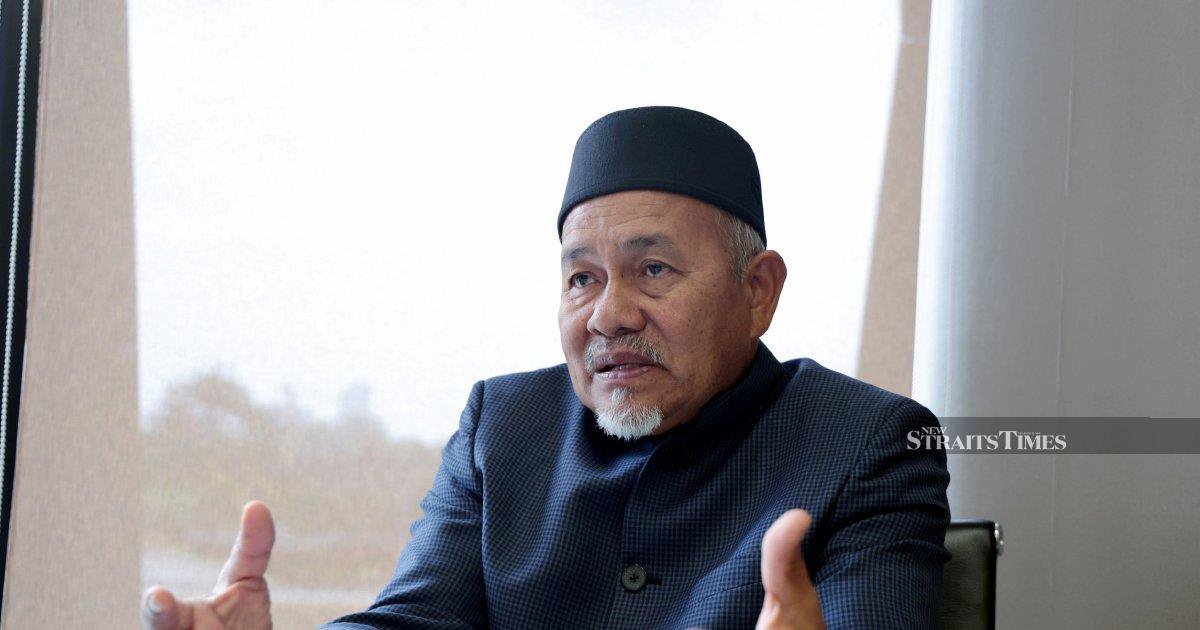
The Islamist party PAS has indicated its readiness to engage in talks about expanding the existing cooperation between Perikatan Nasional and Barisan Nasional beyond its current scope. The proposed expansion would encompass the state of Melaka and potentially reach into the federal administration, suggesting a willingness to test collaborative models that have proven effective in other contexts.
This development reflects the evolving dynamics within Malaysia's fractious political landscape, where coalition arrangements between competing blocs have become increasingly fluid and pragmatic. Rather than maintaining rigid ideological boundaries, parties appear more inclined to explore practical partnerships that could yield electoral or governance advantages. PAS's openness to such talks indicates a calculated shift in its strategic positioning within the multiparty system.
The reference to replicating the Negri Sembilan election model is particularly significant, as it suggests parties have already experimented with coordination mechanisms that produced satisfactory outcomes. In Negri Sembilan, the PN-BN arrangement likely involved agreed-upon candidate placements and mutual support mechanisms designed to optimise combined electoral performance. Such models typically require substantial negotiation and trust-building between parties with historically divergent interests.
For Malaysian observers, this signals that pragmatism increasingly trumps traditional political alliances. The historical division between BN, which dominated Malaysian politics for decades until 2018, and PN, which emerged more recently as an alternative coalition, appears increasingly permeable. Rather than viewing these blocs as mutually exclusive entities, party leaders are now considering them as flexible platforms for tactical cooperation.
The potential extension to Melaka carries particular weight, given that state's strategic importance in Malaysian politics and its track record of coalition government instability. Melaka has witnessed frequent shifts in political control, government formation controversies, and the collapse of previous arrangements. A successful PN-BN model in Melaka could stabilise governance there while demonstrating that such cooperation is workable at the subnational level.
Most provocatively, the prospect of extending this cooperation to federal level introduces the possibility of formal or informal power-sharing arrangements at the national government. This would represent a fundamental reconfiguration of Malaysian governance, potentially creating a centrist bloc that incorporates both BN's traditional establishment networks and PN's newer power bases. Such an arrangement could reshape parliamentary mathematics and ministerial distribution.
The timing of these discussions warrants consideration. Political parties typically explore such cooperative frameworks when facing electoral headwinds or when seeking to prevent opposition advances in key territories. The willingness to discuss federal-level cooperation may reflect assessments within the political establishment that separate operations present vulnerabilities that coordinated action could address.
For Southeast Asia more broadly, Malaysian political developments carry regional implications. Malaysia's multiparty democracy serves as a model of negotiated power-sharing that other regional states observe closely. Demonstrating that even historically opposed parties can find pragmatic cooperation grounds reinforces the notion that managed political competition, rather than winner-take-all confrontation, remains viable in diverse societies.
PAS's specific openness to these talks positions the party as a potential kingmaker in Malaysia's increasingly fragmented political environment. As a party commanding significant parliamentary representation and deep grassroots networks, particularly in northern states, PAS possesses genuine leverage. Its willingness to explore cooperation with both PN and BN elements enhances its negotiating position for any future government formation discussions.
However, such cooperation frameworks carry inherent fragility. Previous attempts at coalition government in Malaysia have repeatedly collapsed when component parties proved unable to manage conflicting interests or when individual parties calculated that withdrawing would yield greater advantages. The Sheraton Move of 2020, which disrupted the then-ruling Pakatan Harapan government, illustrated how rapidly political alignments can shift when parties reassess their strategic calculations.
The success of any extended PN-BN cooperation would depend substantially on formal or informal agreements about power distribution, policy coordination, and mechanisms for resolving disputes. Without clear frameworks, such arrangements risk becoming merely transactional relationships that evaporate when circumstances change. The fact that discussions are apparently beginning suggests parties recognise these complexities and may be developing more sophisticated institutional arrangements.
From a governance perspective, Malaysian voters should scrutinise whether such cooperation arrangements genuinely serve public interest through more stable administrations or whether they primarily serve elite factional interests through enhanced power concentration. The distinction between pragmatic coalition-building and opportunistic horse-trading remains crucial for democratic legitimacy.
As these discussions progress, observers will watch closely whether PAS's openness translates into actual agreements and whether such arrangements ultimately extend to the federal level. The outcome will shape not only Malaysian governance structures but also demonstrate whether Malaysia's democracy is evolving toward more fluid, pragmatic cooperation models or whether historical competitive patterns will reassert themselves.

