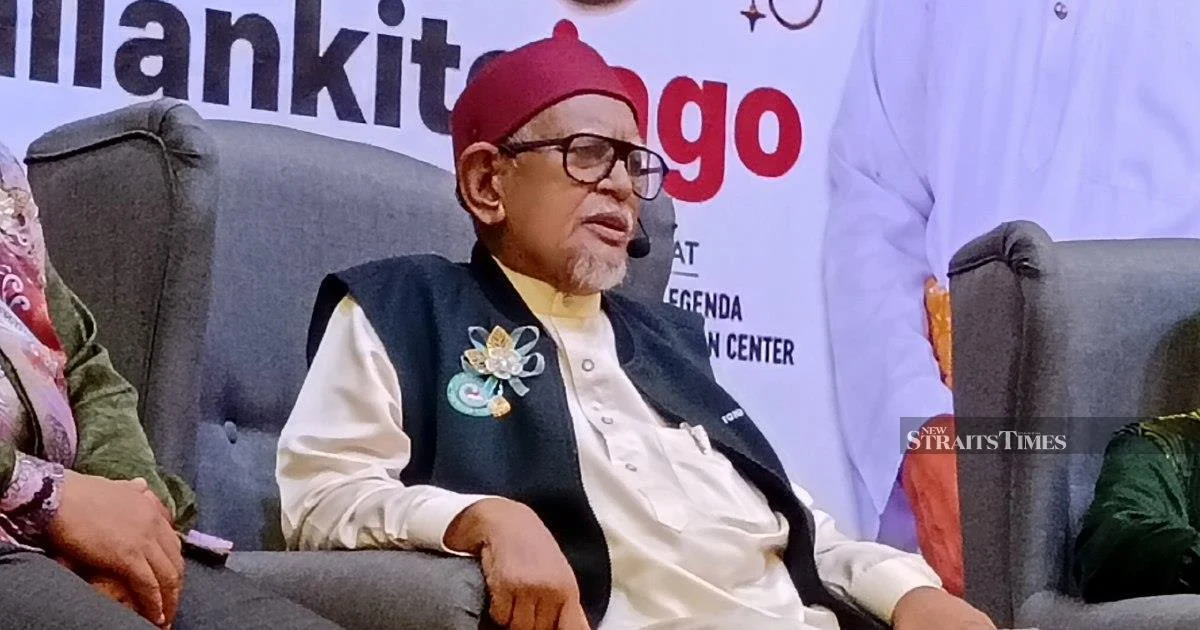
The Islamic Party's leadership has signalled a strategic shift in its approach to the upcoming Negri Sembilan state election, indicating willingness to defer the chief minister's post to its coalition partner United Malays National Organisation if broader cooperation between the two dominant Malay-Muslim parties materialises. This development represents a significant negotiating position as both parties work through the complex mathematics of seat distribution across the 36-seat Negri Sembilan state assembly ahead of the August 1 electoral contest.
PAS's apparent flexibility on the menteri besar candidacy reflects the evolving dynamics of Malay-Muslim politics in Malaysia. Rather than insisting on claiming the state's top administrative position, the party appears to recognise that a unified front between itself and Umno could prove more electorally advantageous than competing separately. This pragmatic approach underscores how Malaysian coalition politics often hinges on detailed internal negotiations that remain largely obscured from public view until agreements are finalised.
The willingness to accept an Umno-backed menteri besar candidate does not necessarily diminish PAS's electoral influence or political standing within Negri Sembilan. Instead, it suggests the party is calculating that securing a greater number of state assembly seats—and therefore more representatives in the legislature—may yield greater long-term power and patronage than controlling the chief minister's office alone. This strategy has precedent in Malaysian state politics, where legislative strength sometimes translates to influence that rivals or exceeds executive authority.
For Umno, PAS's flexibility on the menteri besar position provides an opportunity to reclaim political initiative in a state where the party has faced mounting pressure from competing coalitions. An Umno-led government in Negri Sembilan, supported by PAS's electoral machinery and grassroots networks, could strengthen Umno's hand nationally at a time when the party faces its own internal organisational challenges. The symbolism of reuniting Malay-Muslim political forces around a shared government in a major state carries particular weight.
The ongoing negotiations between PAS and Umno highlight the continued salience of ethnic and religious-based political formations in Malaysian electoral contests. Unlike some Southeast Asian democracies that have gravitated toward multi-ethnic political alliances, Malaysia's state elections—particularly in Peninsular Malaysia—continue to turn significantly on how Malay-Muslim votes coalesce. The Negri Sembilan election will serve as a crucial test of whether PAS and Umno can present a unified electoral alternative that appeals to Malay-Muslim voters who may have fragmented across multiple parties in recent elections.
The August 1 election date creates a compressed timeframe for concluding these negotiations. Seat allocation discussions between coalition partners typically involve intense bargaining over which party contests which constituencies, with particular focus on marginal seats where either partner might realistically win. PAS's conditional openness to accepting an Umno menteri besar may be a bargaining chip designed to secure more favourable seat distributions in the party's strongholds or in newly competitive areas.
Negri Sembilan's political complexion has shifted considerably in recent years, with various coalitions gaining ascendancy at different times. A successful PAS-Umno pact for this election could reshape the state's political trajectory for the next term, influencing not only how government contracts and appointments are distributed but also state policy priorities spanning education, economic development, and religious administration. For the state's 1.1 million residents, the composition of the new government will affect everything from infrastructure investment to the pace of development in urban and rural districts.
Regionally, the outcome of Negri Sembilan's election will be closely watched by political analysts across Southeast Asia. Malaysia's state-level contests often serve as bellwethers for national political sentiment, and a decisive PAS-Umno victory would suggest growing consolidation within Malay-Muslim politics. Conversely, a fragmented result would indicate ongoing vulnerability among these traditional political powerhouses. Other regional democracies grappling with communal politics will likely monitor how Malaysian parties attempt to balance coalition unity with intra-coalition tensions.
The negotiations also underscore the continuing importance of seat allocation mathematics in Malaysian electoral strategy. Rather than ideological platforms dominating campaign discourse, tangible questions about which party contests which seats—and what this means for factional influence within districts—often determine electoral outcomes. PAS's strategic flexibility on the menteri besar position suggests the party is prioritising legislative representation over symbolic leadership claims, a calculation that ultimately depends on accurate assessment of voter behaviour patterns across Negri Sembilan's diverse constituencies.
As discussions between PAS and Umno continue, the party leaderships must balance competing pressures: satisfying grassroots members who have invested in their respective party brands, appealing to swing voters who may be sceptical of coalition partnerships, and ensuring that any agreement is perceived as genuinely beneficial to both parties rather than as capitulation by either side. The ability to thread these needles successfully will determine whether August 1 produces a commanding coalition victory or a contested election outcome.

