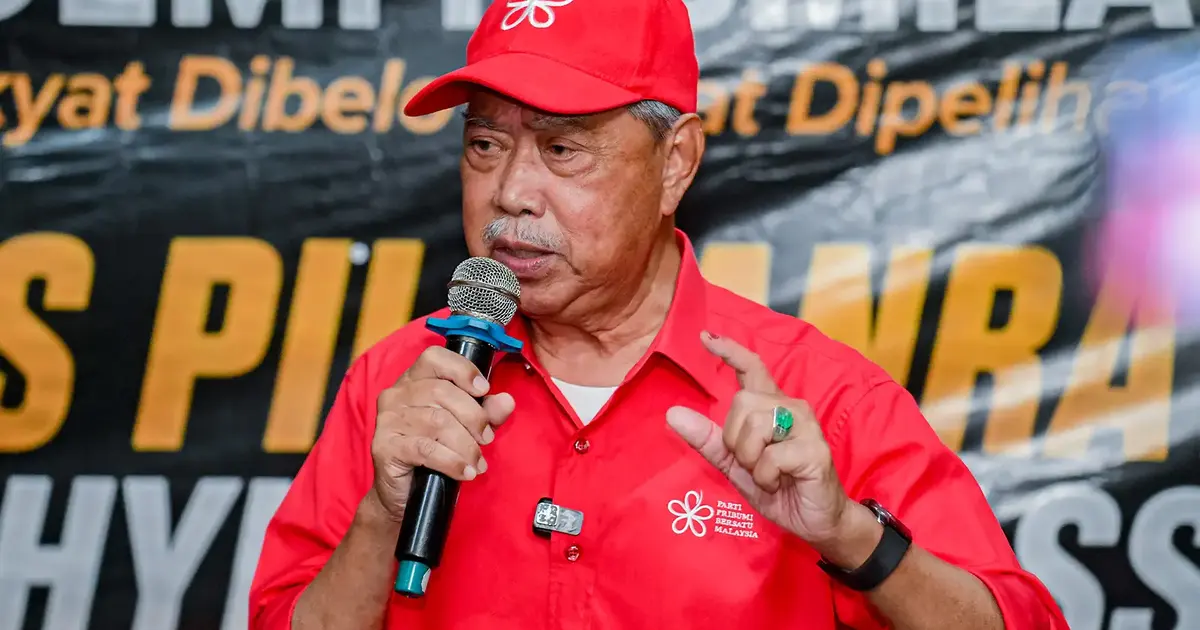
Two senior figures within PAS have issued a pointed rebuke to Bersatu president Muhyiddin Yassin, suggesting that his repeated references to the past are counterproductive to contemporary political objectives. The Islamic party representatives argue that dwelling on historical accomplishments diverts energy from the tangible challenges confronting both the opposition alliance and Muhyiddin's own political machinery at a critical juncture.
The criticism strikes at a tension simmering within Malaysia's opposition landscape, where nostalgia for previous electoral successes or governance arrangements can become a liability rather than an asset. PAS leaders contend that voters are primarily concerned with present-day solutions and future prospects, not recollections of how political configurations functioned years earlier. This perspective reflects a broader strategic calculation within the coalition about how best to mobilise support and appear forward-looking to an electorate that has grown weary of protracted political disputes and retrospective arguments.
Muhyiddin's prominence in Malaysian politics has been intertwined with rapid shifts in coalition alignments, including his tenure as prime minister during the tumultuous 2020-2021 period. His references to past achievements or the context in which previous political arrangements emerged may resonate with certain segments of his base, yet PAS leaders apparently view such messaging as ineffective for broader appeal. The divergence in communication strategy between the two coalition partners signals underlying disagreements about how to prosecute their political campaign and position themselves relative to the ruling government.
The Negeri Sembilan state election serves as the immediate battleground for implementing these contrasting approaches. As a state where opposition forces have competitive prospects, the contest represents a meaningful test of whether refocused messaging and organisational investment can translate into tangible gains. For Muhyiddin and Bersatu specifically, demonstrating viability in state-level contests has become increasingly important given the party's diminished parliamentary representation and need to rebuild credibility after internal upheaval and defections.
Bersatu's fortunes have declined substantially since its peak during the Muhyiddin premiership, when the party temporarily commanded significant political leverage. Subsequent developments, including internal faction disputes and shifts in coalition dynamics, have eroded the party's standing within the opposition framework. The PAS intervention suggests that some within the alliance believe Muhyiddin must accelerate concrete efforts at party reconstruction rather than trade on memories of transient political advantage.
Strengthening internal party machinery requires sustained investment in grassroots organisation, cadre development, and strategic recruitment. These unglamorous but essential functions often receive less public attention than rhetorical salvos or nostalgic commentary, yet they constitute the foundation upon which electoral competitiveness ultimately rests. PAS leaders evidently believe that Muhyiddin's time and resources would be better deployed in these domains than in public reminiscence about the past.
The state election in Negeri Sembilan provides a concrete venue where such strategic reorientation could bear immediate fruit. The campaign allows opposition parties to demonstrate renewed energy and organisational capability to both voters and internal stakeholders. A strong showing would vindicate the PAS position and suggest that forward-looking campaigns grounded in present concerns outperform campaigns reliant on historical narratives. Conversely, disappointing results would reinforce arguments that fundamental recalibration is necessary.
Within the opposition coalition, tensions between constituent parties often manifest through commentary about strategic direction and resource allocation. The PAS intervention should be understood partly as a power dynamic within the alliance, where different groups advocate for approaches that align with their respective interests and organisational strengths. PAS, as the numerically largest opposition party in parliament, possesses sufficient standing to influence how the coalition positions itself, and these public remarks represent an exercise of that influence.
The broader context involves Malaysia's fragmented political landscape, where coalitions require constant management and where disagreements about strategy frequently surface in public statements. Opposition parties must balance the imperative to maintain alliance cohesion with the temptation to differentiate themselves and advance their particular organisational agendas. The PAS criticism of Muhyiddin reflects this enduring tension and suggests that frustration with his approach has accumulated sufficiently to warrant public articulation.
For Malaysian voters and observers, the exchange illuminates how opposition politics remain contested terrain where strategic vision remains contested. The question of whether to emphasise continuity with past coalition arrangements or to project a reimagined political identity will shape how the opposition presents itself heading into the Negeri Sembilan contest and beyond. The PAS position suggests that at least significant voices within the opposition believe that present challenges demand undivided attention and that historical references, however potent psychologically, cannot substitute for contemporary solutions and organisational vitality.
The Negeri Sembilan election will serve as an early indicator of whether the opposition can translate strategic refinements into electoral performance. Success would validate the PAS approach and potentially reshape how opposition parties calibrate their messaging and resource deployment. The stakes extend beyond the immediate state contest to encompass questions about coalition viability and opposition capacity to mount a credible challenge to federal governance arrangements in the medium term.

