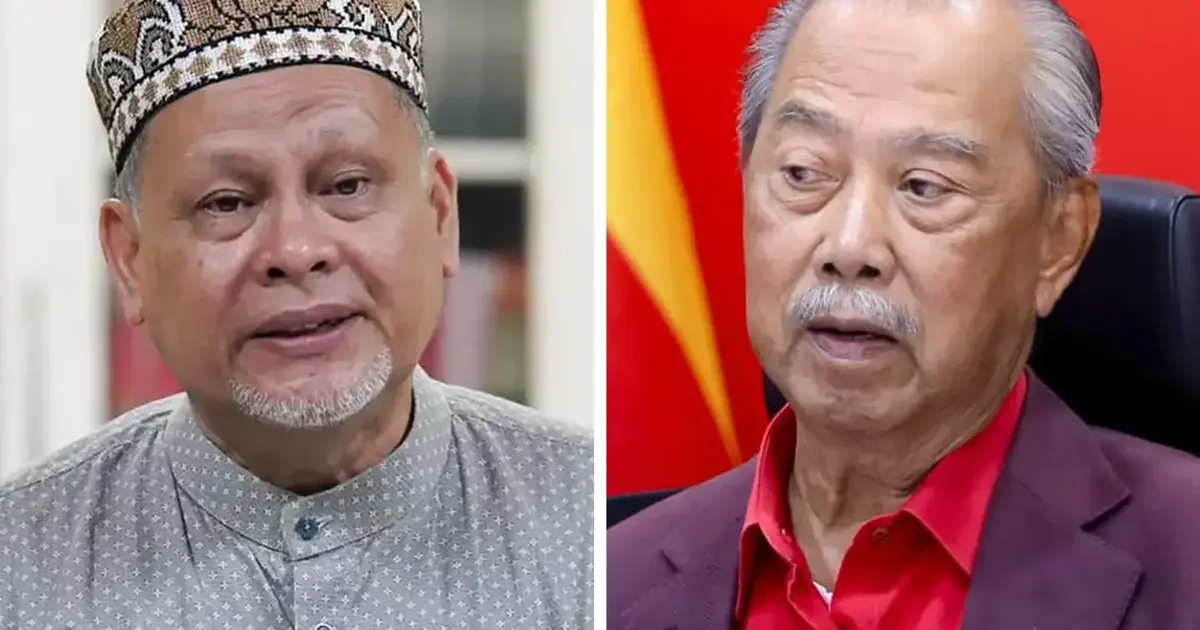
The relationship between PAS and Bersatu has entered a new phase of tension, with senior Islamic party leadership drawing a clear line in the sand regarding electoral cooperation and political rivalry. PAS vice-president Amar Abdullah has characterised recent statements from Bersatu president Muhyiddin Yassin about contesting seats as fundamentally incompatible with their current coalition arrangement, exposing deepening fractures within Perikatan Nasional that observers have long anticipated.
Amar Abdullah's position reflects a broader irritation within PAS circles over what the party perceives as contradictory signals from their coalition partner. The apparent contradiction lies at the heart of the matter: Bersatu cannot reasonably claim coalition membership while simultaneously planning to directly challenge PAS's electoral prospects in constituencies where both parties command significant support. This structural tension highlights a critical weakness in the coalition that has governed Malaysia since 2023.
The underlying issue transcends simple political posturing. Coalition governance in Malaysia requires genuine trust and clearly defined territorial arrangements between member parties. When one partner begins publicly discussing competition against another while maintaining formal alliance status, it creates uncertainty about the stability of the entire arrangement. Other coalition members and potential voters become confused about the coalition's true intentions and internal hierarchy of priorities.
Bersatu's position within Perikatan Nasional has always been somewhat precarious despite holding the prime ministerial position through Muhyiddin Yassin. The party lacks the grassroots organisational infrastructure that PAS has meticulously built across decades, particularly in Malay-Muslim constituencies where both parties compete for support. This organisational gap has likely fuelled Bersatu's interest in expanding its electoral footprint, but doing so within the existing coalition creates obvious contradictions.
PAS's demand effectively forces Bersatu into making a strategic choice that carries significant consequences either way. Remaining in the coalition while abandoning electoral ambitions risks demoralising Bersatu members and supporters who see the party as having chosen constraint over growth. Conversely, leaving the coalition to pursue independent electoral strategies would destabilise the current government and fundamentally reshape Malaysian politics, potentially ushering in an opposition comeback after nearly two years of Perikatan Nasional governance.
For Malaysian voters and political observers, this clash illuminates a fundamental problem with the country's coalition politics. The Perikatan Nasional arrangement was often presented as a government of shared values and complementary strengths, yet the tensions emerging suggest it was primarily a marriage of convenience born from the 2022 political upheaval. Without genuine ideological unity or long-term institutional commitment, coalition partners remain perpetually tempted to pursue unilateral advantages.
The timing of Amar Abdullah's remarks also carries significance in the Malaysian political calendar. With speculation about early elections becoming increasingly common, each coalition member calculates its electoral prospects under different scenarios. PAS leadership evidently believes the Islamic party can perform effectively in contests against rivals, including Bersatu, and may see value in forcing that confrontation sooner rather than later when opposition parties might still be disorganised.
Regionally, this Malaysian political drama reflects broader Southeast Asian trends where electoral coalitions formed in crisis moments struggle to maintain cohesion once immediate threats diminish. Thailand, Indonesia, and the Philippines have all experienced similar coalition fractures as partners reassess their strategic interests after initial crisis responses. The question for Malaysia is whether Perikatan Nasional leadership can manage these tensions through negotiation or whether they will calcify into irreversible divisions.
Bersatu's response to PAS's ultimatum will significantly shape Malaysian politics over coming months. The party led by Muhyiddin Yassin has previously demonstrated political flexibility and pragmatism, but the cost of backing down from electoral aspirations may prove too high for internal party dynamics. Bersatu members and supporters joined the party partly based on its growth trajectory and independence from larger entities like UMNO, expectations that accepting permanent junior status would undermine.
The broader coalition stability question extends beyond just Perikatan Nasional. UMNO's position within the governing structure, while complicated, depends partly on the continued functioning of the larger coalition. Any PAS-Bersatu split would force UMNO to recalibrate its own political strategy and coalition commitments, potentially reopening conversations about returning to UMNO's historical dominance role or fundamentally restructuring Malaysian governance arrangements.
For opposition parties, particularly PKR and the Democratic Action Party, these internal coalition tensions create unexpected opportunities. A weakened or fractious government becomes vulnerable to defections and legislative challenges, though unseating an incumbent remains difficult in Malaysian politics where party switching carries costs for individual politicians.
Ultimately, PAS's ultimatum represents a test of Perikatan Nasional's viability as a long-term governing coalition. If Bersatu capitulates to PAS pressure and abandons electoral ambitions, the coalition becomes essentially a PAS-dominated vehicle with junior partners, raising questions about why other parties would remain. If Bersatu breaks away and contests independently, the coalition splinters entirely. Neither option appears attractive, yet continuing current tensions guarantees eventual rupture.