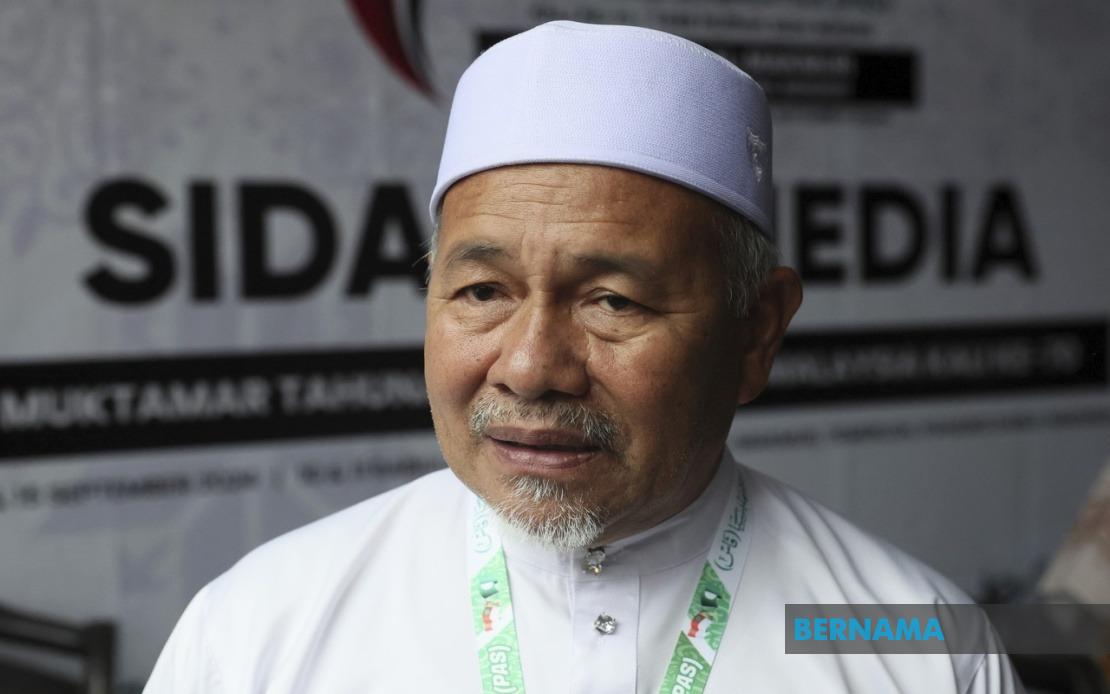
The political pressure on Malaysian authorities to bring fugitive businessman Low Taek Jho to justice intensified this week when the ruling coalition's Islamic partner doubled down on demands for his extradition and trial at home. Speaking at a divisional gathering in Kota Bharu, PAS deputy president Datuk Seri Tuan Ibrahim Tuan Man rejected the notion that Malaysia should merely follow the lead of foreign jurisdictions in prosecuting the man at the centre of one of the country's most damaging financial scandals.
Tuan Ibrahim's comments arrive amid swirling international speculation about a potential presidential pardon from incoming United States President Donald Trump. Reports surfaced that Jho Low was among roughly 250 individuals under consideration for clemency as the United States marked the 250th anniversary of its independence. The prospect of a pardon from Washington has rattled Malaysian officials who have maintained the case as a cornerstone of their anti-corruption messaging and demonstration of commitment to the rule of law.
The PAS leader framed his call for action in nationalist terms, emphasizing that Malaysia's own legal system carries full legitimacy and that the nation need not defer to American decisions in this matter. His statement underscores a broader tension in the 1MDB affair: while the scandal has been prosecuted across multiple jurisdictions including the United States, Singapore, and Abu Dhabi, Malaysia remains the primary victim of the funds' alleged misappropriation. The scale of the economic and reputational damage inflicted on Malaysia provides, in PAS's view, ample justification for the country to mount its own comprehensive legal proceedings.
The timing of Tuan Ibrahim's remarks reflects broader anxieties within Malaysia's political establishment. Prime Minister Datuk Seri Anwar Ibrahim had only the day before reaffirmed the government's commitment to pursuing Jho Low through the Malaysian courts, even as reports of a possible Trump pardon gathered credibility. That sequential positioning—with the prime minister speaking first and then a senior coalition partner amplifying the message—suggests coordinated concern across government about the risk that diplomatic or political developments in Washington could undermine years of investigative and legal work here.
Jho Low's continued fugitive status represents an unresolved wound in Malaysia's recent history. The businessman disappeared amid the unfolding 1MDB scandal, which resulted in the downfall of the previous Najib Razak administration and became emblematic of systemic corruption at the highest levels of government. His absence from Malaysian courts has meant that many Malaysians have never witnessed a full accounting of his role in the scheme within their own legal system, which observers say has complicated public understanding of the affair and closure for affected citizens.
The extradition challenge presents a practical complication to Tuan Ibrahim's demands. Jho Low's current whereabouts have long been a matter of speculation, with various reports suggesting he has found refuge in jurisdictions beyond Malaysia's immediate reach. The formal extradition process requires cooperation from host governments and navigation of complex bilateral legal treaties. Malaysia has pressed for his return on multiple occasions, but geographical distance and diplomatic complexities have thus far prevented enforcement.
The 1MDB case itself has exposed vulnerabilities in Malaysia's capacity to pursue white-collar crime across borders and secure the return of fugitive defendants. Over the past decade, the country has recovered billions of ringgit through settlements and court proceedings, yet the absence of the principal architect of the scheme from the dock raises persistent questions about the completeness of justice. Jho Low's trials in absentia in Malaysia have resulted in convictions, but local legal experts have noted that a physical presence would strengthen the narrative of accountability and deterrence.
PAS's intervention adds weight to what has been the Anwar administration's consistent public position on the matter. The Islamic party's partnership in the governing coalition means its voice carries particular significance in a government that has sought to establish itself as a serious opponent of graft. For PAS, a party that campaigned on governance and Islamic principles, the case offers an opportunity to demonstrate alignment with anti-corruption efforts across Malaysia's diverse political landscape.
The broader diplomatic context complicates straightforward pursuit of this agenda. The incoming Trump administration in the United States has signalled a willingness to grant pardons based on criteria that may or may not align with Malaysia's legal interests. Should such a pardon materialize, it would not technically prevent Malaysia from pursuing Jho Low through its own courts; however, it would likely complicate practical enforcement and could create awkward diplomatic tensions if the businessman were sheltering in a jurisdiction under American protection or influence.
Tuan Ibrahim's call for authorities to expedite the extradition process reflects mounting impatience with the status quo. He framed the issue not merely as a legal question but as a matter of national interest and economic sovereignty. By characterizing Jho Low's actions as fundamentally a Malaysian problem requiring a Malaysian solution, PAS leaders are positioning the country as having the moral and jurisdictional right to primary claim on his prosecution, a stance likely to resonate with voters who remain animated by memories of the 1MDB era.
For Malaysian readers, the episode highlights an enduring challenge in modern governance: the difficulty of pursuing complex financial crimes committed by well-resourced defendants who can flee beyond national borders. It also illustrates the stakes of Malaysia's relationships with major powers, where decisions made in distant capitals can directly affect the pursuit of justice at home. As the new Trump administration takes office, the question of Jho Low's fate may once again test Malaysia's diplomatic leverage and legal determination.

