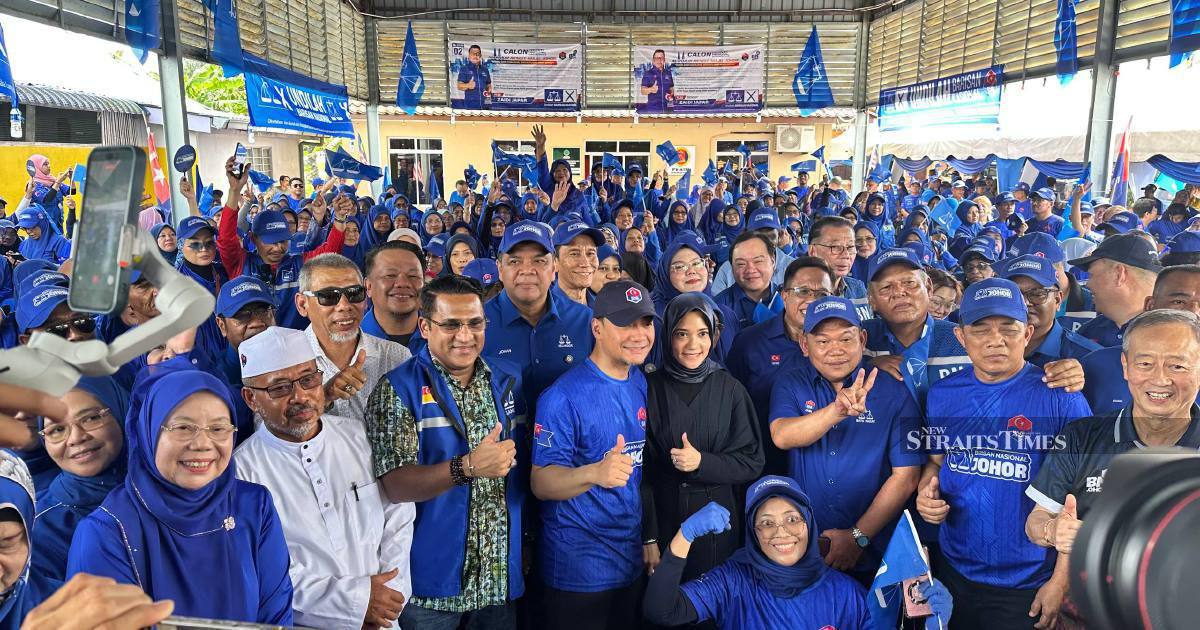
The appearance of two prominent PAS division leaders at a Barisan Nasional gathering in Batu Pahat provides fresh evidence of intensifying efforts to cement political cooperation between Umno and other Malay-Muslim based parties in the run-up to the Johor state election scheduled for next month. The move underscores the broader coalition-building exercise currently underway across the peninsula as parties position themselves for electoral advantage in Malaysia's second-largest state by population.
PAS, which has long maintained complex relationships with both Umno and Pakatan Harapan depending on local political dynamics and national-level shifts, appears to be signalling openness to closer coordination with Barisan Nasional at this critical juncture. The presence of divisional-level leadership at such gatherings carries symbolic weight, suggesting that grass-roots party machinery and decision-makers are aligned with any potential electoral arrangements or cooperation frameworks being discussed at higher levels. This operational coherence across party layers is essential for effective campaign delivery and voter mobilisation during state elections.
For Umno, which continues to anchor Barisan Nasional in terms of membership, organisational strength, and parliamentary leverage, such gestures from PAS represent valuable validation of its efforts to maintain itself as the natural political vehicle for Malay-Muslim constituencies. The federation has faced sustained competitive pressure from Perikatan Nasional, the newer coalition that brings together PAS, Bersatu, and other parties. Securing PAS cooperation in Johor—even if only at divisional level—could prove strategically significant in avoiding three-cornered contests that typically dilute Malay-Muslim votes and fragment the traditional voter base.
Johor carries particular importance in Malaysia's electoral arithmetic. As the state that includes Iskandar Puteri and extensive industrial zones, and as a historically consistent source of parliamentary seats for whichever coalition dominates it, Johor election results often signal broader shifts in peninsular voting patterns. A successful outcome for Barisan Nasional in Johor would provide psychological momentum heading toward the next general election, while a loss would embolden the opposition and suggest that Umno's rehabilitation efforts following the 1Malaysia Development Berhad scandal and internal party turbulence have reached their limits.
The timing of this PAS attendance is equally noteworthy. Coming as multiple political actors are actively organising, the message broadcast through such public appearances is multifaceted. It reassures Umno supporters and Barisan Nasional components that Malay-based parties remain committed to electoral cooperation rather than fragmentation. Simultaneously, it signals to undecided voters in swing constituencies that parties are united on shared Malay-Muslim interests, potentially mobilising support along communal lines.
However, it is important to note that divisional-level attendance does not necessarily guarantee state-wide electoral pacts or formal alliances. PAS has historically played a delicate game of maintaining relationships with multiple political blocs simultaneously, allowing it to position itself as an essential coalition partner rather than a locked-in subordinate. If conditions shift—whether through national-level political developments, factional disputes within Umno, or perceived threats to PAS interests—the party's calculus could change rapidly. Divisional cooperation may reflect local interests that differ from the national party apparatus's broader strategic direction.
The broader context includes ongoing national political realignment following shifting coalitions in the last five years. The rise and subsequent fragmentation of Perikatan Nasional, the complicated governance arrangements that have emerged from no party commanding clear majorities in multiple state assemblies, and persistent internal Umno factionalism have created a landscape where cooperation frameworks are constantly negotiated and renegotiated. Within this environment, any gesture toward strengthened Barisan Nasional cohesion—even at divisional level—receives close scrutiny from analysts, competing parties, and voters attempting to understand where the political centre of gravity lies.
For voters in Johor specifically, the significance of this development hinges on what coalition framework ultimately emerges for the state election. If Barisan Nasional presents a united Umno-PAS ticket across most or all constituencies, it substantially complicates Pakatan Harapan's ability to capture state seats in strongly Malay-Muslim majority divisions where anti-government sentiment alone may prove insufficient. Conversely, should divisions emerge or should PAS maintain independence in contested constituencies, the resulting three-cornered contests would likely favour incumbents and fragment opposition performance.
Regional observers also pay attention to Johor election dynamics because the state's trajectory influences calculations across Brunei, Singapore, and southern Thailand regarding Malaysia's political stability and policy consistency. A state election outcome that strengthens Malay-Muslim coalition frameworks typically correlates with maintained emphasis on religious and communal concerns, potentially affecting bilateral relations and border governance considerations. Conversely, electoral results favouring opposition parties often presage greater attention to secular governance frameworks and more cosmopolitan policy orientations.
Looking ahead, the formal announcement of electoral alliances and candidate slates will provide clearer indication of the depth and breadth of PAS-Umno-Barisan Nasional cooperation in Johor. Until such announcements materialise, events like the Batu Pahat gathering offer important early indicators of elite-level intent, even if they do not guarantee final outcomes. The next month promises increasing clarity on how Malaysia's deeply fragmented political landscape will ultimately structure electoral competition in this pivotal state.

