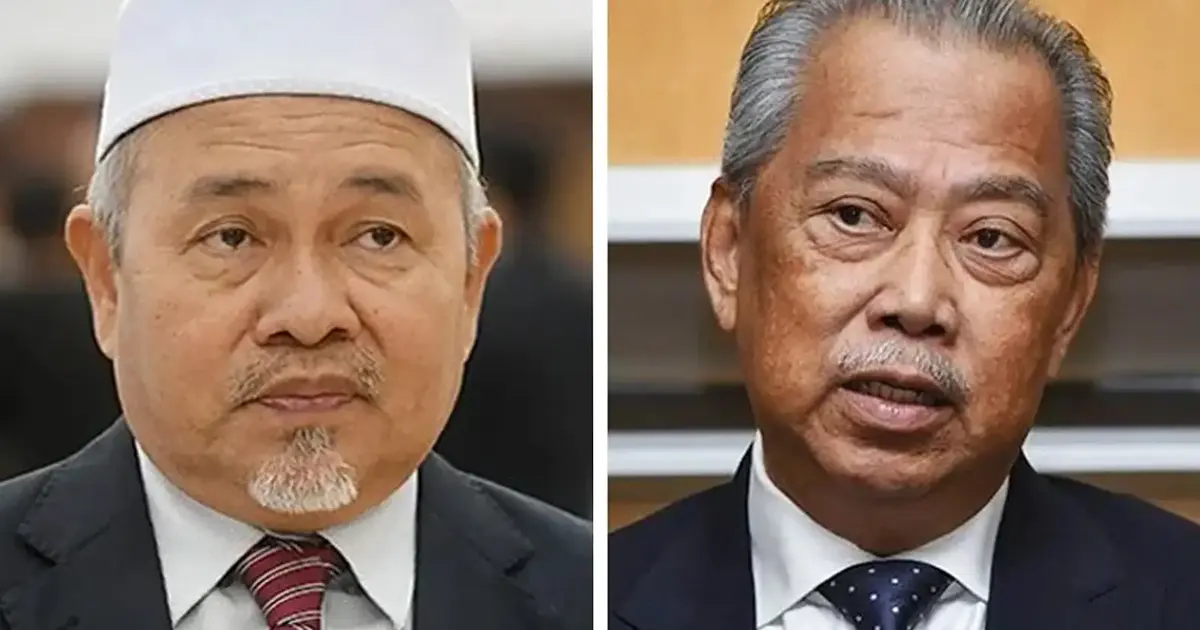
The stability of Malaysia's Perikatan Nasional coalition faces fresh uncertainty following sharp remarks from PAS deputy president Tuan Ibrahim, who has openly questioned whether Bersatu should continue its membership in an alliance he characterised as increasingly compromised. His comments, made in response to Bersatu president Muhyiddin Yassin's recent declaration that he is assembling a separate political coalition, suggest deepening fissures within one of the country's major political blocs.
Tuan Ibrahim's implicit challenge to Bersatu raises fundamental questions about the coalition's internal cohesion and long-term viability. By casting the Perikatan Nasional as a "damaged" entity, the PAS leader has effectively invited Bersatu to reconsider its strategic positioning—a provocative move that underscores the fragile nature of current Malaysian political alliances. This rhetorical move also signals that PAS, as the dominant partner in PN, is prepared to reshape the coalition according to its interests, regardless of whether other members remain committed to the existing structure.
Muhyiddin Yassin's announcement that he intends to form a new coalition appears to have been the catalyst for Tuan Ibrahim's public intervention. Rather than waiting for Bersatu to formally announce its departure, the PAS deputy president has essentially acknowledged what many political observers had already suspected: that Bersatu's future within Perikatan Nasional is untenable if Muhyiddin pursues his stated objectives. The timing of these remarks suggests a coordinated response or a calculated effort to set the terms under which Bersatu might exit the alliance.
For Malaysian political analysts, Tuan Ibrahim's intervention reveals the transitional state of the nation's coalition politics. The Perikatan Nasional, which was formed in 2019 as an alternative to Pakatan Harapan, has served as a counterweight to the ruling opposition coalition. However, internal contradictions between PAS's Islamist ideology and Bersatu's more pragmatic, multiethnic approach have long created tensions. These fundamental differences have become increasingly difficult to paper over, particularly as Muhyiddin seeks to expand his political space beyond the existing PN framework.
The broader implications for Malaysian governance are significant. Coalition instability at the federal level creates uncertainty in policymaking and can undermine the government's ability to implement long-term economic and social initiatives. Regional investors and international observers often view coalition volatility as a sign of political immaturity, potentially affecting Malaysia's attractiveness as a destination for foreign direct investment. Additionally, frequent coalition reorganisations consume political energy that might otherwise be directed toward addressing pressing national concerns such as economic inequality, education reform, and infrastructure development.
Tuan Ibrahim's challenge also reflects the reality that PAS, as the largest party in Perikatan Nasional, increasingly views itself as capable of governing independently or with a more carefully selected set of partners. By questioning why Bersatu would remain in a "damaged" coalition, the PAS leader is essentially signalling that his party's interests are no longer fully aligned with maintaining the current arrangement. This repositioning could reshape the political landscape if other PN members interpret his remarks as permission to explore alternative alliances.
From a Southeast Asian perspective, Malaysia's coalition dynamics are being watched closely by neighbouring countries and regional analysts. Political instability in the region's second-largest economy can have ripple effects throughout ASEAN, influencing everything from trade negotiations to regional security arrangements. A prolonged period of coalition jockeying in Malaysia could distract from critical regional initiatives and reduce Kuala Lumpur's diplomatic bandwidth at a time when regional cooperation is increasingly vital.
Bersatu's position is particularly delicate. The party, which split from UMNO in 2016, has been seeking to establish itself as an independent political force. If Muhyiddin's coalition-building efforts gain traction among other parties, Bersatu could position itself as a kingmaker in future government formations rather than as a junior partner locked into an increasingly dysfunctional alliance. Conversely, remaining in Perikatan Nasional offers access to existing political networks and ministerial positions, albeit with diminishing influence if PAS consolidates power.
PAS itself faces strategic calculations regarding the optimal political configuration for its interests. An alliance exclusively with Bersatu might offer greater ideological coherence and reduce internal contradictions, though it would sacrifice the political reach that Perikatan Nasional's broader membership currently provides. The challenge for Tuan Ibrahim and PAS leadership is managing the transition from the current coalition arrangement to whatever configuration emerges next, without losing leverage or appearing to engineer the breakup.
The coming weeks will be crucial in determining whether Tuan Ibrahim's remarks represent the beginning of a formal dissolution of Perikatan Nasional or merely a tactical negotiating position designed to strengthen PAS's hand in internal coalition discussions. Political observers in Kuala Lumpur are monitoring whether Bersatu responds to his challenge and whether other PN members signal their own intentions. The trajectory of these developments will significantly influence Malaysia's political landscape heading into the next electoral cycle.

