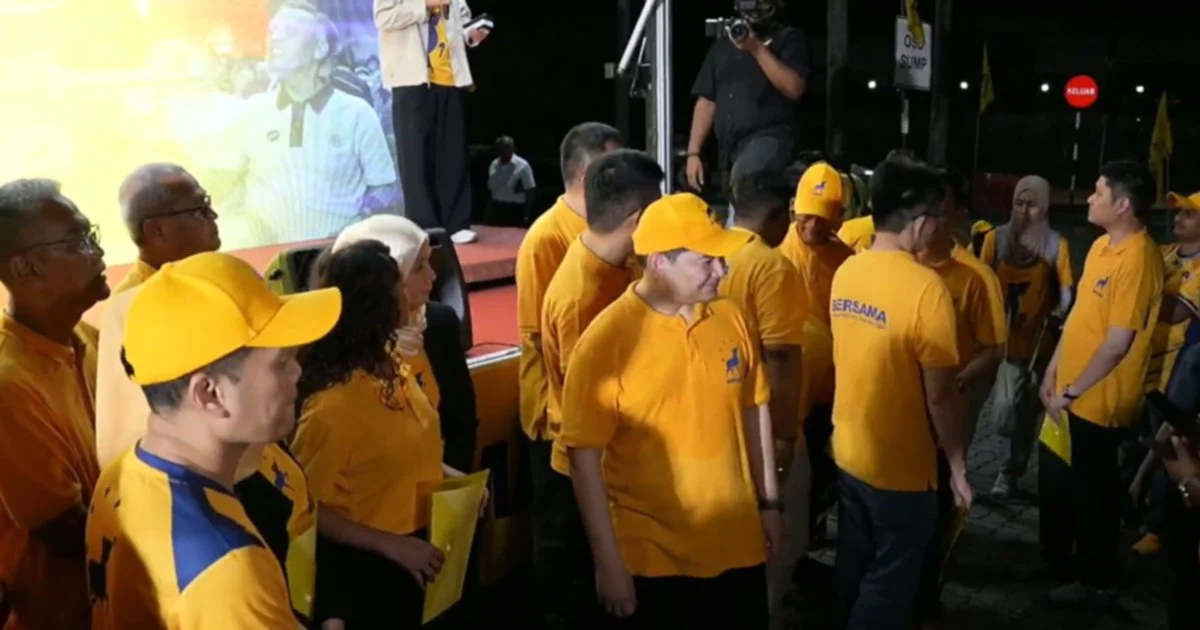
Parti Bersama Malaysia has presented its slate of 15 candidates for the upcoming 16th Johor state election, signalling the party's intention to broaden its appeal beyond traditional political circles by fielding representatives from various economic sectors. The announcement on Friday marks a strategic pivot toward showcasing individuals with practical, ground-level experience in commerce and industry, rather than relying exclusively on established political figures or party loyalists.
The candidate list reflects a conscious effort to connect with ordinary Malaysians by nominating those whose professional lives span the retail economy, entrepreneurship, and transport sectors. Among the nominees are an entrepreneur with business establishment experience, a supermarket manager with expertise in large-scale retail operations, and a logistics worker familiar with the complexities of supply chain management. This composition suggests that Bersama aims to position itself as a party attuned to the everyday concerns of workers and small business operators across Johor.
Johor, as Malaysia's second-largest state by population and a significant industrial hub, has traditionally been a competitive political battleground. The state's economy encompasses everything from manufacturing and petrochemicals to agriculture and tourism, making economic messaging crucial during electoral campaigns. Candidates with direct experience in these sectors can credibly address issues like employment, business regulation, and workers' rights that resonate with local voters.
Parti Bersama Malaysia's candidacy strategy appears designed to differentiate the party from larger coalition partners or established opposition blocs. By recruiting individuals from working-class and entrepreneurial backgrounds, the party positions itself as less elitist and more attuned to the practical needs of ordinary people. This approach has proven effective for emerging political parties seeking to establish credibility and distinguish themselves in crowded electoral contests.
The diversity of professional backgrounds among the 15 nominees also reflects demographic realities in Johor. The state houses significant populations of retail workers, logistics personnel, and small entrepreneurs who may feel overlooked by traditional party structures dominated by lawyers, businessmen, and career politicians. Fielding candidates from their own communities creates psychological and cultural identification that can translate into electoral support.
However, fielding non-traditional candidates carries inherent challenges. Voters often prioritise parliamentary and state assembly experience, track records in managing public resources, and visibility in local governance. Candidates without prior political experience must quickly establish credibility and demonstrate they can navigate legislative processes effectively. Whether Bersama's nominees can overcome these hurdles will partly determine the party's electoral viability in Johor.
The timing of this announcement places pressure on other political parties competing in Johor to justify their own candidate selections. Larger coalitions and established parties may face questions about why their slates appear disconnected from economic realities faced by workers and small business operators. This dynamic could reshape how candidates are recruited and presented across the entire Johor political landscape.
Johor's electoral significance extends beyond state-level implications. The state's political composition influences the overall balance of power in the Malaysian Parliament, as it contributes a substantial bloc of federal representatives. Political movements in Johor therefore signal broader shifts in voter sentiment that may reverberate across other states during subsequent elections.
Bersama's strategic focus on economic diversity among candidates also hints at underlying internal party calculations about which constituencies might be most receptive to their messaging. Rather than spreading candidates thinly across all available seats, the party appears to be concentrating resources in areas where professional and working-class voters constitute significant portions of the electorate.
The coming months will reveal whether this unconventional recruitment strategy yields electoral dividends or merely creates photo opportunities without substantive political impact. Voter behaviour ultimately depends on local issues, incumbent performance, inter-party dynamics, and campaign execution rather than candidate background alone.
Beyond Johor, Bersama's approach offers insights into how emerging political forces in Malaysia attempt to carve out space in increasingly fragmented electoral competitions. By emphasising representation from working sectors rather than traditional power bases, the party seeks to appeal to voters experiencing economic anxiety and feeling disconnected from established political institutions. Whether this resonates broadly enough to translate candidate diversity into meaningful electoral gains remains to be seen.

