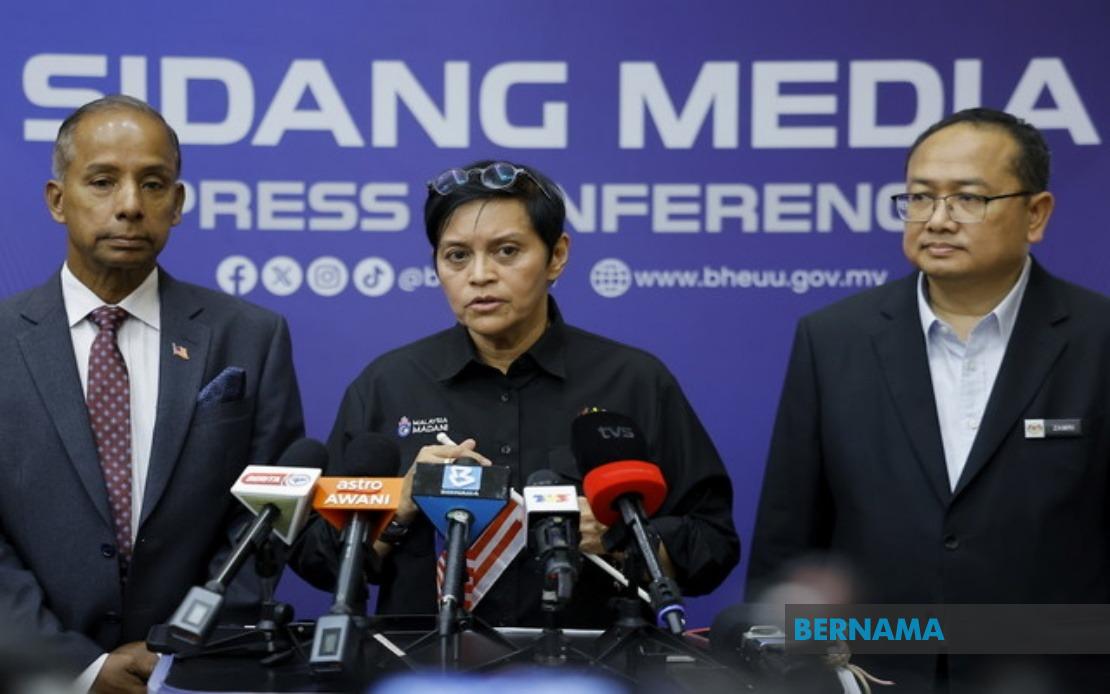
The Freedom of Information Bill 2026 entered a critical phase of legislative review when Malaysia's Parliamentary Select Committee prepared to commence its examination of the proposed statute. Datuk Seri Azalina Othman Said, Minister in the Prime Minister's Department (Law and Institutional Reform), announced that the inaugural Select Committee session would convene to establish the parameters and scope of the review process. This marks a deliberate pivot toward more comprehensive parliamentary scrutiny, moving beyond the initial cabinet consideration to engage wider legislative and public input before the bill's formal presentation to Parliament.
The Select Committee's establishment reflects a significant commitment to transparent governance reform in Malaysia. Rather than proceeding directly to parliamentary debate, the government chose to route the legislation through a structured committee process designed to accommodate multiple perspectives and build consensus across political divides. Azalina emphasised the bipartisan nature of the committee's composition, signalling that the review would not be conducted along strictly partisan lines but would attempt to synthesise viewpoints from both government and opposition members. This approach contrasts with more expedited legislative pathways and suggests authorities recognised the importance of robust engagement on a matter touching transparency and public access to information.
The bill's foundational premise grants Malaysian citizens aged eighteen and above the statutory right to submit written applications for access to government-held information. This represents a potential expansion of transparency in Malaysian public administration, creating a formal mechanism where previously no comprehensive legal entitlement existed. The legislation establishes procedural requirements for how public authorities must respond to and process such requests, creating enforceable obligations rather than discretionary practices. For a nation managing complex administrative systems across federal and state jurisdictions, such standardised procedures could significantly reshape citizen-government interactions and administrative accountability.
However, the scope of the proposed legislation has already provoked measured criticism from civil society organisations and professional bodies. Several NGOs and industry groups have submitted representations arguing that the bill's coverage remains insufficiently broad. These stakeholders contend that crucial categories of government information remain exempted or protected, limiting the practical utility of access rights. The concerns suggest disagreement not with the bill's general philosophy but with its specific boundaries and the strength of its disclosure provisions relative to competing governmental interests.
The bill's current draft structure preserves and reinforces existing secrecy frameworks rather than fundamentally reconsidering them. Information classified under the Official Secrets Act 1972 remains exempt from disclosure through the proposed freedom of information mechanism. Similarly, any documents whose revelation is restricted or safeguarded by separate legislation continue to fall outside the scope of citizens' access rights. This layering of exemptions means the bill functions alongside rather than supplanting established secrecy regimes, a design choice that protects sensitive governmental, security, and defence information but potentially limits transparency gains in practice.
For Malaysian readers and regional observers, this legislative development carries implications extending beyond bureaucratic procedure. Freedom of information statutes fundamentally reshape the relationship between citizens and state institutions, altering power dynamics regarding who possesses knowledge and how that knowledge flows through society. Singapore, Australia, and numerous Commonwealth nations operate mature freedom of information frameworks that have influenced corporate behaviour, political accountability, and judicial oversight. Malaysia's proposed approach will indicate whether the nation intends closer alignment with such transparency-oriented governance models or preferences to maintain traditional executive discretion in information control.
The Select Committee's timeline appears compressed, with expectations that it will formulate recommendations before the next parliamentary session commences. This schedule requires the committee to rapidly process stakeholder submissions, deliberate contentious issues regarding exemption scope, and reach consensus on proposed amendments or refinements. The pace suggests the government seeks timely passage while the legislative window remains open, though it may constrain the depth of public consultation and external engagement possible within that timeframe. Regional precedent suggests such reviews sometimes extend over multiple months to accommodate diverse stakeholder input adequately.
Azalina's specific mention of the bulk or breadth of the bill as requiring evaluation indicates the committee will grapple directly with scope questions. Whether the final legislation applies to all public authorities uniformly, whether it covers government-linked companies, and how it interacts with constitutional provisions protecting legitimate state secrets represent substantive debates likely unfolding within the committee. These technical definitional questions determine whether the statute operates as genuine transparency reform or functions primarily as symbolic legislation creating apparent rights substantially curtailed by exemptions.
The bipartisan committee structure suggests potential for cross-party collaboration on a non-partisan governance issue, though Malaysian parliamentary dynamics occasionally produce surprising partisan dimensions on apparently technical matters. How opposition members engage with the review process and whether they propose significant amendments will indicate whether freedom of information gains status as settled policy consensus or remains subject to electoral swings affecting legislative priorities.
Regionally, Malaysia's freedom of information bill positions the nation within evolving Southeast Asian governance trajectories. Thailand, Indonesia, and the Philippines operate frameworks of varying comprehensiveness addressing public information access. Malaysia's approach will signal whether the nation prioritises convergence with transparency-advancing neighbours or maintains comparative emphasis on information control. For businesses, journalists, researchers, and civil society organisations operating across the region, cumulative movement toward more open information regimes facilitates cross-border operations and strengthens accountability mechanisms.
The forthcoming committee deliberations thus represent more than technical legislative refinement. They constitute a fundamental decision about Malaysia's transparency orientation for coming decades. Whether the government seizes this opportunity to institute genuinely expansive freedom of information rights or opts for cautious reform preserving substantial executive discretion will reverberate through subsequent administrative culture, media relationships with government, and public confidence in institutional openness. The Select Committee's recommendations will reveal whether Malaysia embraces transformative transparency reform or pursues incremental institutional adjustment.

