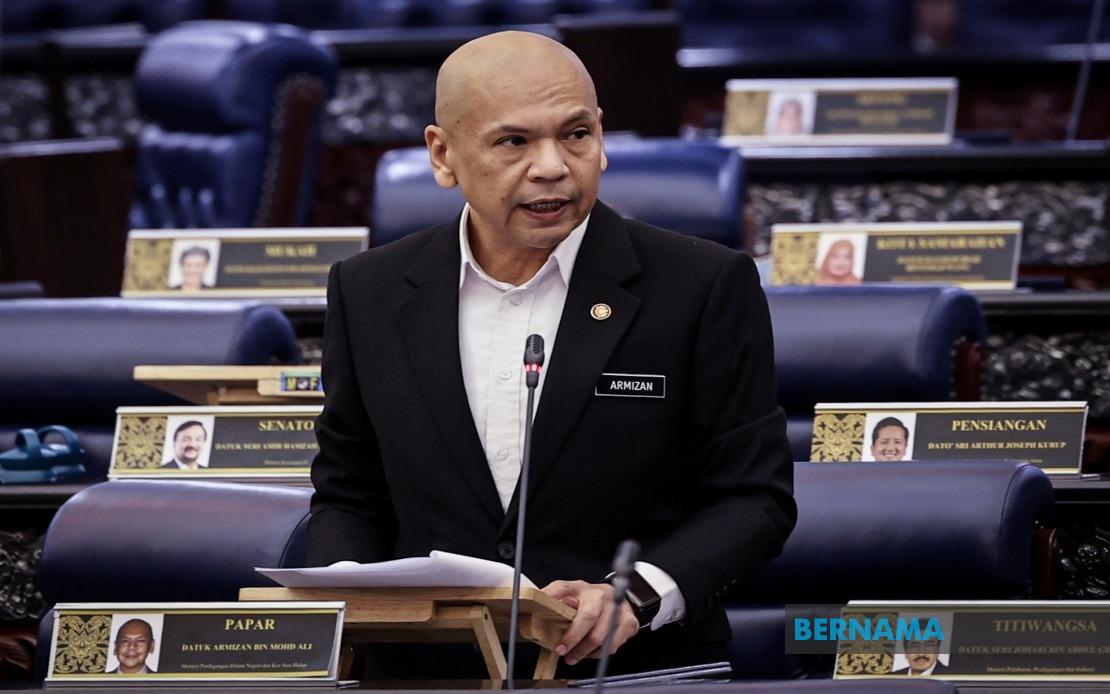
Parliamentarians have stressed the necessity for any investigation stemming from the Royal Commission of Inquiry report on Lembaga Tabung Haji to proceed with full transparency and operational independence, framing such scrutiny as essential to protecting depositor interests and upholding public confidence in the nation's financial institutions. The unified call reflects mounting concern about the credibility of findings that revealed significant operational weaknesses within the pilgrimage fund during the 2014-2020 period, with lawmakers viewing rigorous, impartial enforcement action as the logical next step in the institution's rehabilitation.
Minister of Domestic Trade and Cost of Living Datuk Armizan Mohd Ali articulated a broader frustration with the current discourse surrounding the Tabung Haji situation, characterising recent public debate as having descended into mutual accusation rather than productive investigation. He noted that the proliferation of competing narratives—wherein various stakeholders claim to be victims of slander whilst simultaneously levelling their own accusations—has created a confusing landscape for ordinary Malaysians seeking clarity. This degradation of public discourse undermines the legitimacy of any institutional response, he suggested, making the intervention of formal enforcement agencies not merely desirable but necessary to establish factual truth independent of partisan positioning.
Armizan, who represents Papar in Parliament, emphasised that investigation must be coupled with rigorous professional standards that ensure conclusions rest upon empirical assessment rather than opinion or political consideration. By grounding any enforcement action in documented evidence and legal principle, authorities can break the deadlock of competing narratives and provide the evidentiary foundation required to restore institutional credibility. The minister acknowledged that beyond investigative action, the Royal Commission's 25 improvement recommendations warrant equally thorough examination, as these structural and procedural reforms constitute the pathway to genuine institutional transformation rather than merely addressing past misconduct.
The health of Tabung Haji's operational and financial position today owes partly to recovery initiatives already undertaken by its administration, according to Armizan, who expressed appreciation for management's demonstrated commitment to remedial action. However, he stressed that complacency would be counterproductive at this juncture; the completion of reform recommendations represents the substance of recovery rather than merely its symbolic dimension. By integrating enforcement findings with systematic implementation of governance improvements, the institution can emerge with strengthened organisational direction and enhanced regulatory standing.
Minister of Women, Family and Community Development Datuk Seri Nancy Shukri contributed a distinct analytical perspective to the parliamentary examination of Tabung Haji governance, defending the existing institutional arrangement whereby haj affairs management remains vested in the office of the Minister in the Prime Minister's Department for Religious Affairs whilst financial and investment matters remain under Finance Ministry purview. This division of authority, she argued, reflects legitimate specialisation of governmental capacity according to functional expertise and domain-specific knowledge, thereby enabling more sophisticated oversight while minimising jurisdictional overlap and duplicative administration. The arrangement, when properly coordinated, ensures that each dimension of institutional stewardship receives attention from ministerial offices equipped with requisite technical competence.
A particularly contentious issue arising from the Royal Commission's findings concerned the proportion of board appointments made on political rather than merit-based grounds, prompting Nancy to reframe the underlying question in terms that distinguish between biographical categorisation and actual operational fitness. Rather than viewing political affiliation as inherently disqualifying, she contended that the critical assessment should focus upon whether appointed individuals possess the integrity, technical qualifications, industry experience, demonstrable expertise and institutional capability necessary for conscientious discharge of fiduciary responsibilities. A board member with political background can be entirely legitimate if their professional credentials and track record establish genuine competence for the specific role.
Nancy articulated concern, however, that political identity or factional allegiance must not substitute for rigorous application of fit-and-proper assessment standards. The governance framework surrounding board appointments requires specificity—explicit criteria governing the selection process, clearly delineated areas of required expertise, and transparent selection methodologies through which candidate evaluation can be assessed against pre-established benchmarks rather than post-hoc political convenience. Merit-based appointment frameworks create institutional accountability by establishing objective standards against which board performance can subsequently be measured and evaluated by both internal governance structures and external stakeholders.
The special parliamentary sitting convened to examine the Royal Commission report represented an important institutional mechanism for legislative scrutiny of executive governance, providing the full membership of the Dewan Rakyat opportunity to interrogate and analyse the inquiry's findings before policy responses were finalised. Public release of the report on July 29 reflected governmental commitment to transparency principles, ensuring that the Malaysian public could access the commission's factual findings and recommendations rather than receiving digested interpretations through official channels alone. This approach enhanced the legitimacy of subsequent institutional responses by subjecting them to parliamentary examination and public critique.
The Royal Commission's investigation identified substantive governance deficiencies spanning the 2014-2020 operational period, encompassing management practice, internal controls, investment oversight and institutional accountability mechanisms. The breadth of weaknesses identified underscores that the Tabung Haji's challenges were not incidental lapses but rather systematic failures reflecting inadequate governance frameworks and insufficient executive oversight. The 25 recommendations for institutional improvement therefore address not merely surface-level issues but constitute a comprehensive recalibration of organisational practices and supervisory architecture.
As of July 30, approximately 75 percent of the Royal Commission's improvement recommendations had already been implemented by Tabung Haji management, demonstrating institutional responsiveness to inquiry findings. However, full completion of remaining recommendations requires sustained commitment and adequate resourcing. For Malaysian depositors—predominantly individuals of limited financial sophistication saving for the Hajj pilgrimage—the thoroughness with which governance improvements are institutionalised determines whether the fund can restore the public confidence that institutional failures had damaged. The ongoing parliamentary examination and promised enforcement investigations thus represent essential components of a broader process through which Tabung Haji can transition from an institution marked by governance scandal toward one demonstrating the institutional integrity necessary to justify continued stewardship of Islamic pilgrimage savings.

