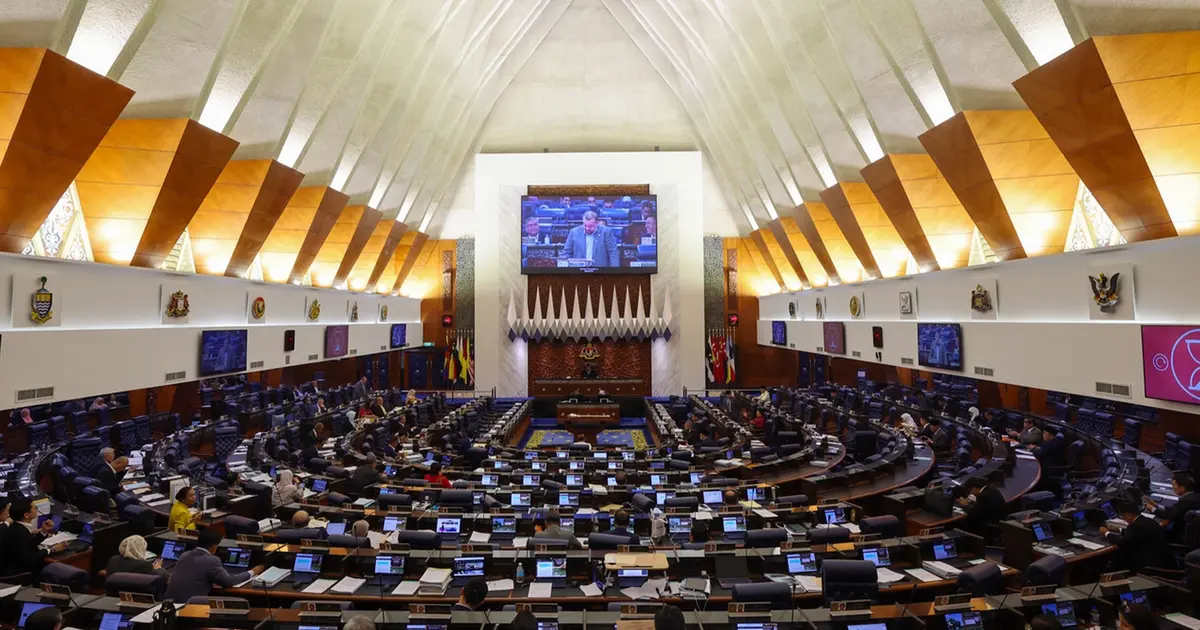
Four significant legislative measures await debate when Malaysia's Dewan Rakyat resumes sitting from Monday, with renewed attention focused on a constitutional amendment that would impose a 10-year ceiling on the prime minister's tenure. The proposal represents a fresh attempt at institutional reform after falling short of the required two-thirds supermajority at the previous parliamentary session, underscoring the challenge of advancing constitutional changes in Malaysia's political system.
The prime minister term-limit bill addresses longstanding concerns about executive power concentration in Malaysian politics. Proponents argue that a defined tenure restriction would foster democratic governance by preventing indefinite hold on the country's highest office and encouraging succession planning within administrations. The 10-year cap—equivalent to two consecutive five-year terms under Malaysia's current electoral cycle—mirrors practices in several established democracies and reflects international norms around executive accountability.
The failure to achieve a two-thirds supermajority in the previous sitting reveals the complexity of building consensus around constitutional amendments in parliament. Constitutional changes in Malaysia require this elevated threshold, a safeguard designed to ensure broad political agreement before fundamentally altering the system's architecture. The shortfall signals that while some lawmakers support the measure, securing sufficient cross-party backing remains problematic, requiring either strategic negotiation or procedural recalibration.
For Malaysia's political landscape, term limits carry particular significance given the nation's history of long-serving premiers and the concentration of power within executive offices. The debate also intersects with broader discussions about institutional checks, democratic renewal, and the balance between executive stability and accountability. A successful passage would mark a watershed moment in Malaysia's constitutional development, fundamentally redefining how leadership transitions occur at the apex of government.
The reintroduction of the bill demonstrates parliamentary commitment to the reform agenda, even amid legislative complexity. Lawmakers pushing the measure must navigate coalition dynamics, regional concerns, and varying interpretations of what term limits mean for effective governance. Some opposition voices contend that premature transitions could compromise administrative continuity, while supporters counter that fixed terms prevent entrenchment and reduce incentives for institutional manipulation.
Beyond the term-limit proposal, the three additional bills scheduled for debate represent parliament's broader legislative workload. These measures collectively address governance, economic, or social priorities that Malaysia's lawmakers have prioritized for the sitting. The composition of this agenda reflects current parliamentary concerns and the government's legislative strategy during the session.
The parliamentary schedule offers observers crucial insight into Malaysia's evolving democratic priorities. Constitutional amendments historically generate substantial political attention and debate, particularly when they reshape executive power relationships. The term-limit discussion will likely feature substantive discourse about Malaysia's constitutional principles, the role of the prime minister within the system, and how institutional design affects governance outcomes.
For Malaysian citizens and regional observers, the outcome carries implications beyond symbolism. Establishing clear executive term limits could influence how future administrations operate, reshape succession planning within political coalitions, and potentially affect the stability and predictability of Malaysia's political system. The constitutional amendment process itself demonstrates Malaysia's parliamentary machinery attempting to address perceived institutional deficiencies through formal legal channels.
The international dimension also warrants consideration. As Southeast Asian democracies navigate questions about presidential and prime ministerial power, Malaysia's approach influences regional discussions about appropriate checks on executive authority. The term-limit debate positions Malaysia within broader conversations about democratic governance standards in Asia.
Parliamentary arithmetic will prove decisive in determining whether the bill clears the two-thirds threshold this time. The government must either consolidate existing support or broker additional backing, while opposition parties decide their stance on an issue that transcends traditional partisan lines. The legislative mathematics surrounding constitutional amendments often produce unexpected alignments, as lawmakers weigh principle against party discipline.
The scheduled sitting from Monday thus assumes particular importance for Malaysia's constitutional trajectory. Successfully advancing the term-limit amendment would signal parliament's capacity to address institutional reform despite procedural complexity, while renewed failure would prompt further strategic reconsideration. Either outcome will resonate through Malaysia's political system and influence the tenor of debates about democratic governance for years to come.

