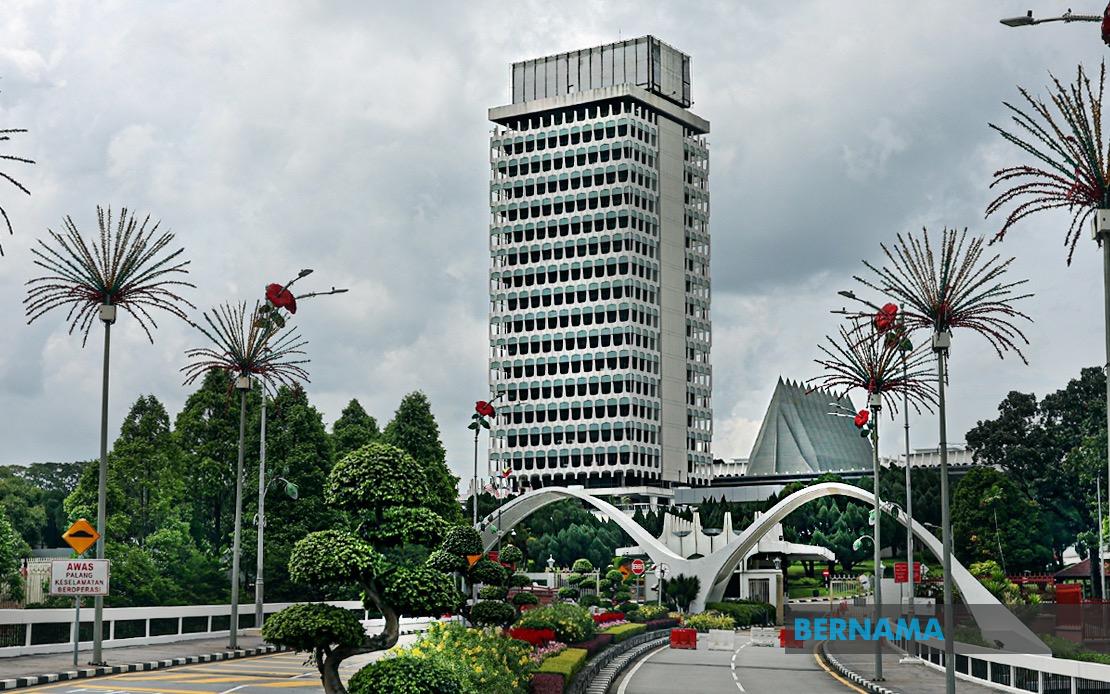
Parliament will tackle three pressing policy areas during today's Dewan Rakyat sitting, reflecting the government's broader agenda on infrastructure resilience, consumer protection, and digital governance. The chamber's agenda encompasses long-term strategies to boost water supply capacity in Johor, measures to reinforce the Malaysia Competition Commission's regulatory capabilities in the property sector, and the rollout of age verification mechanisms for social media platforms—issues that carry significant implications for resource management, housing affordability, and child safety across the nation.
Water scarcity remains a chronic challenge in peninsular Malaysia, and Johor in particular has faced recurrent supply pressures that impact millions of residents across the state and neighbouring regions. During Question Time, Suhaizan Kaiat, the Pulai representative from Pakatan Harapan, will press the Energy Transition and Water Transformation Minister for details on the government's long-term roadmap to expand Johor's water resource capacity. The inquiry will specifically probe plans for constructing additional dams and treatment facilities, as well as the potential role of recycled and reclaimed water in closing the supply gap as demand continues to rise alongside economic growth and urbanisation. This line of questioning underscores growing parliamentary scrutiny of whether current infrastructure investments are sufficient to guarantee reliable water access for future generations.
The water portfolio query arrives at a time when climate variability and population growth have made strategic resource planning increasingly urgent. Recycled water systems, in particular, represent a frontier technology that could meaningfully reduce dependency on conventional sources, yet their expansion requires substantial capital investment and public acceptance. The minister's response may shed light on timelines, funding mechanisms, and the government's confidence in meeting projected demand without rationing or emergency measures becoming routine. For Malaysian readers, especially those in Johor and the wider southern region, the answer carries direct bearing on household water security and economic competitiveness.
On a separate front, the competition and housing affordability crisis will feature prominently when Datuk Seri Ismail Abd. Muttalib, the Perikatan Nasional member for Maran, addresses the Domestic Trade and Cost of Living Minister. His questions target the Malaysia Competition Commission's effectiveness in policing the property sector, where pricing opacity and potential anti-competitive conduct have long frustrated buyers and investigators alike. Ismail will specifically request an account of the ministry's strategy to empower MyCC to monitor housing price offers and promotional packages, as well as detail on how the commission investigates suspected price-fixing and market manipulation within the real estate industry.
This inquiry reflects widespread concern that housing markets in key jurisdictions remain opaque and vulnerable to collusive behaviour among developers. Price-fixing in the property sector—whether explicit or tacit—can lock millions of ordinary Malaysians out of homeownership by artificially inflating valuations. MyCC's capacity to investigate such conduct and impose meaningful sanctions is therefore a litmus test of the government's commitment to tackling the cost-of-living crisis. The exchange may also reveal gaps in current investigative tools, data access, or enforcement powers that parliament might subsequently seek to remedy through legislative amendment.
Digital governance emerges as the third major theme when Syahredzan Johan, the Bangi MP from Pakatan Harapan, questions the Communications Minister on the government's age verification framework for social media platforms. This initiative reflects global concerns about child safety online, with regulators and lawmakers worldwide grappling with how to prevent minors from accessing age-inappropriate content whilst protecting personal data from misuse or government overreach. Syahredzan's specific focus on the proportionality and safeguarding of personal data submitted by users—and crucially, on data deletion protocols once verification is complete—signals parliamentary awareness of the privacy risks inherent in any centralised age-verification system.
The age verification scheme has proven contentious elsewhere. Implementation challenges include ensuring that licensed service providers operate transparently, that data breaches do not expose sensitive information about minors, and that the system does not inadvertently create surveillance infrastructure that governments might exploit. The minister's answers will likely clarify whether Malaysia is pursuing a decentralised model, relying on private companies to manage verification, or a state-backed system. The response may also indicate how the government intends to balance child protection objectives against civil liberties and data protection principles—a tension that resonates across Southeast Asia as multiple nations explore similar policies.
These three questions encapsulate the policy tensions facing contemporary governance: the need to invest in essential infrastructure against fiscal constraints; the desire to protect vulnerable consumers and competition against regulatory complexity and industry resistance; and the imperative to safeguard young people from digital harms without eroding privacy rights. Each issue draws on expertise spanning engineering, competition law, and digital policy respectively, yet all three intersect with the government's broader narrative on delivering prosperity, affordability, and security for ordinary Malaysians.
The sitting itself will run for 16 days through July 16, providing ample time for extended debate and follow-up questions. The extended parliamentary session reflects the government's commitment to maintaining legislative momentum on multiple fronts, though it also suggests a packed agenda that may strain backbenchers' capacity to engage in meaningful scrutiny. For observers in the region, the outcomes of these debates may offer clues to Malaysia's evolving approach to resource governance, market regulation, and digital policy—benchmarks that often influence peer governments' own policymaking calculus.
Beyond the specific questions tabled today, the broader parliamentary sitting underscores the interconnection between infrastructure, market function, and digital rights in modern economic governance. How effectively the government addresses water capacity, housing competition, and age verification will shape public confidence in state institutions and market fairness. The Dewan Rakyat sitting thus serves not merely as a forum for legislative procedure, but as a barometer of executive responsiveness to constituent concerns about living standards, personal safety, and economic opportunity.

