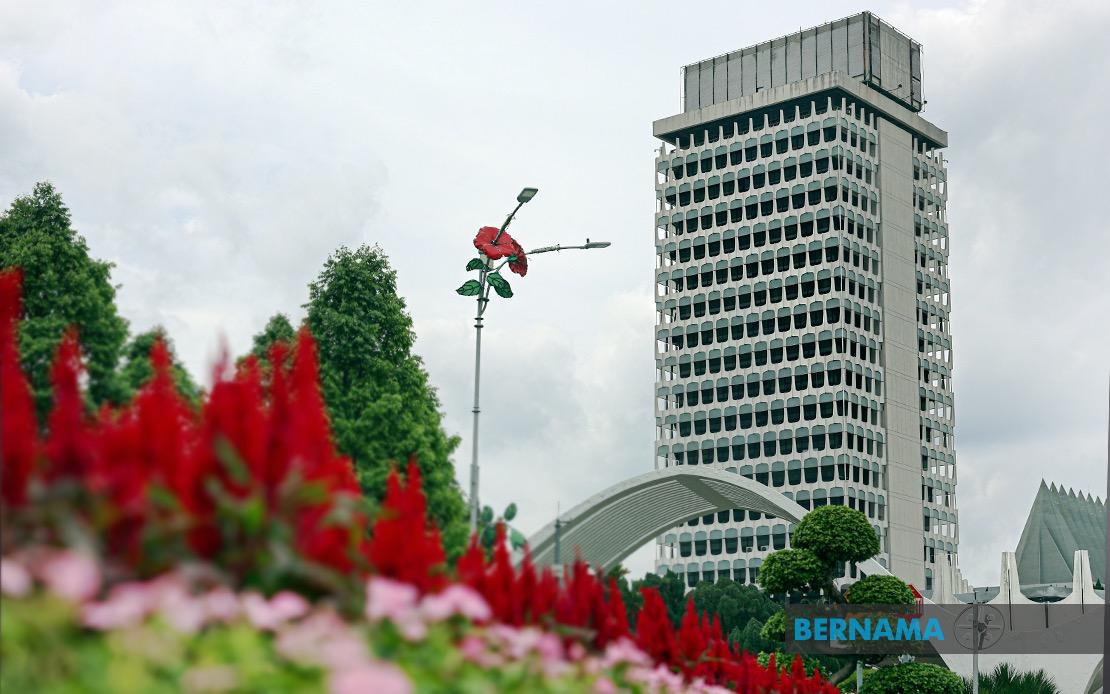
Malaysia's Parliament is set to grapple with three interconnected challenges facing the nation—the structural inequities embedded in global governance, the country's capacity to feed itself during international crises, and the strategic risks posed by over-reliance on foreign military suppliers. The Dewan Rakyat's sitting, which began on July 13 and continues until July 16, brings these issues into sharp parliamentary focus through scheduled questions and legislation, signalling growing concerns among lawmakers about Malaysia's vulnerability in an increasingly unstable world.
The question of United Nations Security Council reform touches on a longstanding frustration shared by many developing nations, including Malaysia. Datuk Seri Sh Mohmed Puzi Sh Ali from the Pekan constituency will press the Foreign Minister to articulate how Malaysia intends to champion structural changes to the UN system and secure a more influential role within the organisation. The veto power wielded by the five permanent members—the United States, Russia, China, France, and Britain—has repeatedly prevented decisive international action on major crises, from Syria to Ukraine. For Malaysia, a middle-power nation without permanent seat privileges, this powerlessness carries real consequences. The question reflects broader dissatisfaction among non-permanent council members about their marginalisation in matters of international peace and security, and points to Malaysia's diplomatic efforts to reshape global governance structures that have remained essentially unchanged since 1945.
Food security looms as an equally pressing domestic concern, particularly in the context of escalating tensions in West Asia that have disrupted supply chains and inflated agricultural input costs worldwide. Shaharizukirnain Abd Kadir, representing Setiu under Perikatan Nasional, will demand clarity on the government's contingency strategies for addressing an anticipated food supply shortage. The question specifically targets how well incentive programmes targeted at agricultural states have bolstered domestic production capacity. Malaysia imports roughly 60 percent of its food, making the nation acutely vulnerable to international price shocks and logistics disruptions. The West Asia crisis has already strained shipping routes and increased freight costs, squeezing margins for local farmers already contending with higher fertiliser and fuel expenses. The parliamentary query underscores recognition that without proactive planning, Malaysia could face severe food inflation or shortages that disproportionately harm lower-income households.
Defence procurement presents a third vulnerability that defence-minded lawmakers are determined to expose. Datuk Awang Hashim will interrogate how extensively Malaysia's armed forces depend on foreign defence contractors and suppliers, and what systemic risks this dependency creates. The question zeros in on concrete impacts: delayed delivery schedules, cancelled contracts, and constraints on strategic asset development. For a country managing complex maritime and land borders across the South China Sea and with ongoing internal security considerations, supply chain unreliability in defence equipment represents a genuine strategic hazard. The question implicitly suggests that Malaysia's defence planning may be held hostage by suppliers' decisions and geopolitical shifts beyond its control, necessitating a serious examination of domestic capability development or diversified sourcing strategies.
Sarawak's emergence as a potential green hydrogen hub across Southeast Asia features in another parliamentary question from Rodiyah Sapiee. She will ask the Science, Technology and Innovation Minister how the government plans to coordinate national energy policy to support green hydrogen development, particularly through partnership with the Sarawak state government. This question reflects Malaysia's recognition that the energy transition represents both economic opportunity and geopolitical positioning. Green hydrogen production could create significant value-added industries in resource-rich states like Sarawak, while also reducing the nation's carbon footprint and aligning with global climate commitments. The question's framing suggests that coordinated federal-state strategy remains unclear, potentially hindering progress on what could become a major economic pillar.
Beyond parliamentary questions, the sitting will advance substantive legislation addressing contemporary challenges. Three communications and media bills—the Communications and Multimedia (Amendment) Bill 2026, the Malaysian Communications and Multimedia Commission (Amendment) Bill 2026, and the Social Work Profession Bill 2026—will receive their first reading. The communications bills are particularly significant given Malaysia's evolving digital landscape and the need to update regulatory frameworks to address emerging technologies, online harms, and data protection. The Social Work Profession Bill signals governmental intent to professionalise social work through statutory registration and standards, reflecting increasing recognition of social services' importance as the country confronts rising inequality and mental health challenges.
The House will also resume deliberation on the Control of Paddy and Rice (Amendment) Bill 2026, another food security-related measure that directly addresses Malaysia's rice production and supply management. This legislation sits at the intersection of agricultural support, food self-sufficiency, and rural welfare, demonstrating that parliamentary attention to food security encompasses both immediate crisis planning and longer-term structural reforms. The resumption of debate on this bill before ministerial wrap-up indicates that substantial discussion has already occurred, suggesting either complexity in the provisions or constituency divisions on implementation approaches.
The 16-day parliamentary sitting reflects a packed agenda that mirrors Malaysia's evolving strategic environment. The concentration of questions on global governance reform, food resilience, defence independence, and clean energy transition reveals lawmakers' awareness that traditional assumptions about stability can no longer be taken for granted. Geopolitical fragmentation, climate impacts, supply chain vulnerabilities, and energy transformation are reshaping the context in which Malaysian policymaking occurs. The parliamentary forum provides elected representatives the opportunity to demand accountability from executive ministers and push for integrated approaches to interconnected challenges.
These debates arrive at a moment when Malaysia's development model faces scrutiny. As an upper-middle-income economy dependent on global trade, vulnerable to imported inflation, and aspiring to leadership in Southeast Asia, the nation cannot afford passivity on any of these fronts. The questions posed will test whether the government has genuinely thought through the implications of its dependencies—on the international system, on food imports, on foreign defence suppliers, and on energy transition pathways. The answers provided will shape not only immediate policy responses but also longer-term strategic positioning as regional and global power dynamics continue to shift.

