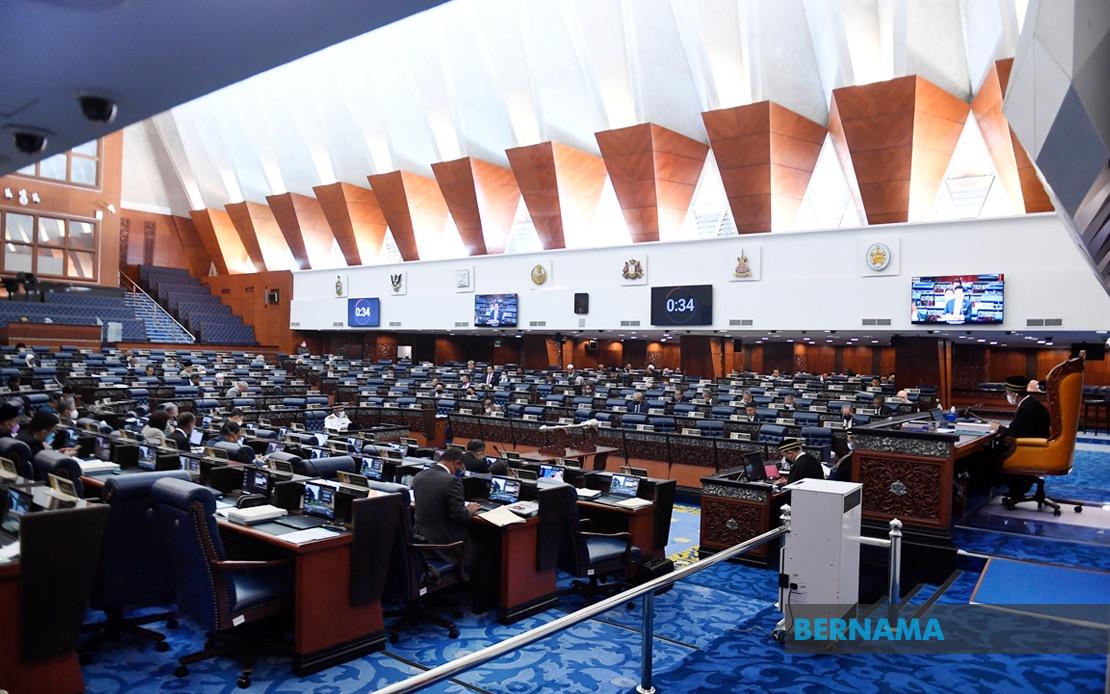
Parliament's agenda for today reveals mounting scrutiny of how the Federal Government distributes resources to state administrations, a contentious issue that directly affects the capacity of regional governments to deliver services to constituents. Datuk Seri Doris Sophia Brodi from GPS-Sri Aman will press the Prime Minister to address persistent complaints that state governments are receiving insufficient allocations relative to the revenue they generate, while also seeking clarity on what mechanisms the MADANI Government intends to deploy to rectify perceived imbalances in the funding formula.
The question reflects broader tensions between federal and state capitals over fiscal autonomy and the adequacy of intergovernmental transfers. Many state governments argue they shoulder considerable expenditure burdens—from infrastructure maintenance to public services—yet receive allocations that lag behind their economic contribution. For Malaysian readers, this debate carries particular weight given the devolved nature of state governance and the reality that service delivery often depends on how equitably federal coffers are distributed across the country's thirteen states and three federal territories.
Equally significant is Parliament's examination of campaign financing rules and electoral conduct standards. Datuk Seri Dr Shahidan Kassim will interrogate whether the restriction on announcing government projects and allocations after nomination day remains in effect ahead of the Johor, Melaka and Negeri Sembilan state elections. This rule, designed to prevent the ruling government from using public resources as campaign tools, has historically been a flashpoint between different political coalitions, with accusations of violation and selective enforcement.
The upcoming state elections in these three constituencies have heightened sensitivity around this matter. The question of enforcement mechanisms takes on fresh urgency, as previous electoral cycles have witnessed disputes over whether certain announcements constitute campaign activity or routine government business. Establishing clear enforcement protocols would provide both government and opposition parties with transparent standards, reducing post-election contestation and bolstering public confidence in the integrity of the poll.
Concern over artificial intelligence-generated misinformation will also occupy Parliament's attention during Question Time. Datuk Seri Ismail Sabri Yaakob has tabled queries to the Communications Minister regarding government strategies to combat deepfake videos and AI-synthesized content that threaten to erode trust in information ecosystems across Malaysia and the region. The proliferation of sophisticated visual manipulation technology poses novel challenges to media literacy efforts and social media governance.
This issue resonates deeply across Southeast Asia, where elections remain vulnerable to coordinated disinformation campaigns. Malaysia's experience during recent elections and by-elections has demonstrated the speed with which manipulated video content can circulate and influence voter sentiment. The government's response—encompassing verification mechanisms, platform-level labelling systems, and public education initiatives—will set a template for how the region addresses a problem that transcends national borders and requires coordination among technology companies, regulators, and civil society.
The parliamentary sitting will also traverse infrastructure and economic readiness. Chong Zhemin from PH-Kampar will ask the Energy Transition and Water Transformation Minister whether Malaysia's electricity grid possesses sufficient capacity to accommodate burgeoning demand from data centres and artificial intelligence enterprises. This question taps into a strategic consideration for policymakers: as Malaysia positions itself as a regional tech hub and seeks to attract investment in digital infrastructure, the energy sector must expand in tandem, particularly if renewable sources are to form the backbone of new generation capacity.
Parallel questions touching social welfare illustrate Parliament's attention to cost-of-living pressures facing ordinary Malaysians. Datuk Awang Hashim will examine the effectiveness of the mySalam health insurance scheme for the B40 group, while Syahredzan Johan focuses on take-up rates of the MADANI Book Vouchers, a cultural initiative aimed at boosting literacy among younger Malaysians. These queries probe whether targeted government programmes are achieving their intended reach and impact.
Workforce participation, particularly among women, features prominently in today's agenda through a question from Datuk Mumtaz Md Nawi regarding TalentCorp's Career Comeback Programme. Addressing the gender employment gap and facilitating women's re-entry into the labour market remains a priority for Malaysia's human capital development, especially given demographic trends and the need to maximise participation across the entire working-age population.
The Program Jualan Rahmah MADANI, a recurring pricing initiative designed to ease living costs, will be scrutinised for consistency and coverage across state constituencies. Datuk Iskandar Dzulkarnain Abdul Khalid's question signals parliamentary interest in whether the programme is being rolled out equitably nationwide and whether frequency can be increased to provide more consistent relief to lower-income households.
Beyond Question Time, the Dewan Rakyat is slated to resume its winding-up debate on the Sexual Offences Against Children (Amendment) Bill 2026, reflecting parliamentary focus on child protection legislation. The chamber will also consider Dewan Negara amendments to the Employment Insurance System (Amendment) Bill 2025 and take up the Cyber Crime Bill 2026, legislation with direct bearing on Malaysia's digital governance framework and worker protections in the modern economy.
Today's sitting encapsulates the breadth of contemporary Malaysian governance challenges: fiscal federalism, electoral integrity, digital safety, energy infrastructure, social protection, gender equity, and child security. The questions tabled signal that both government and opposition benches recognise these interconnected pressures and seek accountability and clarity on execution. For Malaysian observers and regional stakeholders, the responses and ensuing debates will illuminate how Malaysia's political leadership intends to navigate competing priorities while addressing citizen concerns across multiple policy domains.

