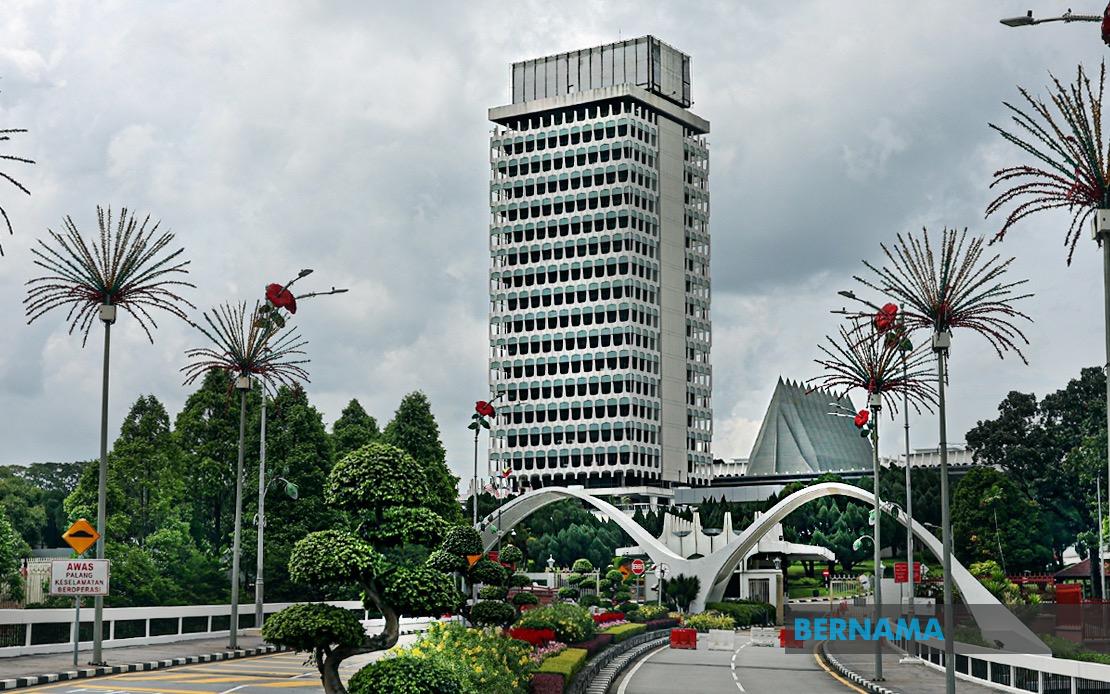
Parliament is set to examine three pressing policy areas as the Dewan Rakyat begins its 16-day sitting that extends to July 16, with lawmakers scheduled to probe the government's implementation of the Online Safety Act 2025, threats to student welfare in educational institutions, and the economic hardship facing small traders following prolonged turbulence in West Asia.
The regulatory architecture underpinning Malaysia's new digital safety framework will come under parliamentary scrutiny as Rodziah Ismail from Ampang poses detailed questions to the Communications Minister about the 10 subsidiary instruments—comprising regulations, guidelines and other supporting documents—currently being drafted to operationalize the Online Safety Act 2025 (Act 886). Her inquiry seeks specifics on the regulatory objectives each instrument pursues, the substantive provisions they contain, their jurisdictional and operational scope, and how far the development process has progressed. This line of questioning reflects broader concerns among legislators that without clarity on implementation timelines and content, the regulatory intent of the parent legislation remains opaque to businesses, technology platforms and the public.
The Online Safety Act 2025 represents Malaysia's legislative attempt to establish guardrails for the digital ecosystem, addressing persistent problems of cyberbullying, misinformation, illegal content distribution and harmful online conduct. However, the transition from statutory authority to practical enforcement depends critically on secondary legislation that defines compliance obligations, specifies penalties and penalties for breaches, and establishes procedures for complaint handling and regulatory investigation. Malaysian businesses and foreign technology companies operating locally require certainty about what the subsidiary instruments will demand; the absence of published drafts or consultation timelines has created uncertainty across the digital economy.
School safety emerges as another focus for parliamentary debate, with Roslan Hashim questioning the Education Minister on the current state of pupil protection across Malaysian schools and what safeguarding mechanisms the government has implemented to shield students from accidents, violence, bullying and other environmental hazards. This inquiry carries weight in a context where periodic incidents involving student injuries, interpersonal violence in school compounds, and inadequate safety infrastructure have attracted media attention and parental alarm. The breadth of Hashim's question—encompassing physical safety, psychological harm and environmental threats—signals that parliamentarians view school security holistically rather than as discrete, isolated problems.
Economic pressures on Malaysia's informal and semi-formal business sectors feature prominently in the day's agenda, as Datuk Andi Muhammad Suryady Bandy directs the Finance Minister to detail immediate government support for street vendors, small shop operators and micro-, small- and medium-sized enterprises experiencing acute financial stress from elevated freight costs and supply chain fragmentation triggered by the ongoing West Asia conflict. The prolonged regional instability has created cascading disruptions to international maritime routes, port operations and logistics networks upon which Malaysian small traders depend for inventory replenishment and market competitiveness. Many of these businesses, lacking the capital reserves and supply chain sophistication of larger corporations, face margin compression and reduced turnover as input costs climb while selling prices remain constrained by consumer purchasing power.
Transport infrastructure and road safety also command parliamentary attention. Datuk Seri Dr Wee Ka Siong will request a progress update from the Transport Minister on the Johor Elevated Autonomous Rapid Transit (E-ART) project, a mass transit initiative intended to enhance regional connectivity and reduce vehicular congestion in the southern state. Zakri Hassan, meanwhile, is pressing the Works Minister to justify the rationale and implementation approach for measures intended to improve road safety, suggesting that lawmakers require greater transparency about the design, enforcement and expected outcomes of such initiatives.
Healthcare financing in Sabah emerges as a concern for Datuk Shahelmey Yahya, who seeks assurances from the Health Minister that fiscal consolidation measures undertaken by the federal government will not undermine the quality, scope or availability of public healthcare delivery systems in the East Malaysian state. This question reflects anxieties that austerity-driven budget constraints could compromise hospital operations, specialist services, medical equipment procurement and infrastructure maintenance in Sabah, potentially widening healthcare disparities between the peninsula and the eastern states.
Cybersecurity governance in the context of potential social media age restrictions forms the basis of a question from Riduan Rubin, an independent member representing Tenom. His inquiry asks the Home Affairs Minister to assess the national cybersecurity vulnerabilities and risks that might emerge if the government introduces a minimum age requirement of 16 for social media platform access. This question captures tension between child protection objectives—which motivate age-gating—and cybersecurity considerations, including the risk that age restrictions could drive minors toward unregulated, poorly secured alternative platforms or create fraudulent identity verification schemes that themselves pose security threats.
Beyond the question-and-answer segments, Parliament will advance the Competition (Amendment) Bill 2026 for its second reading, with the Minister of Domestic Trade and Cost of Living tabling the legislation. This amendment bill carries significance for Malaysia's competition policy framework, potentially introducing new provisions affecting merger review procedures, cartel enforcement, abuse-of-dominance cases or consumer protection mechanisms. The timing of the bill—during a period of economic pressure on smaller traders—suggests the government may be signalling an intention to strengthen competitive discipline in concentrated markets or enhance the enforcement toolkit available to competition authorities.
The 16-day sitting represents the Second Meeting of the Fifth Session of the 15th Parliament, scheduled to conclude on July 16. This extended parliamentary schedule signals the government's legislative agenda and prioritization of multiple policy domains, from digital regulation and social safety to economic support and infrastructure development. The breadth of topics—spanning communications, education, finance, transport, health and security—reflects the complex interdependencies characterizing contemporary governance in Malaysia, where digital transformation, regional economic shocks, and domestic welfare considerations demand coordinated policy responses and sustained parliamentary oversight.

