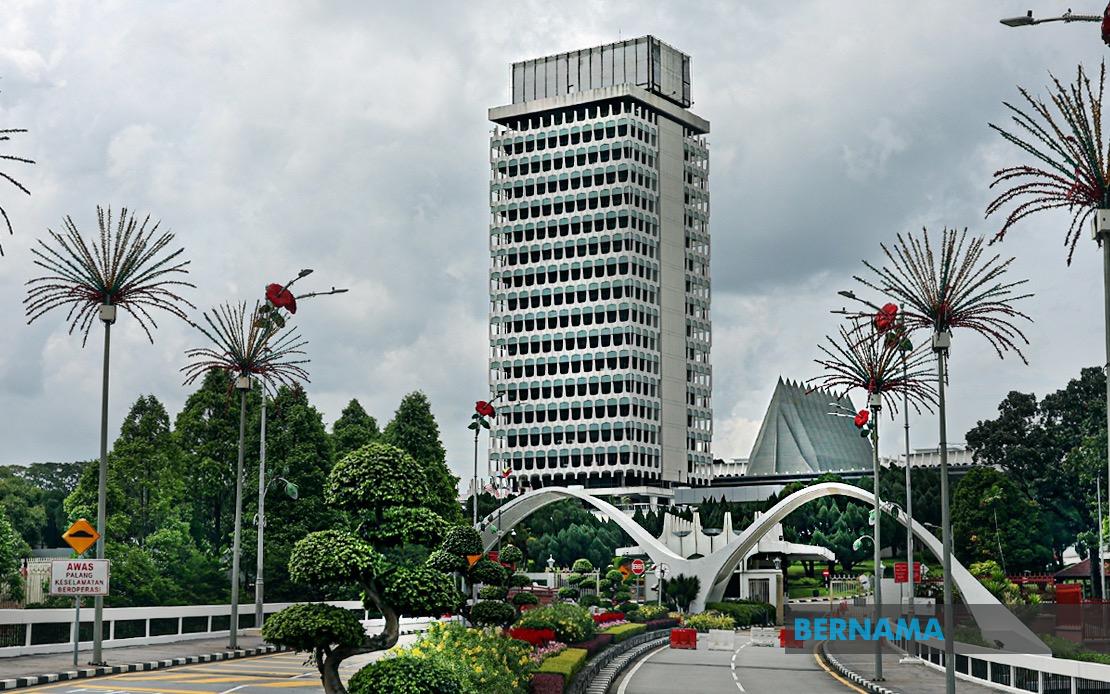
Prime Minister Datuk Seri Anwar Ibrahim moved to quell concerns about unequal federal funding distribution, telling parliament during Ministers' Question Time that nearly all Malaysian states receive government allocations that substantially exceed their tax contributions. The clarification addresses persistent anxieties among state legislators that certain regions face systemic disadvantage in accessing development funds, a concern that gains particular resonance in an economically diverse federation where some states contribute proportionally more to federal coffers than others. Anwar's assertion underscores a fundamental principle underlying Malaysia's fiscal federalism: that allocation decisions reflect developmental priorities and public welfare requirements rather than revenue generation alone.
The Prime Minister outlined that any state government seeking supplementary funding for projects requiring a Notice of Change must enter into renegotiations with the federal administration before additional resources or loans are approved. This procedural requirement reflects growing scrutiny over how development funds are deployed, particularly as states seek flexibility in project implementation amid changing economic conditions. The mechanism signals that while the federal government acknowledges legitimate expansion of project scope, such adjustments demand transparent reassessment rather than automatic approval. For Malaysian state administrators, this represents both a clarification and a constraint—funds exist for genuine development needs, but administrative rigour governs their release.
Anwar additionally emphasised restrictions on announcement of new initiatives during election periods, invoking Section 24B of the Election Offences Act 1954 as the legal foundation. This stricture reflects international best practice around electoral conduct but carries particular significance in Malaysia's political environment, where boundary disputes between electoral cycles and governance windows occasionally blur. The reminder signals the government's intention to maintain clear separation between campaign activities and policy announcements, a principle increasingly important as Malaysia navigates toward its next general election.
Parliament successfully enacted three significant pieces of legislation that reshape Malaysia's approach to digital safety and child protection. The Sexual Offences Against Children (Amendment) Bill 2026 strengthens the legal framework protecting minors from exploitation, responding to documented increases in child-related offences facilitated through digital platforms. Simultaneously, the Cybercrime Bill 2026 criminalises digital forgery—commonly termed deepfake technology—and unauthorised distribution of manipulated intimate imagery, addressing a rapidly emerging threat category that existing legislation had not adequately covered. These measures position Malaysia alongside regional and global peers in confronting technology-enabled harms, though implementation effectiveness will depend substantially on enforcement capacity and coordination between law enforcement agencies.
The Employment Insurance System (Amendment) Bill 2025 underwent parliamentary approval during the week, though detailed provisions remain largely unreported. This legislation likely addresses coverage gaps or adjustment of benefit calculations within Malaysia's existing employee protection framework, forming part of the government's broader labour market modernisation agenda. The amendment signals ongoing refinement of employment protections as economic structures evolve and workforce composition changes.
Minister in the Prime Minister's Department (Law and Institutional Reform) Datuk Seri Azalina Othman Said revealed completion of Malaysia's comprehensive contract law reform study, now presented to parliamentarians for deliberation. The new legal framework extends recognition to third-party rights within contractual relationships and modernises provisions governing commercial agency arrangements. Notably, the reform incorporates artificial intelligence deployment within commercial relationships—a prescient inclusion given rapid AI adoption across Malaysian business sectors. The initiative reflects government recognition that existing contract law frameworks, largely inherited from British colonial jurisprudence and incrementally modified, inadequately address contemporary commercial practices and emerging technologies. Implementation of these reforms could substantially facilitate cross-border commercial engagement and provide greater legal certainty for technology-enabled business models.
Economy Minister Akmal Nasrullah Mohd Nasir detailed government mechanisms for managing essential goods availability and price stability, emphasising daily monitoring protocols and coordination with national energy corporation Petroliam Nasional Berhad (Petronas) and private sector participants. This commitment assumes heightened importance given inflationary pressures affecting regional economies and Malaysian consumer concern about living costs. The minister's emphasis on coordination with major energy suppliers signals recognition that fuel price stability underpins broader price movements across the economy. For Malaysian households already facing pressure on discretionary spending, such government vigilance carries tangible significance in budget planning.
The MADANI Book Voucher programme 2026 expansion emerges as a substantial intervention supporting student access to educational materials. Projected to benefit over 2.2 million learners under Ministry of Education supervision, the RM221.6 million allocation represents the government's continued commitment to ensuring economic barriers do not restrict educational opportunity. The e-voucher redemption mechanism, permitting RM100 per student spending from late June through October, modernises delivery by reducing administrative friction compared to traditional printed voucher systems. For students in lower-income households and less-developed regions where physical bookshop access may be limited, digital voucher mechanisms potentially improve effective utilisation rates.
Communications Minister Datuk Fahmi Fadzil outlined regulatory finalisation under the Online Safety Act 2025, with particular attention to private messaging features and platform obligations regarding harmful content. The government's exploration of agentic artificial intelligence technology for complaint management suggests pragmatic recognition that traditional complaint handling mechanisms struggle with the volume and velocity of online safety matters. This approach—leveraging technology to address problems partly created by technology—reflects mature policymaking but introduces fresh questions about algorithmic decision-making in content moderation and potential bias in automated enforcement. The ministry's encouragement of platform self-deployment of AI detection tools represents a public-private partnership approach, though effectiveness ultimately depends on platform compliance and resource commitment.
The parliamentary sitting, scheduled to conclude on July 16 following its June 22 commencement, has demonstrated focus on legislation addressing emerging societal challenges whilst simultaneously attending to established governance concerns. The breadth of topics—from macroeconomic management through digital safety to youth educational support—reflects Parliament's expanded legislative agenda as Malaysian society grapples with technological disruption, climate adaptation, and economic complexity. These second-week developments position the legislature as engaged with contemporary governance demands, though subsequent implementation will determine whether legislative intent translates into meaningful community outcomes. For Malaysian stakeholders monitoring parliamentary activity, this week signalled serious engagement with modernisation of legal and regulatory frameworks, balanced against attention to immediate consumer welfare concerns.

