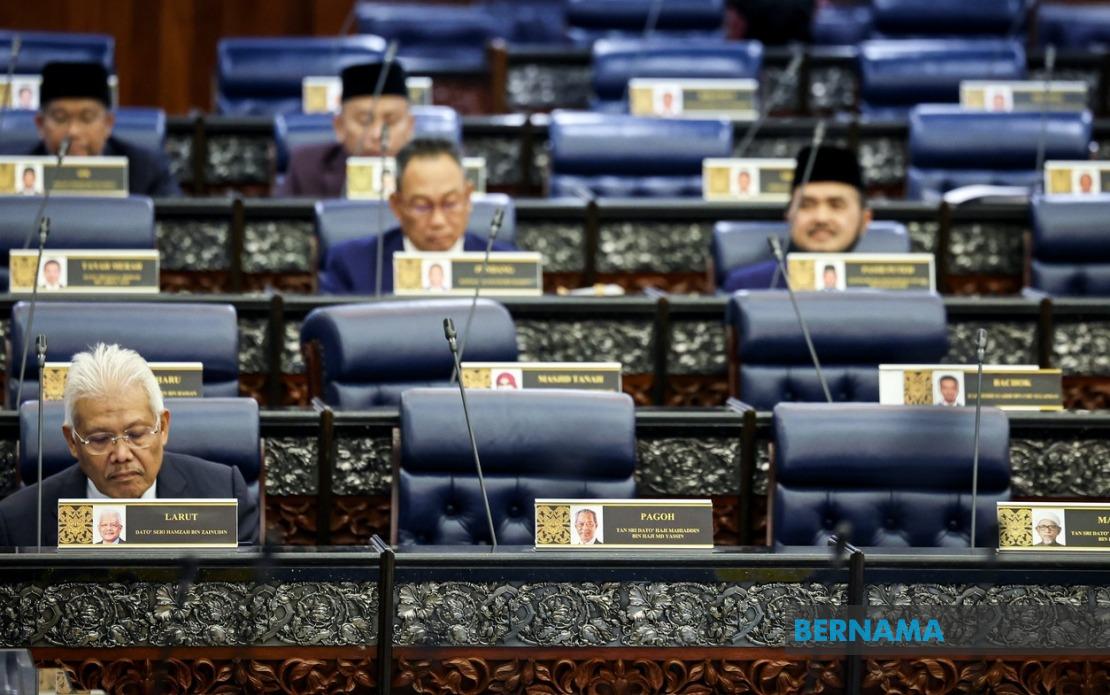
The Dewan Rakyat Speaker Tan Sri Dr Johari Abdul has officially received and processed a formal notification confirming that Larut MP Datuk Seri Hamzah Zainudin now holds the position of opposition leader. This administrative confirmation, communicated to the news agency, represents a significant moment in Parliament's institutional framework as it formally documents the leadership change within the legislative opposition.
The Speaker's verification of Hamzah's status arrives at a pivotal juncture, coinciding with the impending parliamentary sitting scheduled to commence on June 22. The timing underscores the procedural necessity of clarifying parliamentary hierarchies before legislative business resumes, ensuring that all members understand the formal structure of opposition leadership that will operate throughout the coming session.
Alongside the confirmation of Hamzah's opposition leadership, the parliamentary administration has implemented revisions to the physical seating arrangements within the chamber. These modifications, which the Speaker disclosed in his communication, reflect routine adjustments made to accommodate MPs' individual requests and parliamentary operational requirements. Such changes, while appearing purely logistical, carry symbolic weight in parliamentary tradition, as seating placement carries significance in terms of visibility and prominence within the chamber.
Pageh MP and Bersatu president Tan Sri Muhyiddin Yassin has been among those affected by the realigned seating plan. According to the most recent parliamentary documentation released on June 19, Muhyiddin's seat has been relocated to Block E within the Dewan Rakyat chamber. This relocation occurred at his own request, indicating that the former prime minister sought a different positioning within the parliamentary space, a detail that provides insight into the practical management of the chamber's physical layout.
Despite these broader organisational changes, Hamzah's specific seating location as opposition leader has remained constant. He maintains his position on the opposition front bench, the prominent row reserved for the leadership echelon of the parliamentary opposition. This continuity in his placement signals the stability of his role, even as other arrangements undergo modification. His continued presence in this symbolic location reinforces his official status within the opposition structure.
Adjacent to Hamzah on the opposition front bench sits Kemaman MP and Perikatan Nasional chairman Datuk Seri Dr Ahmad Samsuri Mokhtar, whose seating arrangement has likewise been preserved. This pairing reflects the coalition dynamics within the opposition bloc and maintains the physical proximity of key figures essential for coordinating parliamentary strategy and messaging. The unchanged nature of this arrangement suggests an intentional effort to preserve the structural integrity of opposition leadership positioning.
The confirmation of Hamzah's role builds upon an earlier public announcement made by PAS president Tan Sri Abdul Hadi Awang during the Reset Malaysia Convention. At that gathering, Hadi had articulated that Hamzah had resumed his responsibilities as opposition leader, marking a formal declaration of the leadership transition. The Speaker's subsequent administrative confirmation translates this political pronouncement into the official parliamentary record, completing the institutional process of recognizing the change.
This parliamentary session, formally designated as the Second Meeting of the Fifth Session of the 15th Parliament, will extend across an extended legislative period running from June 22 through July 16. The duration of nearly four weeks provides a substantial window for substantial legislative work and opposition business, making clear delineation of opposition leadership roles particularly important for the functioning of parliamentary procedure and debate protocols.
For Malaysian readers and political observers, these developments reflect the intricate interplay between parliamentary administration and political leadership. The Speaker's confirmation process, while procedurally straightforward, represents the formal recognition by Malaysia's legislative institution of shifts within political coalitions and opposition structures. The concurrent adjustments to physical seating arrangements, including Muhyiddin's relocation, offer a tangible illustration of how parliamentary hierarchies translate into spatial organization within the chamber itself.
The implications of Hamzah's confirmed status extend beyond symbolic recognition. As opposition leader, he gains formal speaking rights, the capacity to table opposition business, and responsibility for coordinating opposition legislative responses. This formal confirmation ensures that parliamentary staff, the government, and all members operate with absolute clarity regarding the chain of opposition command and decision-making authority. The clarity provided through such administrative confirmation prevents disputes regarding procedural matters and ensures the orderly conduct of parliamentary business.
The broader context of these arrangements demonstrates Malaysia's commitment to maintaining institutional protocols even amid shifts in political alignments. The careful documentation of the opposition leader's status and the methodical adjustment of parliamentary seating reflects the bureaucratic rigor that supports parliamentary democracy. These seemingly administrative acts provide the scaffolding upon which effective legislative oversight and parliamentary debate depend.

