Parliament's passage of the Social Work Profession Bill 2026 on July 14 represents a watershed moment for social work in Malaysia, establishing a formal legislative mechanism to govern and strengthen the profession through creation of the Malaysian Social Work Profession Council. The bill secured approval after deliberations involving 23 lawmakers spanning both government and opposition benches, signalling broad consensus on the need for professional standards in a field that touches some of Malaysia's most vulnerable populations.
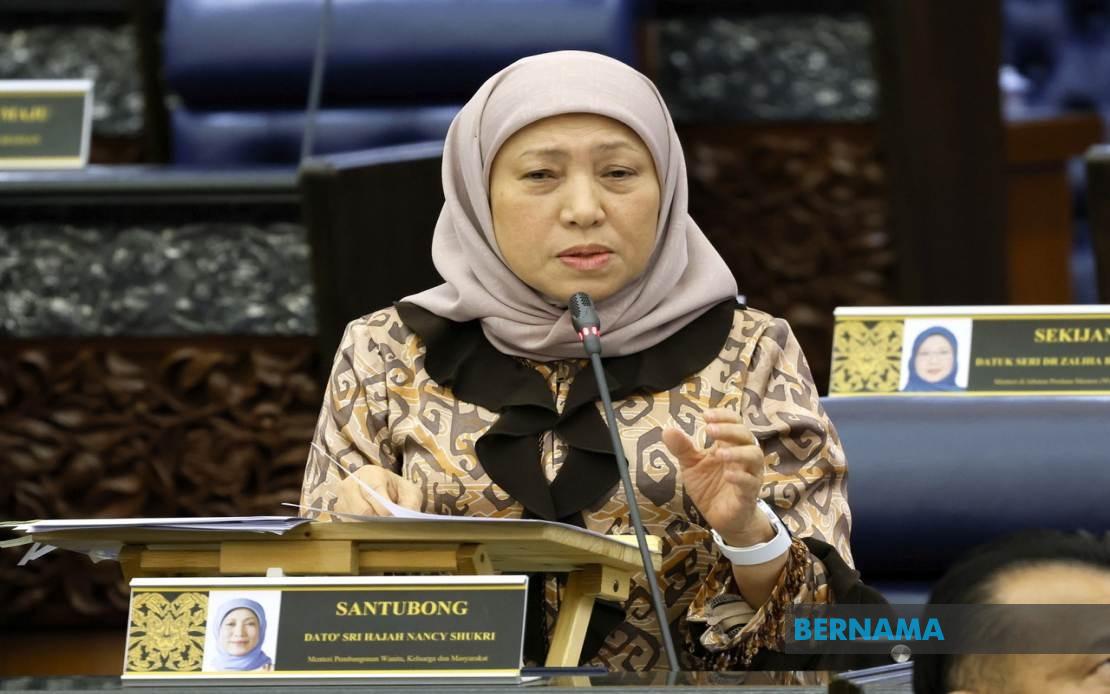
Minister of the Women, Family and Community Development Ministry Datuk Seri Nancy Shukri characterised the legislation as the culmination of efforts spanning more than a decade to recognise social work as a legitimate profession. Her remarks underscore how long Malaysian policymakers have grappled with formalising standards in a sector where practitioners frequently manage sensitive cases involving child protection, disabled persons, elderly citizens, and families in crisis. The legislation addresses what many viewed as a critical gap in Malaysia's social care infrastructure.
The implementation approach adopted by the government demonstrates pragmatic phasing designed to build institutional capacity gradually. In its initial phase, the act mandates registration of all private sector social workers, encompassing those employed by non-governmental organisations, community-based organisations, private companies, and those operating independently. Public sector social workers face a more lenient threshold initially, requiring registration only when they practice social work outside their official governmental roles. This differentiation reflects the government's recognition that public servants already operate under existing supervision systems, training protocols, standard operating procedures, and ethical codes.
The rationale for this staged approach addresses real structural constraints within Malaysia's public bureaucracy. Nancy explained that public sector social workers currently operate under layered supervision mechanisms and must navigate intricate coordination procedures involving multiple ministries and agencies before any mandatory registration system could feasibly take effect. Rather than imposing immediate comprehensive requirements that might overwhelm administrative capacity, the government opted for a pathway that establishes the Council first, allowing it to develop necessary regulations and frameworks before extending requirements more broadly.
Once operational, the Malaysian Social Work Profession Council will shoulder substantial responsibilities in professionalising the field. Beyond registering practitioners, the Council will develop qualifications standards and competency frameworks tailored to Malaysia's context, establish mechanisms for handling complaints against practitioners, draft safety guidelines protecting social workers themselves, and explore proposals including a national reciprocity arrangement for social workers. These functions collectively create infrastructure for genuine professional accountability and continuous quality improvement across the sector.
Parliamentary debate revealed important critiques of the legislation's scope. Howard Lee of Ipoh Timor argued persuasively that exempting public sector social workers from holding practice certificates contradicts the bill's professionalisation objective, particularly given that government social workers routinely manage high-risk cases involving children, disabled persons, and vulnerable families. His point highlighted potential inconsistency in professional standards depending on whether vulnerable Malaysians receive services from government, non-governmental, or private providers. This tension between practical implementation constraints and principled consistency may resurface as the Council develops its regulations.
Other parliamentarians expanded the debate beyond regulatory mechanics to consider implementation success factors. Halimah Ali proposed that government support implementation through targeted incentives including grants to non-governmental organisations, educational scholarships for aspiring social workers, and placement incentives for rural areas. Her intervention recognised that regulation alone proves insufficient without parallel investments ensuring qualified practitioners actually work in underserved regions where social services remain sparse. Sabah and Sarawak representatives similarly emphasised that professionalisation efforts must translate into competitive career pathways across Malaysia's diverse geography, preventing implementation from becoming primarily urban-focused.
The legislation deliberately excludes volunteers and informal caregivers, targeting only professional practitioners. This boundary clarification acknowledges that Malaysia's social care ecosystem depends substantially on volunteer contribution and family-based support networks. Professionalising only paid practitioners avoids imposing burdensome registration requirements on voluntary workers while still establishing standards for those providing social work as their professional vocation. Similarly, the Council's work on professional qualifications and competencies operates separately from existing wage and employment laws, meaning the legislation does not directly address social worker compensation—a persistent challenge in attracting talent to the profession.
Financial sustainability of the new regulatory body has been addressed through government commitment to funding the Council's operational costs via annual budget allocations rather than relying solely on registration fees. This government underwriting signals ministerial seriousness about establishing a functional regulatory body rather than creating a hollow structure dependent on practitioner fees. Consistent public funding provides the Council independence to develop rigorous standards without financial pressure to approve unsuitable practitioners simply to generate revenue.
The bill's passage holds particular significance for Malaysian civil society and social service delivery. Non-governmental organisations that employ social workers represent substantial portions of Malaysia's social care workforce, particularly in specialised services and marginalised communities. Bringing these practitioners into a professional regulatory framework while exempting public sector social workers initially creates an unusual situation where regulatory requirements diverge depending on employment sector. As the Council develops detailed regulations, it will need to navigate ensuring equivalent professional standards without creating perverse incentives that push talent exclusively toward private sector positions.
For Malaysian social workers themselves, the legislation offers both opportunity and challenge. Recognition as a regulated profession potentially enhances career status and public credibility, protecting practitioners from operating under unclear standards or competing with unqualified individuals. However, registration requirements and compliance with Council-developed codes of conduct also impose obligations and create accountability mechanisms previously absent. How the profession embraces these institutional structures will substantially influence whether the legislation achieves its aim of elevating social work's standing within Malaysian society.
The Council's future work in developing competency frameworks and professional guidelines will prove crucial in translating legislative intent into operational reality. Malaysia's diverse social needs across urban areas, rural communities, indigenous regions, and varying economic circumstances demand that professional standards prove flexible enough to guide practice across heterogeneous contexts while maintaining consistent quality. The decade-long path to legislative passage suggests considerable consensus exists for professional regulation; translating that consensus into practical frameworks that genuinely strengthen social service delivery represents the next essential challenge.
Looking forward, the act preserves flexibility for continuous improvement through regulations and guidelines the Council will progressively develop. This adaptive approach acknowledges that professionalising social work remains an evolving process requiring ongoing refinement rather than a problem solved through single legislation. As the Council establishes itself and develops detailed requirements, practitioners, civil society organisations, and government agencies will need to engage constructively in implementing standards that ultimately serve Malaysia's most vulnerable populations.

