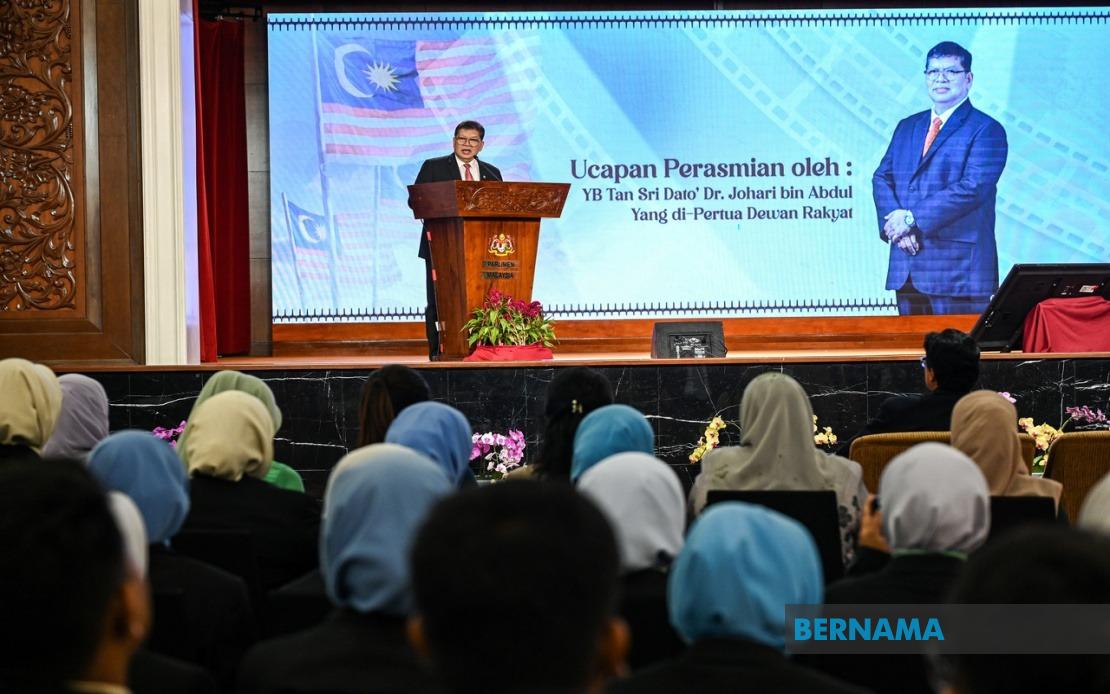
Parliament has launched a new short film titled "Arkitek Bangsa" designed to inspire Malaysia's younger generation to embrace leadership and strengthen their patriotic commitment to the nation. The video was screened at a special event at the Parliament Building in Kuala Lumpur on July 16, marking the beginning of what parliamentary officials hope will be a widely distributed educational resource across government agencies and schools nationwide.
At the launch, officials emphasised that the production represents a strategic effort to shape how young Malaysians perceive their role in building the country's future. Rather than viewing themselves as passive observers of national development, young people are being encouraged to adopt an active, ownership-driven mindset towards nation-building. This philosophical shift underpins the entire initiative, reflecting a recognition that leadership capacity must be deliberately cultivated through sustained exposure and structured mentorship rather than assumed as an innate quality some individuals possess from birth.
Parliament has framed the video as part of a broader ecosystem of youth-focused interventions already underway. The Parliament School Programme exemplifies this integrated approach, having successfully brought 1,057 schools to Parliament to provide students with direct exposure to democratic institutions and the legislative process. By bringing young people into the physical space where laws are debated and made, the initiative aims to demystify governance and foster a tangible understanding of how parliamentary democracy functions in practice. These school visits create formative experiences that help students appreciate the complexity and importance of legislative work beyond what textbooks alone can convey.
Beyond parliamentary facilities and programmes, government officials have highlighted Parliament's involvement in the National Service Training Programme (PLKN), where a special select committee provides oversight and strategic direction. This engagement reflects an understanding that youth development occurs across multiple institutional touchpoints, and parliamentary participation in such programmes helps ensure that democratic values and civic responsibility are woven into national service training from inception. The programme's reach and influence make it a critical platform for normalising civic engagement among young people who might otherwise regard government institutions as distant or irrelevant to their lives.
A particularly significant expansion involves the Youth Parliament initiative, which has grown substantially in recent years. Membership has increased from 100 to 222 participants, reflecting a deliberate effort to broaden representation and ensure that young people from diverse backgrounds have meaningful seats at the table. Accompanying this numerical expansion is a systemic change: the introduction of proportional representation in the Youth Parliament's electoral system. This shift from winner-take-all to proportional models democratises access to positions and ensures that minority viewpoints and underrepresented regions maintain visibility within the youth legislative body. Such structural reforms signal serious commitment to authenticity in youth participation rather than tokenism.
Official comments at the launch emphasised the symbolic and practical significance of the "Arkitek Bangsa" metaphor. The architectural framing suggests that nation-building is a deliberate, intentional process requiring skilled craftsmanship, detailed planning, and sustained effort over time. Unlike abstract concepts of patriotism or vague appeals to national pride, the architect analogy resonates concretely with young people: buildings are tangible, their construction is observable, and their quality depends fundamentally on the competence and dedication of those who design and construct them. This framing invites young Malaysians to see themselves as creative, technically skilled contributors rather than mere flag-wavers.
The contrast drawn between construction and destruction carries particular weight in the Malaysian context, where national cohesion and social stability are understood as hard-won achievements requiring constant maintenance. The observation that buildings require extensive time to construct but can be destroyed rapidly functions as a cautionary message about the fragility of national institutions and social fabric. This implicit warning against complacency or destructive behaviour, directed at youth, reflects concerns within government about ensuring that younger generations understand the stakes involved in preserving institutional integrity and social harmony across Malaysia's multi-ethnic, multi-religious society.
Official statements indicate that the video is intended for widespread distribution through ministries and government agencies involved in nation-building work. This distribution strategy acknowledges that formal schooling represents only one avenue for youth engagement; government initiatives spanning education, cultural development, community engagement, and national service all present opportunities to screen and discuss the film. Coordinated use across multiple government touchpoints could reinforce consistent messaging about youth leadership and responsibility, creating a more cohesive national conversation around these themes.
The historical dimension embedded in the initiative warrants attention. By encouraging young people to understand and appreciate the sacrifices and contributions of earlier generations, the video attempts to create intergenerational continuity while simultaneously empowering youth to author their own chapter in Malaysia's ongoing national narrative. This balancing act—honouring past contributions while encouraging young people to forge their own path—addresses a common tension in nation-building efforts, where excessive focus on historical grievances or glory can either constrain younger generations or fail to engage them meaningfully.
From a regional perspective, Malaysia's investment in youth leadership development through cultural and institutional channels reflects a broader Southeast Asian pattern. Across the region, governments grapple with questions of succession, institutional renewal, and ensuring that democratic values are internalised rather than merely externally imposed. The "Arkitek Bangsa" initiative demonstrates how Malaysia is attempting to address these challenges through multi-channel engagement that combines parliamentary institutions, national service, film and media, and intentional curriculum integration. The approach suggests confidence that young people will respond positively when given genuine opportunities for participation and leadership development.
The film's success will likely depend on several implementation factors beyond the production itself. Distribution reach, the quality of facilitated discussions following screenings, integration with existing school curricula, and the credibility of government messengers all influence whether young viewers internalise the intended messages or view the initiative as hollow propaganda. Malaysian educators and youth development specialists will watch closely to assess whether the video effectively motivates increased civic participation or functions primarily as well-intentioned outreach that fails to translate into sustained behavioural change.
Ultimately, the "Arkitek Bangsa" video represents Parliament's gamble that carefully crafted cultural messaging, combined with structural opportunities for youth participation, can shape a generation of young Malaysians genuinely committed to democratic institutions and national development. Whether this initiative succeeds in cultivating the leadership qualities and patriotic conviction it targets will become apparent through the trajectories and choices of young people who engage with it over the coming years.

