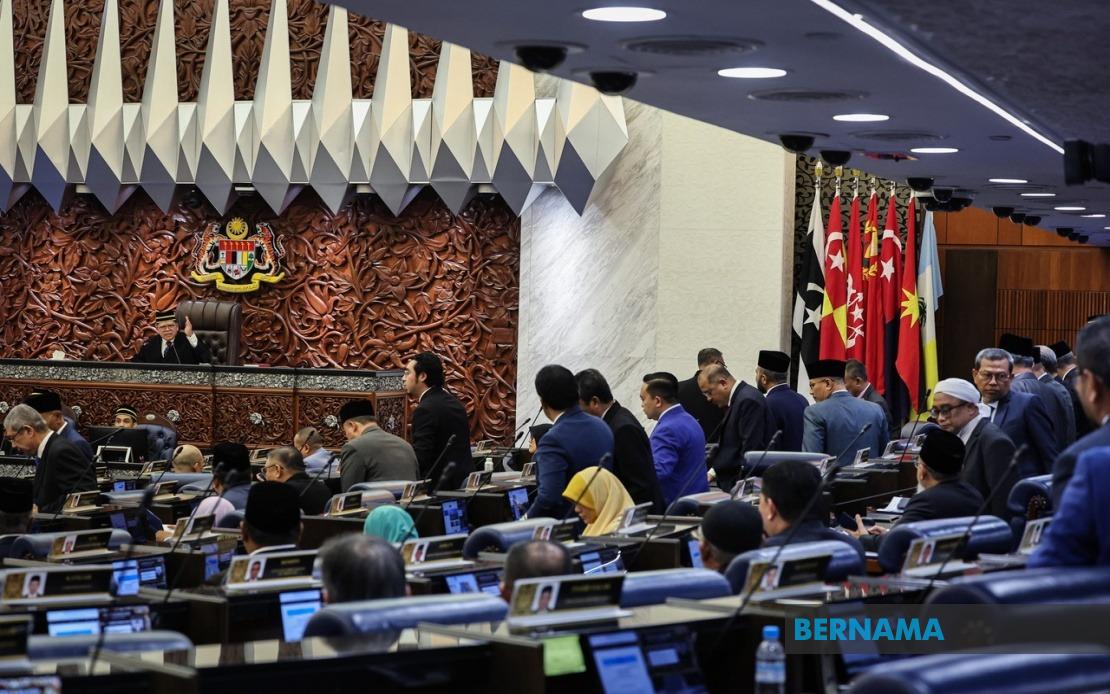
The Dewan Rakyat convened a special sitting to allow legislators from across the political spectrum to thoroughly examine the Royal Commission of Inquiry report into Lembaga Tabung Haji, underscoring Parliament's role as a forum for public scrutiny of government institutions. The chamber's Speaker, Tan Sri Johari Abdul, confirmed that the sitting was held in accordance with Standing Order 11(3) of the Dewan Rakyat's parliamentary procedures, following a formal request from Prime Minister Datuk Seri Anwar Ibrahim.
Parliamentary procedure in Malaysia grants the Speaker significant authority in determining whether special sittings proceed, and Tan Sri Johari indicated that he approved the request to facilitate wider debate on the inquiry's conclusions. His decision reflected adherence to established parliamentary rules while simultaneously prioritising the government's stated objective of enhancing governance transparency. The Speaker's remarks clarified that his approval was not discretionary preference but rather compliance with standing orders that permit such arrangements when initiated by the Prime Minister.
The timing of this parliamentary sitting carries particular significance for Malaysian stakeholders interested in Tabung Haji's governance structures and the management of pilgrimage savings. Tabung Haji, the state-backed entity responsible for managing funds contributed by Malaysian Muslims intending to perform the Hajj, has faced periodic scrutiny regarding investment decisions and operational efficiency. The Royal Commission's investigation represented an official governmental effort to examine specific concerns, and parliamentary debate on its findings allows elected representatives to voice constituent concerns and demand accountability from relevant authorities.
For Malaysian parliamentarians, the opportunity to debate such inquiry reports serves multiple functions beyond mere procedural formality. Backbench members from both government and opposition benches gain visibility when addressing significant national issues, while the public record created through parliamentary hansard documents legislative positions for future reference. This transparency mechanism is particularly relevant given Malaysia's ongoing efforts to strengthen institutional accountability following periods of heightened public concern about governance standards.
The Standing Order framework that enabled this sitting represents a deliberate design within Malaysian parliamentary practice to balance executive authority with legislative oversight. Prime ministerial power to request special sittings is not unlimited; the mechanism exists to address matters deemed sufficiently urgent or important to warrant extraordinary parliamentary time. By invoking this procedure for the Tabung Haji inquiry discussion, the government signalled that the findings warranted comprehensive legislative engagement rather than confined ministerial briefings.
Regional observers studying Southeast Asian governance structures often note that parliamentary systems in the region vary significantly in their capacity to facilitate such public debates. Malaysia's arrangement allows for relatively extensive legislative discussion of executive-commissioned inquiries, a characteristic that distinguishes its parliamentary tradition from some neighbouring systems. The Dewan Rakyat's role in scrutinising the Tabung Haji report exemplifies this comparative institutional strength, offering Malaysian citizens a forum where legislative bodies challenge and interrogate official findings.
The briefing that followed parliamentary debate, delivered by relevant ministers, represented the government's formal presentation of how it would respond to the inquiry's recommendations. This sequential arrangement—parliamentary debate preceding ministerial response—creates space for legislators to frame questions and establish expectations before officials outline implementation plans. Such ordering of parliamentary business reflects sophisticated management of legislative-executive relations, ensuring that public discourse occurs before bureaucratic positions ossify around specific responses.
For Tabung Haji contributors scattered across Malaysia and in diaspora communities abroad, parliamentary debate on the inquiry report provides assurance that governance concerns affecting their savings receive high-level political attention. Tabung Haji manages approximately 9.3 million accounts, making it a savings vehicle of significant scale within the Muslim Malaysian population. Parliamentary attention to institutional scrutiny demonstrates that elected representatives take stewardship of such large collective pools of citizen funds seriously.
The Speaker's emphasis on transparency reflects broader contemporary political narratives in Malaysia regarding governance standards and institutional integrity. Multiple government initiatives in recent years have centred on anti-corruption measures, institutional reform, and enhanced accountability mechanisms. Parliamentary debate on commissioned inquiry reports fits logically within this governance framework, positioning the legislature as guardian of institutional performance rather than mere rubber-stamp of executive decisions.
For opposition lawmakers, special parliamentary sittings regarding significant inquiries offer strategic opportunities to demonstrate alternative governance approaches or criticise official responses. While government backbenchers may raise constituency concerns, opposition members can present systematic critiques of institutional arrangements or specific policy decisions highlighted by investigative reports. This dynamic tension within parliament, properly channelled through debate procedures, generates public discourse that informs citizen understanding of national governance challenges.
The practical implications of this parliamentary debate will depend substantially on the inquiry's specific findings and the government's receptiveness to recommended reforms. Should the report identify systemic weaknesses in Tabung Haji's investment governance or operational procedures, parliamentary pressure may accelerate policy changes that might otherwise face bureaucratic resistance. Conversely, if the inquiry validates existing arrangements, legislative affirmation may strengthen institutional confidence among stakeholders and contributors.
Looking forward, the precedent established through this sitting suggests that Malaysia's parliamentary system retains capacity to function as genuine institutional check on executive power, at least regarding matters that command sufficient political consensus or public concern. Whether future governments employ similar mechanisms with comparable frequency will indicate whether this represents standard practice or exceptional circumstance. For now, the Dewan Rakyat's engagement with the Tabung Haji inquiry report demonstrates that parliamentary oversight mechanisms remain operative and accessible to legislators committed to transparency and accountability.

