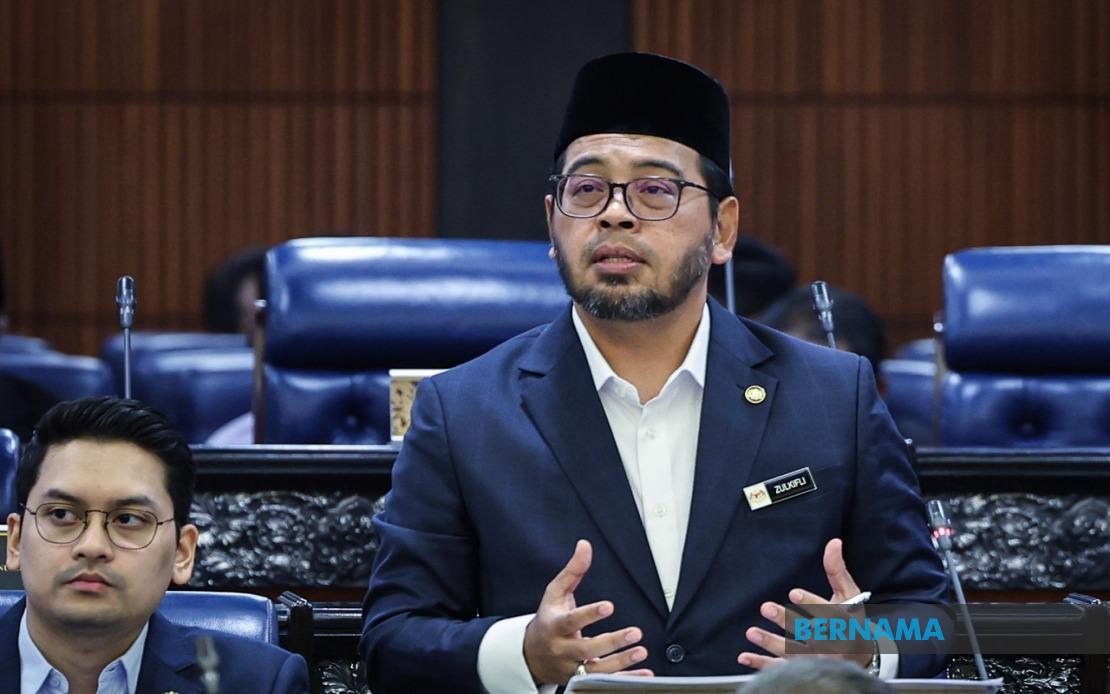
The Malaysian Parliament convened for an unprecedented 10-hour session on August 11 to scrutinise the findings of the Royal Commission of Inquiry into Lembaga Tabung Haji, with lawmakers across the chamber demanding comprehensive institutional transformation to restore public confidence in an organisation responsible for managing pilgrimage finances for more than 10 million Malaysians. The intensity of the debate reflected growing public concern over governance lapses and substantial financial losses that have undermined trust in an institution that occupies a central place in Malaysian Muslim life.
The discussion centred on several interconnected reform priorities. Parliamentarians called for expedited amendments to the Tabung Haji Act 1995 to modernise the legal framework governing the organisation's operations, enhanced mechanisms to oversee investment decisions and financial management practices, and structural measures to insulate leadership appointments from political patronage. Many members emphasised that systemic vulnerabilities must be eliminated to prevent future misconduct and ensure depositors' savings remain protected regardless of which individuals occupy management positions.
The Financial dimension of the crisis dominated parliamentary proceedings. Minister of Finance II Datuk Seri Amir Hamzah Azizan disclosed that TH faced nearly RM13 billion in cumulative losses across 14 problematic investments, with seven generating total losses. Of this staggering figure, the government absorbed RM10.2 billion through a 2018 rescue package involving Urusharta Jamaah Sdn Bhd, while another RM2.6 billion represented impairment losses TH itself absorbed between 2018 and 2025. These numbers underscore the severity of mismanagement that occurred during the 2014-2020 period examined by the Commission, raising questions about oversight mechanisms that existed during those years.
One particularly instructive case involved the Al-Rawda Real Estates arrangement, where TH remitted 1.4 billion Saudi riyals—approximately RM1.5 billion—to an intermediary for securing hotel leases in Madinah and Makkah to accommodate Malaysian pilgrims. When the counterparty failed to meet rental obligations to TH, the institution recorded a complete RM1 billion impairment write-down in 2024, crystallising losses that had accumulated over years. This episode exemplifies how inadequate due diligence and counterparty vetting at the investment entry point cascaded into catastrophic losses that ultimately threatened the haj affordability for ordinary Malaysian Muslims.
Minister in the Prime Minister's Department (Religious Affairs) Dr Zulkifli Hasan articulated the government's philosophical approach to rebuilding institutional resilience. He stressed that organisations cannot rely indefinitely on the competence or integrity of individual leaders; rather, durability requires robust systems, documented procedures, internal controls, and genuine checks and balances that function independently of personalities. This observation carries significance beyond TH itself, as it reflects broader governance philosophy increasingly relevant across Malaysian public institutions. The Minister noted that since 2018, TH had implemented recovery measures that stabilised its financial position, strengthened governance protocols, and improved investment selection quality, achievements that enabled the government to maintain the haj pilgrimage fee at RM33,300 across three consecutive seasons from 2024 to 2026—a politically and socially sensitive metric.
Accountability for misconduct remained a central parliamentary preoccupation. Lawmakers insisted that the Commission's findings must trigger thorough and transparent investigations into individuals and entities implicated in governance breaches, misappropriation, and financial mismanagement. Several members expressed concern that without credible enforcement action against wrongdoers, reform efforts would appear performative rather than substantive. Dr Zulkifli reported that authorities had already detained multiple individuals on suspicion of bribery, abuse of power, and governance violations, though the Parliament requested greater transparency regarding investigation timelines and outcomes to satisfy public expectations.
The government welcomed a cross-agency task force proposal designed to identify and manage investments at elevated risk of generating losses. This mechanism represents an attempt to institutionalise early-warning systems and intervention protocols that might have arrested some of the deterioration evident in TH's portfolio during the pre-2018 period. The task force concept also reflects recognition that TH's investment risks may extend beyond the institution's own technical capacity, potentially requiring engagement with banking regulators, the Securities Commission, and other agencies with specialised sectoral expertise.
The timing and rationale for releasing the RCI report also featured prominently in parliamentary discourse. The government had delayed public disclosure to afford TH opportunity to implement the Commission's recommendations proactively and stabilise its operational foundation before media and political scrutiny intensified. The Commission had formulated 25 recommendations; TH had implemented 75 per cent of these proposals as of late July, suggesting meaningful progress, though parliamentarians sought assurance that implementation would deepen rather than remain superficial. This staggered disclosure approach generated criticism from some quarters that suggested the government had prioritised narrative management over immediate transparency, though officials contended that the delay enabled constructive change rather than reactive damage control.
One notable feature of the sitting was the boycott by several opposition members who declined to participate in the debate. This absence drew sharp criticism, with government members arguing that the opposition had abdicated its constitutional responsibility to scrutinise executive action on behalf of the over 10 million TH depositors whose interests transcended partisan divisions. The boycott raised questions about whether political contestation over the timing and handling of the RCI report had obscured the broader institutional imperative to rebuild public confidence, suggesting that factional interests had temporarily eclipsed collective commitment to protecting vulnerable savers' interests.
For Malaysian policymakers and Southeast Asian observers, the TH controversy illuminates recurring governance vulnerabilities in long-established institutions where technical complexity intersects with political sensitivities. The investment losses, coupled with inadequate oversight mechanisms, echo governance failures in comparable entities across the region where political appointees have gained excessive decision-making authority over substantial financial portfolios. The parliamentary debate suggests Malaysia's leadership recognises these systemic dangers and is pursuing reform architectures designed to professionalise institutional management and insulate routine operations from patronage pressures.
Looking forward, the effectiveness of TH's recovery will depend substantially on whether the promised legislative amendments, governance strengthening, and accountability mechanisms materialise as substantive institutional change or remain largely symbolic gestures. Malaysian depositors, numbering more than 10 million citizens across income strata, have accumulated savings specifically designated for a fundamental religious obligation; restoration of their confidence requires demonstrable transformation, not merely rhetorical commitments. The August 11 parliamentary sitting represented an important accountability moment, but the genuine test will involve whether the subsequent months and years produce tangible evidence that weaknesses remedied in 2018-2025 genuinely remain corrected.

