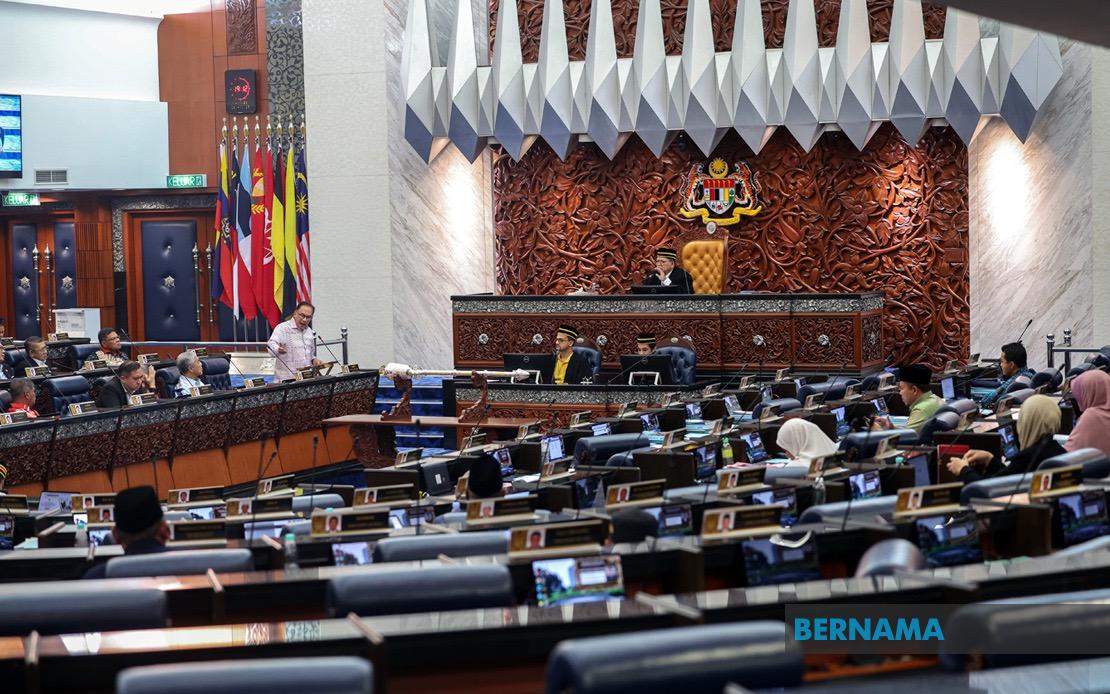
Parliament has given its backing to a significant financial mechanism that will channel RM14.5 billion towards Malaysia's development expenditure. The Dewan Rakyat passed the motion through a majority voice vote following deliberations in the lower house, with backing from multiple lawmakers including Datuk Seri Ismail Abd Muttalib from PN–Maran and Datuk Zulkafperi Hanapi. The approval represents a key procedural step in managing government borrowing and allocation of funds during a critical juncture in the nation's fiscal calendar.
Deputy Finance Minister Liew Chin Tong provided detailed clarity on the mechanism underpinning this transfer, explaining that the Development Fund operates through multiple revenue streams including transfers from the Consolidated Revenue Account, the Consolidated Loan Account, loan repayments, and various development-related income sources. This diversified financing approach reflects Malaysia's institutional framework for managing government spending across different economic cycles. The fund itself represents a distinct accounting mechanism designed to ring-fence resources specifically for infrastructure and development projects rather than operational costs.
Central to understanding this week's parliamentary action is the broader context of Malaysian Government Investment Issues in 2026. According to Liew's statement, the total projected MGII issuance for the year stands at RM95 billion, reflecting the government's substantial financing needs across multiple objectives. This figure encompasses RM55 billion earmarked for refinancing securities that are reaching maturity, ensuring continuity in the government's debt management obligations. An additional RM2 billion has been allocated towards partially meeting redemption commitments for Malaysian Islamic Treasury Bills, which are short-term shariah-compliant instruments that form part of Malaysia's Islamic finance ecosystem.
The remaining RM38 billion from the total MGII issuance serves to partially finance the fiscal deficit anticipated for 2026, demonstrating the government's reliance on borrowing markets to bridge revenue shortfalls. This dependency on capital markets highlights the ongoing fiscal pressures facing the government as it seeks to maintain development spending while managing revenue constraints. The actual gross issuance recorded between January and May 2026 reached RM40 billion. After deducting RM25.5 billion devoted to refinancing maturing MGII, the net proceeds available for channelling to development purposes amounted to the RM14.5 billion figure now approved for transfer.
Under Malaysia's constitutional and legal framework, government borrowing is constrained by a fundamental principle: borrowings may only finance development expenditure, while operating expenditure must be covered entirely through government revenue and taxation. This distinction shapes how policymakers structure budget financing and constrains the scope for deficit financing of recurrent costs. The arrangement creates a structural incentive to classify spending as developmental when economically defensible, though this framework has provided relative stability to Malaysia's fiscal governance compared to jurisdictions lacking such constraints.
Liew indicated that a further parliamentary approval will be sought during the next sitting of the Dewan Rakyat to handle MGII issuances spanning the June to December 2026 period. This staggered approach to parliamentary authorisation of borrowing transfers reflects standard legislative practice, breaking the annual borrowing programme into manageable tranches that require separate endorsement. The sequential approval process ensures ongoing parliamentary oversight of government financing decisions and maintains transparency in capital market operations.
During the parliamentary debate, concerns emerged about potential crowding-out effects within Malaysia's domestic financial markets. Zulkafperi raised questions about whether substantial government securities issuance might displace private sector borrowing or limit investment opportunities for major institutional investors such as the Employees Provident Fund and the Retirement Fund Incorporated. This concern reflects legitimate economic theory suggesting that large-scale government borrowing can absorb available capital and potentially raise interest rates for other borrowers.
Liew responded by highlighting that the government has been progressively reducing annual new borrowings over recent years, suggesting a consolidation phase in debt accumulation. This modest deleveraging trajectory, if sustained, could mitigate concerns about permanent crowding-out. More significantly, Liew articulated a positive economic argument for government securities issuance: these instruments provide essential investment vehicles for domestic institutional investors to deploy capital while earning returns. From this perspective, MGII issuances complement rather than compete with development objectives by channelling savings into government-backed securities.
The deputy minister's reasoning extends to currency implications, arguing that without adequate domestic investment opportunities, capital might flow overseas, potentially weakening the Malaysian ringgit. This argument positions government securities not merely as borrowing instruments but as crucial components of Malaysia's domestic financial architecture. The availability of sizeable, liquid government debt instruments supports financial market depth and attracts institutional investment that might otherwise seek offshore opportunities. For a small open economy like Malaysia, retaining domestic savings through attractive government securities offerings carries macroeconomic significance beyond immediate fiscal needs.
Parliamentary approval of this MGII proceeds transfer demonstrates the government's commitment to directing borrowed funds towards infrastructure and development initiatives rather than operating expenditures. This disciplined approach to deficit financing, while imperfect in practice, represents an institutional safeguard against unbridled recurrent spending financed through debt. The RM14.5 billion now authorised for development deployment will ostensibly support capital projects across various sectors, from transportation and energy to social infrastructure and human capital investments.
For Malaysian businesses and investors monitoring government spending patterns, this approval signals continued emphasis on development financing despite fiscal constraints. The mechanism also reveals how policymakers navigate between maintaining development momentum and managing debt sustainability. With further MGII issuance tranches expected for the remainder of 2026, financial markets will continue monitoring how successfully the government balances its borrowing needs against prevailing interest rate conditions and investor appetite for Malaysian government debt.
The parliamentary decision underscores Malaysia's relatively structured approach to government borrowing compared to certain peer economies, though ongoing debate persists about whether existing fiscal rules adequately address medium-term sustainability challenges. As the country transitions through 2026 and beyond, how effectively the development spending financed through these mechanisms translates into productive infrastructure and human development outcomes will ultimately determine whether the borrowing strategy serves its intended purpose of supporting long-term growth.

