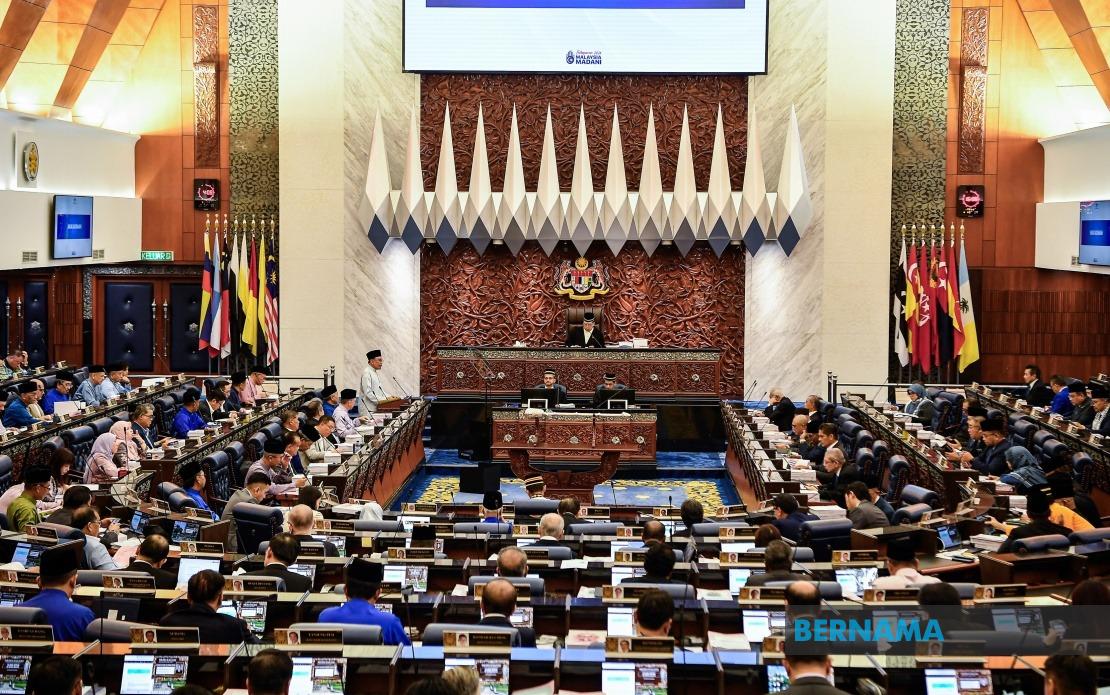
Malaysia's parliament has given its backing to sweeping amendments aimed at equipping the Malaysian Communications and Multimedia Commission with modernized operational capacity and clearer governance frameworks. The Dewan Rakyat endorsed the MCMC (Amendment) Bill 2026 through a voice vote on July 15, following substantive debate involving 14 parliamentarians across government and opposition benches. The legislative update represents a significant recalibration of how the commission—the primary custodian of Malaysia's communications and multimedia landscape—will operate in an increasingly complex digital environment.
Deputy Communications Minister Teo Nie Ching anchored the government's position during the bill's conclusion, emphasizing that the commission's long-term sustainability hinges on maintaining robust regulatory frameworks capable of steering Malaysia's communications and multimedia sector through rapid technological change. She stressed that the amendments preserve established mechanisms while modernizing them to reflect contemporary governance standards. The ministerial appointment authority over the MCMC chairman and commissioners, a provision that has existed since 1998, continues under the new bill but with refined institutional safeguards designed to insulate the regulatory body from political influence.
A critical element embedded in the amendments restricts the MCMC chairman from simultaneously holding membership in any legislative body—a provision specifically crafted to eliminate potential conflicts of interest and ensure the regulator operates with institutional autonomy. This stipulation acknowledges growing parliamentary concerns about regulatory capture and the need for clear separation between the executive sphere and independent regulatory institutions. Such boundaries have become increasingly important as Malaysia's communications sector intersects with sensitive matters ranging from media ownership concentration to digital content governance and cybersecurity oversight.
Perhaps the most tangible change concerns MCMC's procurement authority. The bill elevates the financial threshold for contracts that the commission can independently approve from RM5 million to RM50 million—the first adjustment to this limit in over two decades. Deputy Minister Teo situated this increase within the broader procurement regulations governing federal statutory bodies, noting that the Finance Ministry's WP7.5 framework permits fully internally-funded bodies to authorize procurements reaching RM499 million. The government, however, determined that RM50 million represents an appropriately calibrated ceiling, reflecting accumulated cost pressures while maintaining fiscal prudence.
The rationale for this specific threshold acknowledges the cumulative weight of multiple economic forces reshaping MCMC's operational costs. Inflation has steadily eroded purchasing power, while the technological transformation underpinning modern telecommunications infrastructure demands increasingly sophisticated equipment and services. Labour market dynamics have similarly driven up personnel costs for specialized expertise in areas such as spectrum management, cybersecurity, and digital economy regulation. By elevating the procurement limit, the bill enables the commission to execute necessary infrastructure and operational improvements without repeatedly seeking ministerial approval for individual contracts—a bureaucratic bottleneck that would hinder responsive regulation in a fast-moving sector.
Opposition and independent voices in parliament articulated a more expansive vision for institutional reform. Dr Halimah Ali from Pakatan Negeri Sembilan representing Kapar constituency advocated for substantially stronger independence safeguards, urging the government to introduce appointment mechanisms modeled after the Human Rights Commission of Malaysia (SUHAKAM). Under such an approach, commissioners would be selected through transparent, competitive processes emphasizing professional credentials, sectoral experience, and demonstrated integrity rather than relying primarily on ministerial discretion. She further proposed that all ministerial directions to the MCMC be formally recorded and subsequently tabled before parliament, creating an explicit paper trail for legislative oversight.
Datuk Mas Ermieyati Samsudin, representing Perikatan Nasional interests from Masjid Tanah, similarly pressed for enhanced checks and balances, particularly regarding stewardship of the Universal Service Provision Fund—a critical mechanism through which the MCMC allocates resources to extend telecommunications access to underserved communities. She advocated for systematic parliamentary review of fund utilization patterns and strengthened audit mechanisms to ensure accountability. These concerns reflect broader anxiety within some parliamentary quarters about whether existing regulatory frameworks adequately protect public interest in an environment where digital access increasingly constitutes an essential service analogous to electricity or water supply.
The governance debate touches a sensitive nerve in Malaysian regulatory politics. Historically, independent agencies have sometimes operated in ambiguous terrain between ministerial direction and institutional autonomy, occasionally generating accusations that political considerations influenced regulatory decisions. This tension is particularly acute in the communications sector, where media licensing, broadcast content standards, and digital platform governance intersect with political speech, national security, and business interests. The MCMC's credibility rests substantially on being perceived as technically competent and institutionally neutral—a perception that can erode if decision-making processes appear politically influenced or opaque.
Dr Richard Rapu from the GPS-aligned Betong constituency offered a positive assessment of the overall reform package, characterizing the amendments as foundational improvements extending beyond mere structural adjustment. He contended that the changes position the MCMC to function as a genuinely professional regulatory body with institutional maturity capable of navigating the complexities of the digital economy. His perspective acknowledges that effective regulation requires not just legislative authority but organizational capacity, institutional stability, and technical expertise—dimensions that infrastructure improvements and clearer governance frameworks ostensibly strengthen.
For Malaysian stakeholders and observers, the passage of this amendment carries broader implications beyond the MCMC itself. It signals parliament's willingness to revisit and modernize foundational regulatory infrastructure, a pattern that may extend to other agencies managing critical sectors from financial services to environmental protection. The debate also illustrates ongoing tension between, on one hand, efficiency considerations favoring administrative discretion and streamlined decision-making, and on the other hand, institutional independence and transparency concerns that some parliamentarians view as essential safeguards against regulatory capture or political misuse.
The amendments take effect following royal assent, positioning Malaysia's communications regulator with enhanced operational capacity precisely when the digital transformation accelerates. The sector faces mounting pressures ranging from spectrum congestion to ensuring cybersecurity resilience, managing artificial intelligence deployment, and balancing innovation with consumer protection. Whether the refreshed MCMC framework—combining preserved ministerial appointment authority with strengthened independence provisions—strikes the appropriate balance between regulatory responsiveness and institutional autonomy will merit close monitoring as the commission navigates emerging communications policy challenges across Southeast Asia's most digitally advanced economy.

