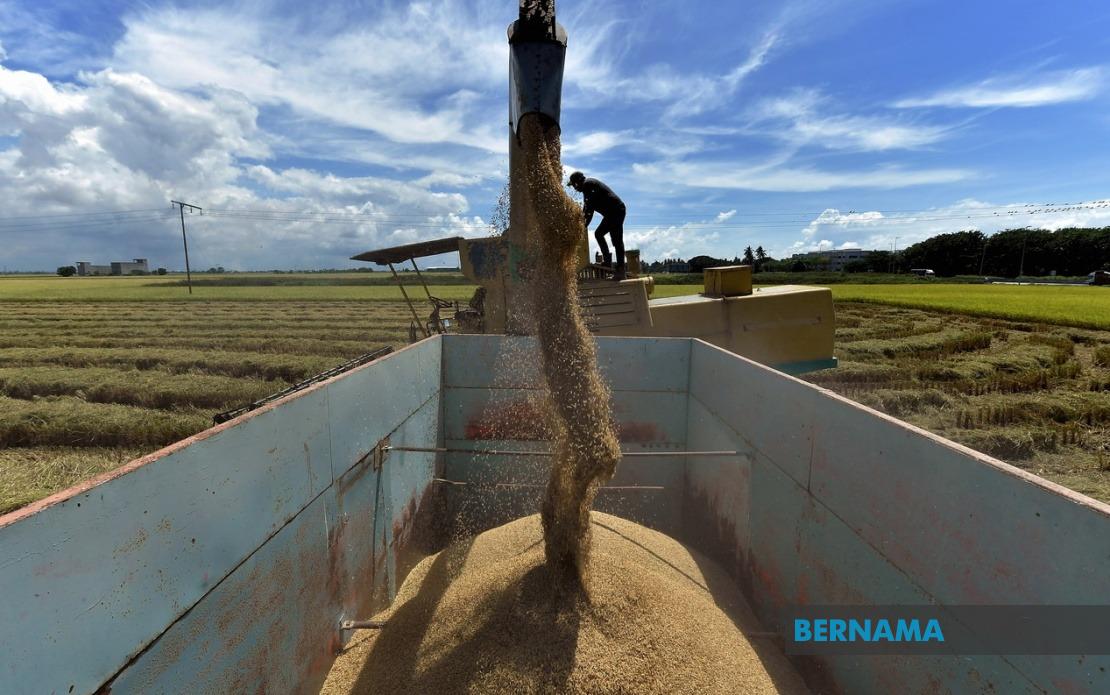
Parliament has commenced debate on sweeping amendments to Malaysia's rice sector framework, with the Control of Padi and Rice Act (Amendment) Bill 2026 receiving its first reading in the Dewan Rakyat. Agriculture and Food Security Minister Datuk Seri Mohamad Sabu indicated that the legislative process will move swiftly, with both second and third readings scheduled during the current parliamentary sitting, signalling government determination to modernise regulations governing one of the country's most sensitive commodity markets.
The legislation represents a significant recalibration of state authority over padi cultivation and rice distribution, addressing longstanding concerns about market stability and the need for more robust regulatory mechanisms. The proposed changes emerge at a time when food security remains a top policy priority across Southeast Asia, with Malaysia seeking to strengthen its capacity to manage domestic rice supplies and pricing dynamics that directly affect consumer grocery bills and agricultural producer incomes.
Central to the amendment is an expansion of administrative power to establish price floors and ceilings. Currently, officials lack explicit authority to directly enforce maximum or minimum price points for these essential commodities. The revised legislation grants the Director General, with ministerial approval, the ability to set such price boundaries for both unprocessed padi and milled rice. This mechanism appears designed to insulate the market from volatile international commodity fluctuations while protecting both farmers and consumers from extreme price swings—an increasingly relevant consideration given global uncertainties affecting food supply chains.
The bill simultaneously grants the Minister regulatory flexibility to classify rice into grades and establish differentiated pricing frameworks for each category. This tiered approach acknowledges market realities where quality variations justify price differentials, allowing policy makers to accommodate diverse market segments while maintaining overall price discipline. Such granular control tools reflect international best practice in agricultural commodity management, particularly relevant for a nation balancing domestic production incentives with consumer affordability.
Penalty provisions undergo dramatic reform, introducing what observers view as substantially more forceful enforcement architecture. For individuals, including company directors and officers, maximum fines rise from RM15,000 to RM250,000 for first offences, with repeat violations triggering fines up to RM500,000—more than a tenfold increase. Corporate entities face even steeper consequences, with initial violations drawing fines up to RM500,000 and subsequent breaches subject to RM1 million penalties. These escalations signal governmental seriousness about compliance and suggest frustration with past enforcement limitations.
The regulatory framework also empowers the Minister to issue prescriptive regulations addressing padi purchaser licensing, rice grading standards, price controls for differentiated rice grades, and oversight of padi and rice movement throughout the supply chain. By establishing ministerial rule-making authority, the amendments provide flexibility to adapt regulatory requirements without requiring parliamentary intervention each time market conditions or policy priorities shift. This administrative adaptability proves particularly valuable in agricultural sectors where seasonal variations and global market dynamics demand responsive governance.
Regulations issued under these enhanced powers can classify specific actions or omissions as violations, with penalties including fines up to RM15,000 or imprisonment not exceeding six months, or both. This combination of financial and custodial penalties targets serious violations involving deliberate market manipulation or regulatory evasion, deterring actors who might otherwise calculate fines as mere business expenses. The inclusion of imprisonment provisions elevates commodity price management from a regulatory nuisance into a matter affecting individual liberty, fundamentally changing compliance incentives.
For Malaysian consumers and agricultural workers, these amendments carry immediate practical implications. Strengthened price regulation capacity potentially moderates retail rice costs, protecting household budgets—particularly significant given rice's role as a staple food. Simultaneously, more robust administrative authority to prevent supply-chain manipulation protects farmer incomes by reducing opportunities for middle-men to exploit padi producers through manipulative purchasing practices. The legislation attempts to balance these competing interests through expanded regulatory reach.
Southeast Asian context adds significance to Malaysia's move. The region experienced rice price volatility during past commodity cycles that threatened food security across the subregion. Malaysia's decision to enhance domestic regulatory capacity reflects broader regional trend toward stronger state management of critical food commodities. Other nations observing Malaysia's framework may consider comparable amendments, potentially establishing regional standards for agricultural price governance.
Transitional provisions ensure that investigations or proceedings initiated before the amendments take effect continue uninterrupted under existing rules, protecting due process while enabling smooth implementation. This legal continuity prevents complicated disputes over whether past conduct should face old or new penalties, reducing retrospective application concerns.
The rapid parliamentary schedule reflects governing coalition confidence in the bill's necessity and adequacy. Political consensus around food security and consumer protection apparently transcends typical partisan divisions, suggesting legislative passage faces minimal obstruction. Implementation will ultimately test whether expanded regulatory tools deliver promised price stability and market integrity, or alternatively impose compliance burdens that prove counterproductive for agricultural efficiency and supply-chain functionality.

