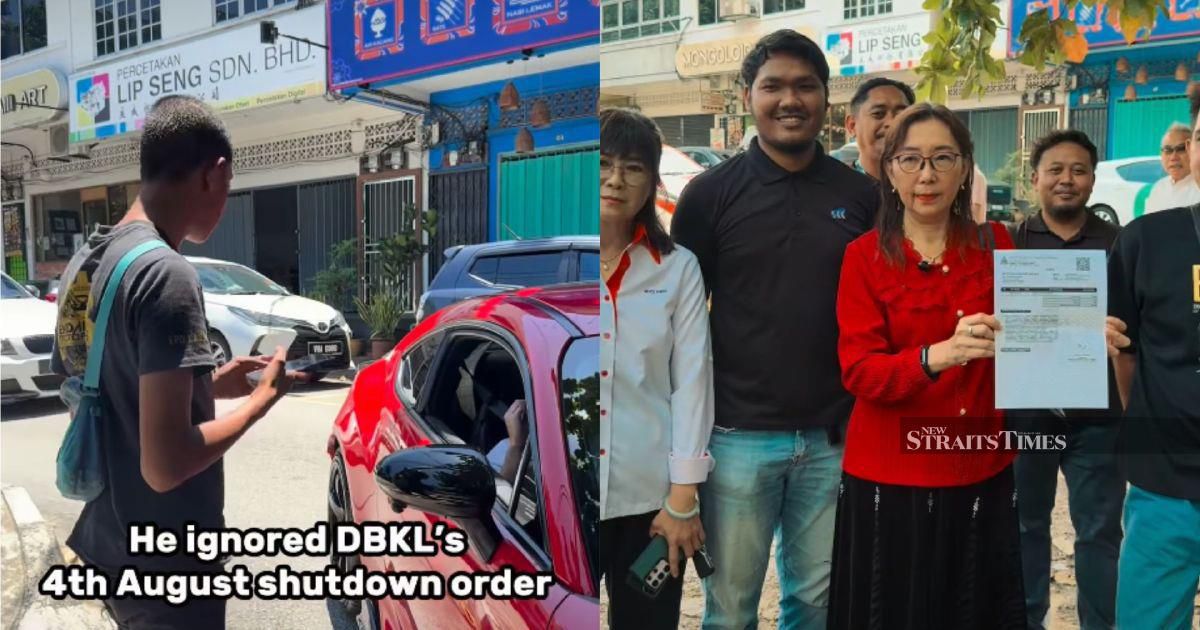
Police in Kuala Lumpur have apprehended a man who was operating as an unauthorised parking collector in the Taman OUG residential neighbourhood, bringing an end to what appears to have been an escalating enforcement action against illegal street-level parking operations. The arrest came after the individual, who had positioned himself along Jalan Hujan, allegedly turned physical with an officer attempting to enforce regulations against unlicensed parking collection activities.
The confrontation highlights a persistent challenge facing Malaysian municipalities: the prevalence of unofficial parking attendants who operate without proper licensing or oversight in residential and commercial areas. These individuals typically charge vehicles for parking in public spaces, collecting fees that are never formalised or channelled to legitimate authorities. In densely packed urban neighbourhoods like Taman OUG, where parking remains perpetually contested, such unofficial arrangements often become entrenched through a combination of public acquiescence and weak enforcement capacity.
What distinguished this particular case was the suspect's apparent determination to continue operating despite receiving multiple formal enforcement notices. Rather than ceasing activities or seeking proper authorisation, the individual allegedly persisted in collecting parking fees, suggesting either a dismissal of official warnings or a business model dependent on ignoring regulatory frameworks. This pattern of non-compliance typically escalates enforcement responses, as authorities seek to establish credible deterrence against such activities.
The alleged assault on an enforcement officer represents a more serious dimension to what might otherwise be dismissed as a minor street-level economic activity. When confrontations turn physical, they cross a threshold into territory covered by more severe criminal statutes. Officers conducting enforcement operations, whether targeting parking violations, street vending, or other breaches of municipal bylaws, operate in potentially volatile situations where tensions between regulators and informal operators can ignite rapidly. The incident underscores the occupational risks faced by enforcement personnel performing compliance duties.
Taman OUG, located in the Kelang Valley region, is a long-established middle-class residential enclave with commercial nodes that generate constant parking demand. The neighbourhood's relatively narrow streets and limited formal parking facilities create persistent supply-demand mismatches, particularly during peak hours. This environment naturally encourages informal parking arrangements and the emergence of unofficial collectors who position themselves as solving a practical problem for residents and visitors, even as they operate outside legal structures.
The arrest reflects broader enforcement priorities among Kuala Lumpur City Council and related authorities to establish order in street-level economic activities. Unauthorised parking collection sits at the intersection of several concerns: municipal revenue loss, lack of accountability and consumer protection, potential for harassment or extortion of vehicle owners, and the establishment of informal taxation systems that undermine formal governance. When enforcement efforts encounter resistance, especially physical resistance, authorities typically pursue prosecution to establish consequences that deter future non-compliance.
For Malaysian drivers accustomed to encountering parking collectors in residential areas, this incident raises questions about the legitimacy of such arrangements. Many vehicle owners pay these collectors without verifying credentials, assuming they represent official council operations. The reality is that most such collectors operate without authorisation, pocketing fees entirely. Prosecutions, when they occur, serve partly as public education about the absence of any official sanction for these activities.
The case also illustrates tensions between formal regulation and informal economic practices that characterise urban Malaysia. Many individuals derive income from activities sitting in grey zones between legality and widespread public acceptance. Parking collection, street vending, and unlicensed transportation services persist because they address genuine service gaps, creating an equilibrium where enforcement remains sporadic and often reactive rather than comprehensive. However, when these activities involve deception of the public or resistance to authorities, enforcement intensifies.
Looking forward, the arrest may signal a phase of intensified enforcement against parking collectors in Kuala Lumpur, or it may simply represent one incident in an ongoing pattern of sporadic interventions. The effectiveness of such enforcement ultimately depends on sustained follow-through, including prosecution outcomes that deter others from attempting similar activities. Additionally, addressing the root cause—insufficient formal parking infrastructure and management—would likely prove more effective than enforcement alone in reducing reliance on informal collectors.
The incident serves as a reminder that urban governance in Malaysian cities involves constant negotiation between formal rules and informal practices, with enforcement actions representing flashpoints in these ongoing dynamics. How authorities proceed will influence both compliance patterns among informal operators and public confidence in municipal services across the Klang Valley.

