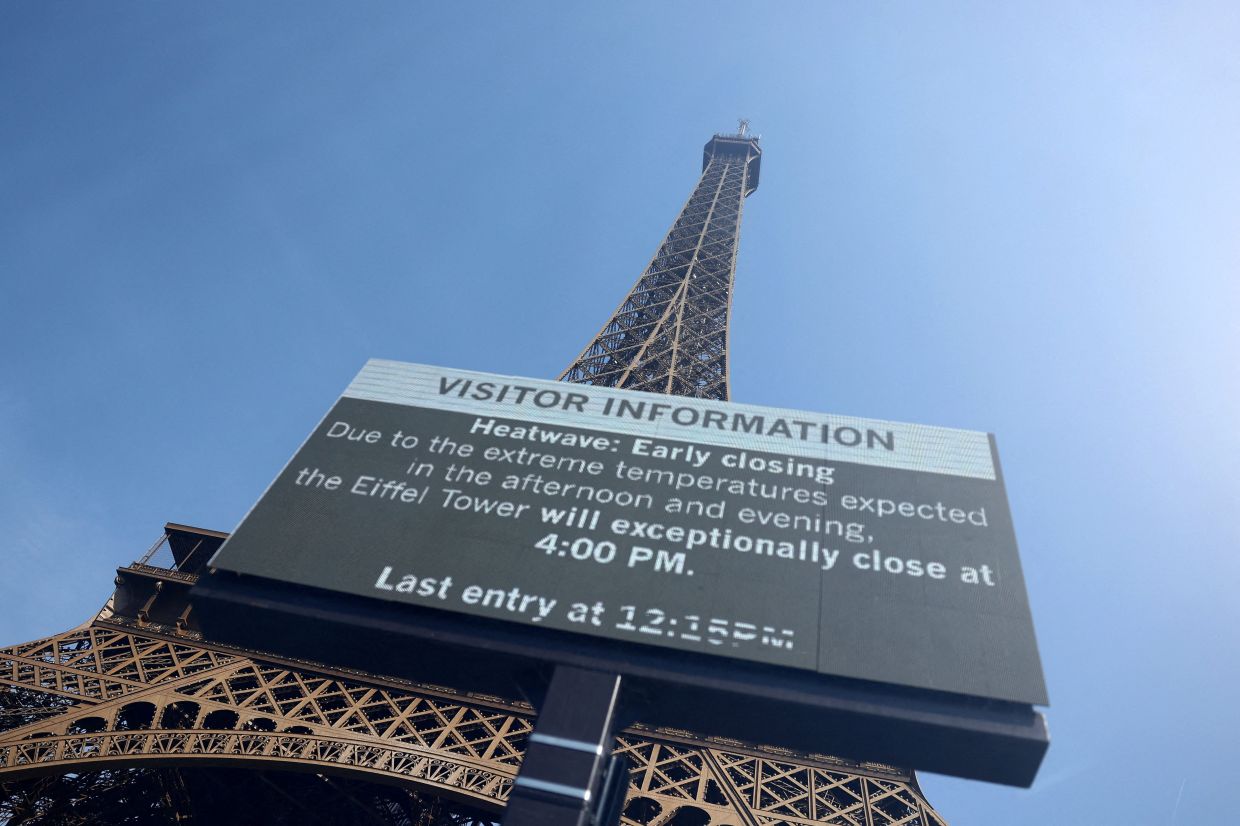
A devastating heatwave swept across France this week, forcing major Paris tourist destinations to shut their doors early and leaving visitors stranded in sweltering conditions with nowhere to seek refuge. The Eiffel Tower and the Louvre museum both announced unexpected closures as temperatures soared to levels not recorded since systematic measurements began in 1947, creating logistical chaos for holidaymakers who had carefully planned their visits to these world-renowned attractions.
The human toll of the extreme weather became evident in the stories of displaced tourists struggling to salvage their trips. Maite Blazques, a Spanish nurse from Madrid, had spent months saving money to bring her six-year-old son to Paris for what she hoped would be a memorable family holiday. Instead, the oppressive heat forced her to completely reimagine their itinerary, eliminating experiences she had long anticipated sharing with her child. Walking through the historic Marais district, a leisurely Seine river boat cruise, and an ascent of the iconic latticed-steel tower—all staples of the classic Paris experience—had to be abandoned entirely.
The operator of the Eiffel Tower, which ordinarily welcomes seven million visitors annually, announced an exceptional early closure at 4pm on June 23 and indicated that shortened opening hours would likely continue. During peak summer season, the 324-metre monument typically remains accessible well past midnight, allowing evening visitors to experience the city's shimmering lights from above. This sudden contraction of operating hours caught many tourists off guard, as exemplified by American visitor Tamara Dancer, whose guided tour was cancelled on the afternoon of June 23, leaving her frustrated and with gaping holes in her holiday schedule.
Across the capital, the physical environment itself became hostile to tourism. Pavements radiated such intense heat that they became uncomfortable to walk on, forcing visitors to improvise with whatever cooling measures they could muster—umbrellas, wide-brimmed hats, and hand-held fans became essential accessories rather than optional items. John Beeler, a 45-year-old American engineer, described the experience as genuinely miserable, noting that the heat penetrated every layer of the city. Even underground in the metro system and within the confines of their rental accommodation, he and his wife found themselves struggling to cope. They ultimately decided to relocate to a hotel offering air conditioning, transforming what should have been a budget-conscious holiday into an unplanned expense.
The fundamental way people experience Paris became impossible to maintain. Drake Winners, a 66-year-old British retiree, highlighted a crucial aspect of visiting the French capital—that exploration on foot is central to understanding and appreciating the city. Yet under such extreme conditions, even a seasoned traveller acknowledged that walking the streets had become physically untenable. Instead of his intended street-level discovery, Winners found himself retreating indoors to museums and churches, accepting a passive, climate-controlled experience rather than the active engagement Paris typically offers.
The Louvre, the world's most-visited museum with approximately nine million annual visitors, found itself unable to maintain normal operations. The vast palace, accumulated and modified by successive French monarchs and presidents over centuries, had inadequate climate control systems to handle the unprecedented heat. Museum management frankly acknowledged that the building was simply not sufficiently adapted to withstand modern climate extremes, a stark admission from one of Europe's most prestigious cultural institutions. This revelation carries sobering implications, suggesting that iconic heritage structures across Europe may be increasingly vulnerable to the atmospheric changes unfolding across the continent.
The Louvre's predicament reflects deeper institutional problems. Beyond the immediate challenge of managing extreme heat, the museum had endured a tumultuous period marked by a brazen jewellery heist worth US$100 million, significant water damage from leaks, and various other maintenance crises throughout the preceding year. The heat emergency thus arrived at a moment when the institution was already stretched thin, compounding management difficulties and forcing difficult decisions about prioritising visitor safety over visitor access.
The geographical scope of the crisis extended well beyond Paris's central attractions. More than half of mainland France remained under the national weather service's most severe alert classification, triggering precautionary closures and visitor warnings across numerous sites. Mont Saint-Michel, the spectacular island fortress in Normandy that ranks among France's most visited tourist destinations outside the Paris region, issued explicit advisories urging visitors to postpone their visits entirely during the red alert period. Such blanket warnings across the nation underscored the unprecedented nature of the weather event and the systematic threat it posed to France's entire tourism infrastructure.
For Malaysia and Southeast Asian travellers who dream of visiting Paris, this episode offers an uncomfortable reminder that climate volatility may increasingly shape travel experiences in ways previously unforeseen. While tropical Asian nations are accustomed to managing heat, European cities built for cooler climates present particular vulnerabilities. Malaysian visitors planning European holidays may need to reconsider seasonal timing, with summer months previously considered ideal now potentially presenting complications. The incident also demonstrates how environmental stress tests fundamental infrastructure assumptions, forcing even world-class institutions to acknowledge limitations and requiring travellers to maintain flexibility when volatile weather systems disrupt carefully laid plans.
The broader tourism and climate intersection deserves consideration from regional policymakers. As Southeast Asia continues developing its tourism infrastructure and preparing to welcome millions of international visitors annually, the Paris experience serves as a cautionary case study. Building climate resilience into tourism facilities—ensuring adequate cooling systems, water supply reliability, and contingency planning—may prove essential for maintaining competitiveness as global temperatures rise. The heatwave that emptied Paris's streets and closed its monuments demonstrates that even the world's most iconic destinations cannot guarantee uninterrupted visitor experiences if environmental conditions exceed the tolerance of aging infrastructure.

