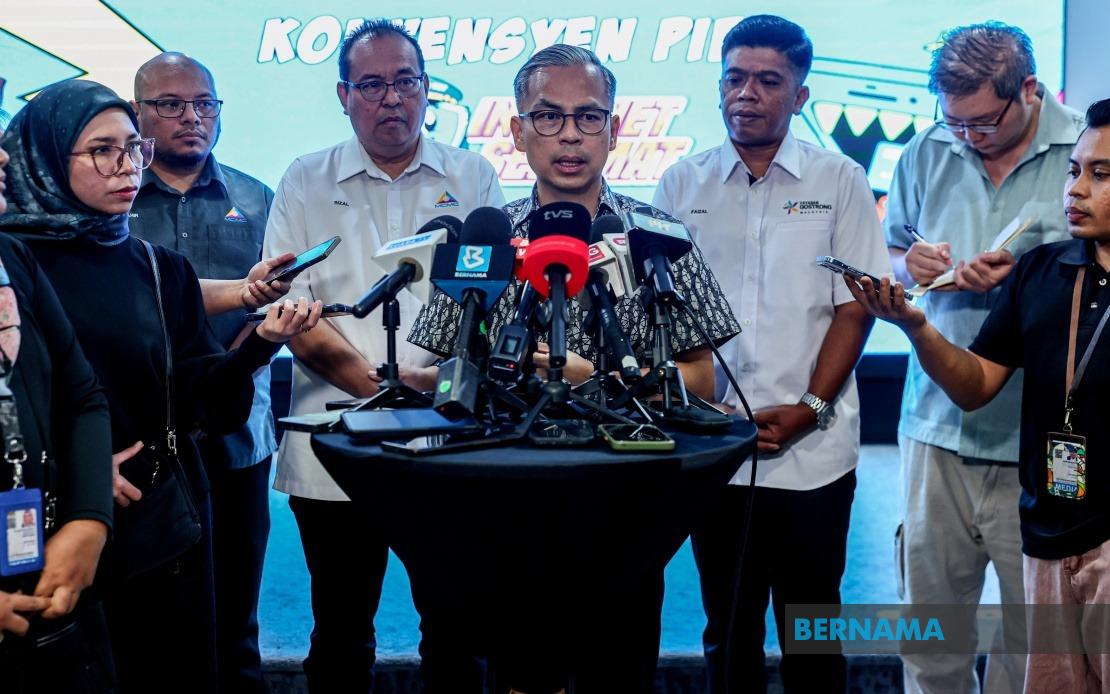
Communications Minister Datuk Seri Fahmi Fadzil has issued a timely warning to Malaysian parents about the growing tendency among young people to develop parasocial relationships with artificial intelligence systems, urging greater vigilance as digital natives increasingly blur the lines between human interaction and machine communication. Speaking at the Kuala Lumpur Federal Territory Safe Internet PTA Convention 2026, Fahmi stressed that while AI tools offer legitimate educational and informational value, they should never be permitted to substitute for genuine human connection or serve as emotional support figures in a child's life.
The minister's concern centres on what he identifies as the most insidious aspect of contemporary AI technology: its capacity to simulate human conversation with sufficient sophistication that vulnerable users—particularly children and adolescents—may unconsciously transfer social attachment patterns onto non-sentient systems. Unlike passive digital content, conversational AI can respond, adapt, and engage in ways that mimic reciprocal friendship, creating a false sense of mutual understanding and emotional investment. This distinction carries significant psychological implications for young people still developing their social cognition and attachment frameworks.
Fahmi emphasised that parents must understand the fundamental difference between AI as a tool and AI as a companion. The technology, he noted, operates entirely within parameters established by human programmers using training data compiled from human sources. It has no consciousness, no genuine understanding, and no capacity to care about the user's wellbeing. When children begin referring to their AI interactions as friendships or, more troublingly, romantic relationships, parents should recognise this as a warning sign requiring immediate attention and intervention. The naturalness of AI conversation can make this phenomenon difficult for parents to detect without active monitoring.
Beyond the psychological risks of unhealthy attachment, Fahmi highlighted a critical technical limitation that compounds the dangers: AI systems routinely generate false information or "hallucinate" plausible-sounding but entirely fabricated details. These systems may also rely on outdated training data, providing children with information that is not merely incomplete but actively incorrect. When young people treat AI as a reliable source of guidance or truth, they develop dangerous epistemological habits that could undermine critical thinking skills and leave them vulnerable to misinformation across digital platforms.
The minister advocated for a balanced approach rather than draconian prohibition. Parents should not attempt to shield children from internet access entirely, as digital literacy and technological engagement are increasingly non-negotiable life skills in Malaysia's knowledge economy. Instead, he urged families to implement structured supervision, establish clear boundaries around AI usage, and maintain open dialogue about digital experiences. Schools can play a pivotal role in this ecosystem, potentially offering guidance through parent-teacher associations and educational programmes that help students understand both the capabilities and limitations of AI.
Fahmi also raised concerns about a parallel problem affecting Malaysia's diverse communities: the inadequacy of AI-powered content moderation systems in understanding linguistic nuance and cultural context. He specifically cited troubling patterns of cyberbullying within Tamil-speaking communities on TikTok, where algorithmic content regulation has failed to detect harmful behaviour because the AI systems involved lack cultural and linguistic sophistication. This highlights a crucial vulnerability in relying on AI for safety governance—the technology cannot grasp the specific ways communities deploy language to marginalise and harass one another.
The minister's engagement with TikTok underscores recognition that platform responsibility cannot be outsourced entirely to automated systems. He has pressed the company to develop more nuanced content governance approaches that account for linguistic diversity and cultural specificity. This intervention reflects Malaysia's broader challenge as a multilingual, multicultural nation where standardised AI moderation often fails precisely at the points where cultural understanding matters most. The issue resonates across Southeast Asia, where similar linguistic and cultural complexities demand localised solutions.
Fahmi announced that social media platforms operating in Malaysia have been granted a grace period to implement the recently established Child Protection Code (CPC) and Risk Mitigation Code (RMC). These regulatory frameworks represent Malaysia's attempt to establish baseline standards for platform conduct regarding fraud, online gambling, cyberbullying, and predatory behaviour. The MCMC is currently in Singapore conducting discussions with major platforms including YouTube to ensure their systems can accommodate these codes. The transition period reflects practical recognition that compliance requires genuine technological modification rather than merely paper commitments.
The enforcement mechanism embedded in these codes carries significant weight. Once fully implemented, platforms failing to meet regulatory standards face the prospect of court action accompanied by substantial financial penalties. This credible threat of enforcement distinguishes Malaysia's approach from purely aspirational regulatory frameworks. The deterrent is designed to incentivise platforms to invest seriously in safety infrastructure, content moderation capacity, and community protection systems that actually address the specific vulnerabilities within Malaysian user communities.
The Safe Internet PTA Convention 2026, organised by the GoStrong Malaysia Foundation in partnership with MCMC, attracted nearly 500 participants representing schools, parent organisations, government agencies, and community stakeholders. This convening of diverse constituencies reflects recognition that online safety cannot be addressed through government action alone. Parents, educators, and school administrators must develop shared understanding of emerging threats and coordinate responses. The scale of participation suggests growing awareness across Malaysian society that digital citizenship requires intentional community effort.
Fahmi's warnings arrive at a moment when Malaysian families are still calibrating their relationship with AI technology. Unlike digital platforms that emerged from Western contexts, AI represents a more fundamental reshaping of how humans interact with information and potentially with one another. The minister's focus on parental awareness rather than technological prohibition suggests confidence in Malaysian families' capacity to make informed choices when armed with accurate information about AI's genuine capabilities and limitations. This approach respects parental agency while clearly identifying the specific risks requiring attention.

