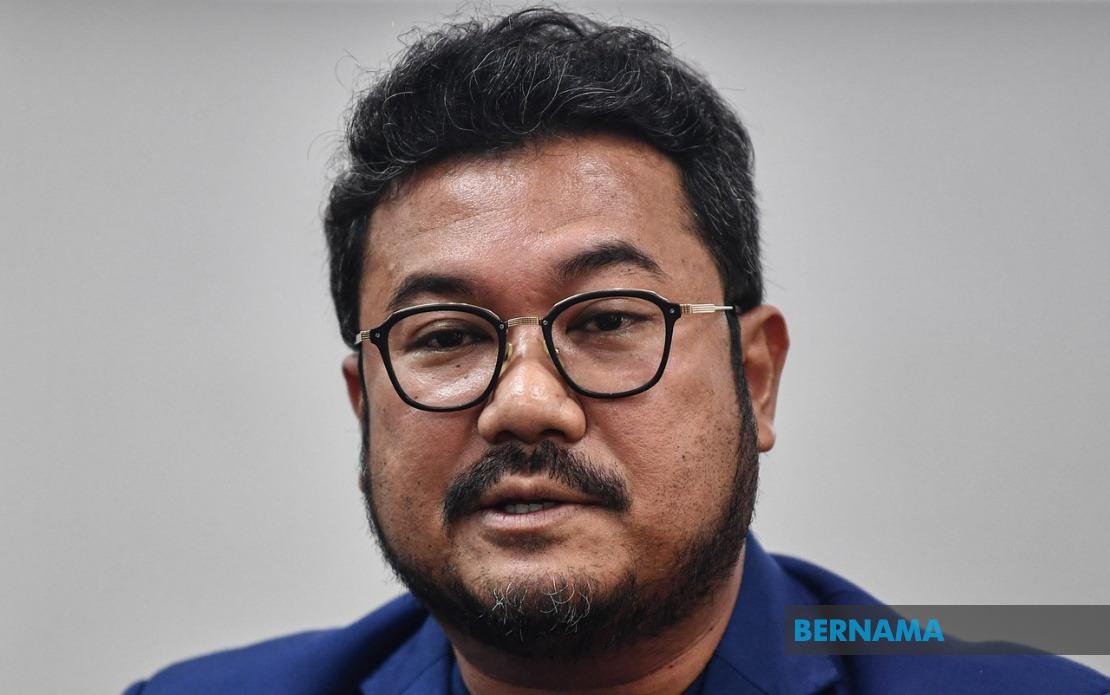
The Malaysian Paralympics Council's president, Datuk Seri Megat D Shahriman Zaharudin, has secured a place on Bersatu's candidate slate for the forthcoming Negeri Sembilan state election, marking a significant moment for sports leadership entry into state-level politics. The announcement came during a formal candidate presentation ceremony in Nilai, where Bersatu president Tan Sri Muhyiddin Yassin unveiled the party's full roster of 24 hopefuls contesting the 16th Negeri Sembilan state poll. Megat D Shahriman will represent Bersatu in the Seri Menanti constituency, bringing his extensive experience in disability sports administration to the electoral arena.
Megat D Shahriman's candidacy underscores an emerging trend in Malaysian politics wherein individuals from sports and civic organisations are being positioned as alternatives to traditional political operatives. His credentials extend beyond Paralympics administration, as he also holds the presidency of the Negeri Sembilan Canoe Association, demonstrating his broader engagement with sporting development at the state level. This dual leadership of both national disability sports coordination and state-level aquatic sports governance suggests a candidate with diverse stakeholder connections and demonstrated commitment to athletic and recreational advancement.
The timing of his nomination reflects Bersatu's strategy to diversify its candidate pool ahead of what promises to be a competitive state election. By fielding sports administrators alongside career politicians, the party appears intent on appealing to constituencies that value practical governance experience and civic commitment. Negeri Sembilan, as a relatively compact state with strong community networks, often responds favourably to candidates with established local credentials and visible participation in grassroots institutions.
The electoral calendar for the Negeri Sembilan contest remains tightly scheduled. The Election Commission designated Saturday for the official nomination period, establishing the formal launching point for all contenders. Early voting has been set for July 28, enabling civil servants and essential workers to participate before the general population heads to polling stations. The main election day arrives on August 1, giving candidates and parties just over a fortnight to conduct their ground campaigns.
Bersatu's decision to field 24 candidates suggests an attempt to contest substantially across the state assembly seats, positioning itself as a significant force in the state legislature. The breadth of this candidate roster, coupled with the inclusion of figures like Megat D Shahriman from outside conventional political circles, indicates the party's effort to construct a broad-based appeal. Such diversification may prove advantageous in constituencies where voters express fatigue with purely partisan messaging and gravitate towards candidates offering alternative professional backgrounds.
The inclusion of sports administrators within party candidate lists reflects a broader democratisation of political recruitment in Malaysia, where traditional gatekeeping by long-standing party cadres has gradually relaxed. Organisations like the Paralympics Council and state sports associations serve as talent pools that party strategists increasingly view as repositories of civic-minded individuals with established community respect. Megat D Shahriman's position managing athlete welfare and international sporting representation likely furnishes him with skills applicable to legislative representation and constituency services.
For the Paralympic movement in Malaysia specifically, the candidacy of its national council president introduces questions about leadership succession and institutional continuity should electoral success alter his availability for sports administration duties. The Paralympics Council depends upon steady institutional stewardship to maintain Malaysia's competitive position in regional and international disability sports competitions. Balancing electoral candidacy with executive sports responsibilities presents practical challenges that organisations must navigate during election periods.
Seri Menanti, the constituency Megat D Shahriman will contest, holds particular significance within Negeri Sembilan's political landscape. The seat's demographic composition and electoral history will substantially influence his chances. Understanding local voter preferences, incumbent strength, and opposition positioning becomes crucial for assessing his electoral prospects. Seri Menanti voters will ultimately judge whether his sports administration background and civic engagement translate into legislative effectiveness and constituency advocacy.
Bersatu's participation in the Negeri Sembilan election continues the party's effort to maintain and expand its influence in state governments following its national repositioning in recent years. The party's performance in this contest will contribute to broader narratives about its capacity to remain electorally competitive and its ability to attract credible candidates capable of resonating with diverse voter segments. State elections increasingly serve as testing grounds for both established parties and newer political formations seeking to validate their organisational strength and messaging resonance.
The broader Malaysian political context surrounding this state election encompasses questions about coalition formation, post-election government stability, and the evolving role of smaller parties within state administrations. Negeri Sembilan's result will offer insights into voter sentiment across different demographic and geographic segments, contributing data points to the larger picture of Malaysian electoral behaviour as the country moves through its current political cycle.

