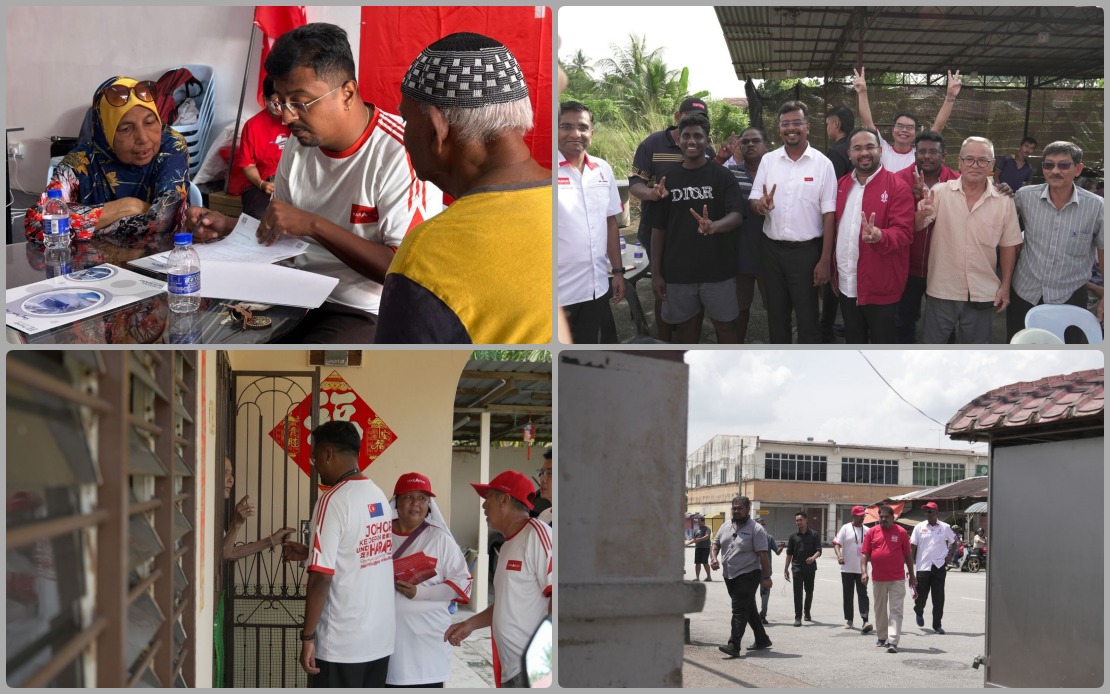
Dr. A. Ruban, the Pakatan Harapan (PH) candidate contesting the Paloh state assembly seat, was admitted to a private hospital in Batu Pahat on July 7 for medical intervention related to a chronic spinal condition. The hospitalization comes just four days before voters head to the polls in the Johor state election on July 11, introducing an unexpected complication into what was already shaping up to be a tightly contested four-way race in the constituency.
The decision to seek immediate hospital care followed acute pain that has severely restricted the candidate's mobility since the morning of his admission. According to Abdul Majid Abd Aziz, the campaign's operational manager, Dr. Ruban had been managing a pre-existing spinal ailment that had previously required surgical intervention. However, the intensity of the campaign trail—characterised by extensive ground walkabouts and public engagement across the constituency—appears to have exacerbated the underlying condition, triggering the acute episode that necessitated hospitalisation.
The medical situation reflects a broader challenge facing political candidates during electoral campaigns, particularly in a state election context where ground presence and direct voter engagement have become increasingly pivotal to campaign success. The demanding schedule of house visits, public rallies, and community meetings can impose considerable physical strain, especially on candidates managing chronic health conditions. For Dr. Ruban, whose past medical history includes spinal surgery, the cumulative effects of fatigue and intensive physical activity appear to have tipped the balance toward medical intervention.
Hospital officials have indicated that Dr. Ruban's condition is not life-threatening or critical in nature, suggesting a realistic prospect of discharge within one or two days of admission. This assessment provides some relief to the PH machinery in Paloh, as it indicates the candidate's absence from active campaigning need not extend indefinitely. Nevertheless, the timing remains challenging, falling as it does in the final stretch of the election cycle when momentum and visibility can meaningfully influence voting patterns.
The PH campaign apparatus has already begun contingency planning to maintain their ground presence and messaging effectiveness during Dr. Ruban's period of reduced availability. Abdul Majid emphasized that the party's organizational infrastructure in Paloh will sustain campaign momentum and ensure that the candidate's policy platform continues to reach voters through other channels and party representatives. This approach acknowledges that while the candidate's personal campaigning carries significant weight, a well-coordinated party machine can partially compensate for such absences through collective effort.
The Paloh contest has emerged as a genuinely competitive four-cornered affair, adding layers of complexity to what might otherwise be a straightforward incumbent-versus-challenger scenario. Perikatan Nasional (PN) has fielded D. Jeevakumar as their candidate, seeking to capitalize on any shifts in the electoral landscape. An independent contestant, G. Kamaleswaren, is also in the fray, fragmenting the opposition vote. The incumbent, Lee Ting Han of Barisan Nasional (BN), enters as the defending member seeking to retain his seat. In such a fragmented contest, every vote becomes consequential, and extended absences by any candidate during the final campaigning days can have measurable effects.
The Johor state election represents the third significant electoral contest in Malaysia within recent months, and voter attention and engagement levels remain relatively high. The state has proven to be a bellwether for national political trends, and constituencies like Paloh often attract disproportionate attention from both local and national party leadership. The presence of a four-way contest has elevated the profile of what might otherwise be regarded as a routine suburban state seat, making Dr. Ruban's health complications a matter of broader political interest.
Early voting proceedings commenced on July 7, the same day as Dr. Ruban's hospitalization, meaning that a portion of the electoral pool had already cast their votes before the news of his medical situation became public. This timing suggests that his absence from active campaigning will primarily impact the smaller cohort of voters who still intend to vote on election day itself. Nevertheless, in close contests—which Paloh appears likely to be—even marginal swings can prove decisive.
The incident also touches on broader questions about the sustainability and expectations placed on political candidates in Malaysia's electoral system. Unlike some democracies where campaign regulations impose limits on candidate activities or where healthcare considerations are more formally accommodated within electoral frameworks, Malaysian elections maintain a relatively grueling pace for aspirants seeking elected office. The physical and mental demands of modern campaigning, particularly at state assembly level where grassroots engagement remains intensive, occasionally collide with the realities of human health and endurance.
For the Johor electoral process as a whole, the 16th state election continues to unfold with all the usual elements of democratic competition: multiple competing visions, party machines mobilizing supporters, and voters preparing to make consequential choices about representation. The Paloh situation serves as a reminder that electoral contests are ultimately conducted by individual human beings, each bringing their own circumstances, capabilities, and limitations to the arena of democratic politics.

