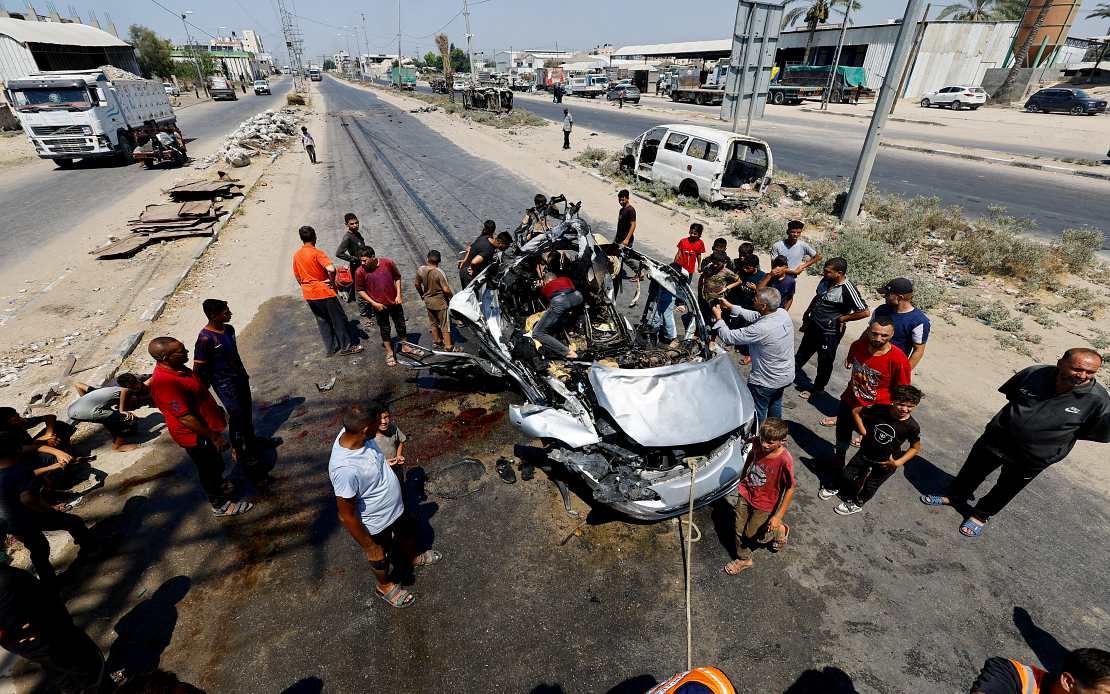
The Palestinian Authority has escalated its criticism of Israel's compliance with the recently agreed ceasefire, with officials in Ramallah describing the accord as fundamentally broken despite international agreement on implementing its second phase. According to Palestinian presidential spokesperson Nabil Abu Rudeineh, the situation on the ground contradicts the framework that was supposed to halt hostilities and protect civilians, underscoring deepening frustration with how the agreement is being executed in practice.
Abu Rudeineh's characterisation of the ceasefire as "an agreement on paper and death on the ground" encapsulates Palestinian grievances that the accord has failed to deliver the comprehensive end to violence it promised. Rather than ushering in a period of relative calm, the Palestinians argue that military operations have continued across key population centres, negating the humanitarian benefits the ceasefire was designed to provide. This assessment reflects a widening gap between the political agreement reached by negotiating parties and the operational reality experienced by Palestinians in affected areas.
Central to Palestinian complaints are allegations of sustained Israeli military activity in refugee camps and villages, which officials characterise as part of a systematic strategy to weaken Palestinian territorial claims and resolve. The spokesperson framed these continuing operations not as isolated incidents but as evidence of a deliberate approach to eliminate or marginalise the Palestinian refugee population, an assertion that touches on one of the most sensitive and longstanding dimensions of the Israeli-Palestinian conflict. For Malaysia and other Southeast Asian nations with significant Palestinian diaspora communities, such allegations carry particular resonance and fuel regional discourse on the conflict.
Palestinian leadership has now formally called upon the international community, with particular emphasis on the United Nations Security Council, to move beyond statements of concern and take concrete action. The request signals Palestinian frustration with what they perceive as insufficient international enforcement mechanisms and a lack of binding consequences for violations. Abu Rudeineh's appeal reflects a strategic shift toward demanding not just diplomatic initiatives but enforceable interventions that would compel compliance with agreed terms.
The spokesperson outlined specific demands for international action: immediate implementation of the ceasefire's second phase, termination of Israeli military operations across Gaza, the West Bank, and occupied East Jerusalem, and deployment of protective international mechanisms for Palestinian civilians. These demands essentially ask the Security Council to move beyond observer status into an active enforcement role, a position that has proven diplomatically challenging given competing interests among permanent council members.
Palestinian officials have also emphasised the role of impunity in perpetuating the cycle of violations. According to Abu Rudeineh, the absence of meaningful consequences for breaching international humanitarian law creates perverse incentives for continued violations, establishing a pattern where legal frameworks exist but carry little practical weight. This argument extends beyond the immediate ceasefire dispute to encompass broader questions about accountability mechanisms and the effectiveness of international law in regulating state conduct during armed conflict.
The Palestinian position explicitly connects cessation of hostilities to broader political resolution, insisting that regional stability remains impossible without ending the occupation and achieving statehood. Abu Rudeineh reiterated core Palestinian demands including recognition of East Jerusalem as the capital of a future independent Palestinian state, alignment with the Arab Peace Initiative framework, and adherence to UN resolutions on Palestinian rights. This linkage between immediate ceasefire implementation and longer-term political settlement reflects Palestinian reluctance to accept temporary arrangements without progress toward permanent solutions.
For regional observers including Malaysia, the implications are significant. Southeast Asian nations have generally supported Palestinian causes within international forums and maintain diverse engagement across the Middle East. The breakdown of ceasefire implementation suggests that diplomatic solutions remain fragile without robust enforcement mechanisms, a lesson potentially applicable to other regional disputes. Additionally, the failure to translate agreements into ground realities threatens to perpetuate cycles of violence that generate humanitarian crises and refugee outflows affecting the broader region.
The Palestinian narrative of systematic breaches also reflects deeper mistrust between parties, suggesting that technical agreement on ceasefire terms does not necessarily translate into mutual confidence or compliance. Each side's competing interpretations of agreement provisions and differing assessments of what constitutes violation create space for continued confrontation even within nominally peaceful frameworks. This dynamic complicates future negotiation efforts and raises questions about whether structural mechanisms beyond political agreement are necessary to ensure implementation.
The emphasis on international protection mechanisms reflects Palestinian recognition that security guarantees remain essential for meaningful implementation. Rather than relying on direct Israeli-Palestinian negotiations or monitoring, Palestinian leadership increasingly seeks third-party enforcement, suggesting profound distrust in bilateral compliance. This approach, while understandable given historical grievances, creates additional international burden and raises questions about the viability of solutions requiring sustained external involvement.
Going forward, the Palestinian demand for Security Council action places diplomatic pressure on major powers to take stronger positions on the ceasefire's implementation. For countries like Malaysia that support Palestinian aspirations, these developments may intensify calls for stronger statements and positions within international forums. The situation also underscores how ceasefire agreements without clear enforcement mechanisms and accountability frameworks risk becoming merely symbolic, failing to deliver the humanitarian protection and stability they ostensibly promise.

